
01Ground Reality: 130 Million People, One Real City and Money That Comes Home
Bihar has more people than Japan and a property market the size of a single Indian metro suburb. That is the paradox to start from. Patna, with 2.5 million people in the city and 4 million in the metropolitan region, is the only market with flats, developers, RERA registrations and resale; the next tier, Gaya, Muzaffarpur, Bhagalpur and Darbhanga, have a few builders each and a plot-and-house economy; the rest is land. The buyers are a specific crowd: government officers, doctors, lawyers and traders in the city, and the vast Bihari diaspora, from Delhi's bureaucracy and Mumbai's hospitals to Dubai's sites and Punjab's farms, sending money home to buy a plot or a flat in Patna as the family's anchor. Remittances are the state's largest private capital flow and they land in land.
Patna prices look like a bigger city's. Boring Road, Patliputra Colony, SK Puri and Shri Krishna Puri, the old professional colonies west of Gandhi Maidan, trade at ₹8,000 to 14,000 per sq ft for flats and ₹1.5 to 3 crore a katha (1,361 sq ft in Patna) for the rare plot; Kankarbagh, the planned middle-class colony to the east, and the Bailey Road corridor to the west at ₹5,500 to 8,000; Rajendra Nagar and Kadamkuan in the old middle at ₹6,000 to 8,000; Danapur, Khagaul, Saguna More and Phulwari Sharif on the fringe at ₹3,500 to 5,000; and Bihta, 30 km west with the IIT, the ESIC hospital and the planned civil airport, at ₹2,500 to 4,000, where most of the new gated projects are. Land across the city is the asset: plots of two to five katha trade in crores where they exist, and the katha is the unit of every conversation.
What changed in the last three years: the state reset Patna's circle rates for the first time in a decade, doubling the government value on the prime corridors and putting Boring Road and Gandhi Maidan at around ₹2.5 crore a katha on paper, with annual increases to follow, which ends the era of registering at a third of the price; the Patna Metro's first stretch opened on the east side; the JP Ganga Path riverfront road is open from Digha to Didarganj and has created a new premium address along the river; the new airport terminal opened; Purnia got an airport and Darbhanga an AIIMS; the Bihar special land survey rewrote the record of rights village by village and threw up disputes in every family; and Bihar RERA, among the more active regulators in the country, started refusing registrations and ordering refunds.
The honest caution: Bihar's records are the weakest of any large state. The khatiyan from the last cadastral survey may be a century old, the jamabandi may be in a dead ancestor's name, the land possession certificate may contradict both, and the special survey is producing a new record that can differ from all of them. Add benami holdings, land-mafia encroachment on the fringes and the Patna High Court's regular demolitions of unauthorised construction, and the rule becomes simple: buy only what a Patna lawyer can trace, and prefer a RERA-registered flat with an occupancy certificate to any plot you cannot fence and watch.
02Location and Macro Infrastructure: Bridges, the Metro and a Riverfront That Became an Address
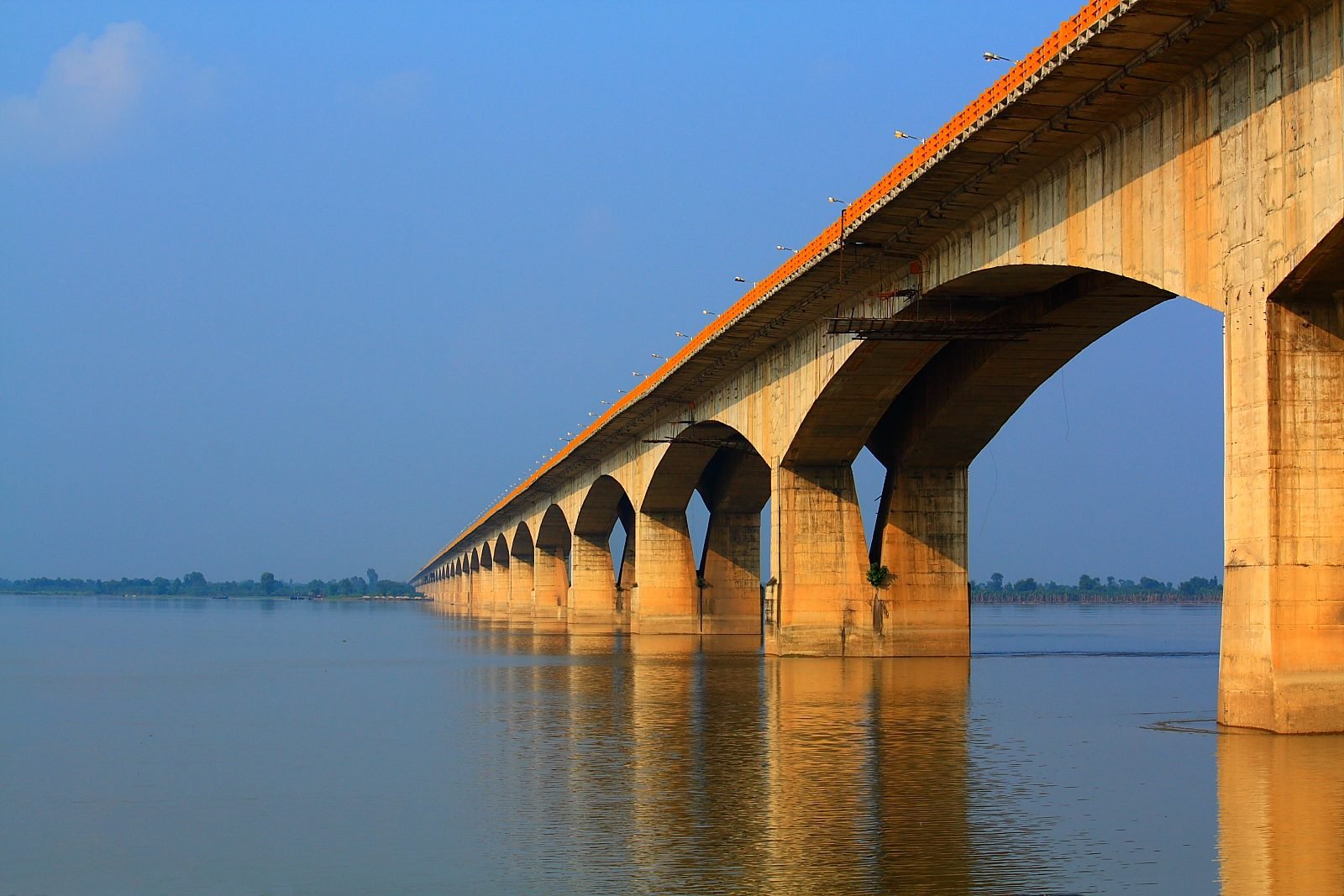
Bihar is a river plain cut in two by the Ganga, with the Kosi, Gandak, Bagmati and Son feeding it. The south bank carries Patna, Gaya, Bhagalpur, Munger and the Grand Trunk Road; the north bank carries Muzaffarpur, Darbhanga, Chhapra, Saharsa and the Nepal border; the two halves were joined by a single bridge at Patna for decades. The bridge programme is the state's biggest infrastructure story: the JP Setu at Digha, the Kachchi Dargah–Bidupur six-lane bridge, the new four-lane Gandhi Setu, the Aunta–Simaria bridge at Begusarai, the Munger road–rail bridge, the Sultanganj–Aguwani Ghat bridge (which collapsed twice during construction and is being rebuilt), and the Vikramshila parallel bridge at Bhagalpur. Each one turns a north-bank town into a south-bank commute and moves land.
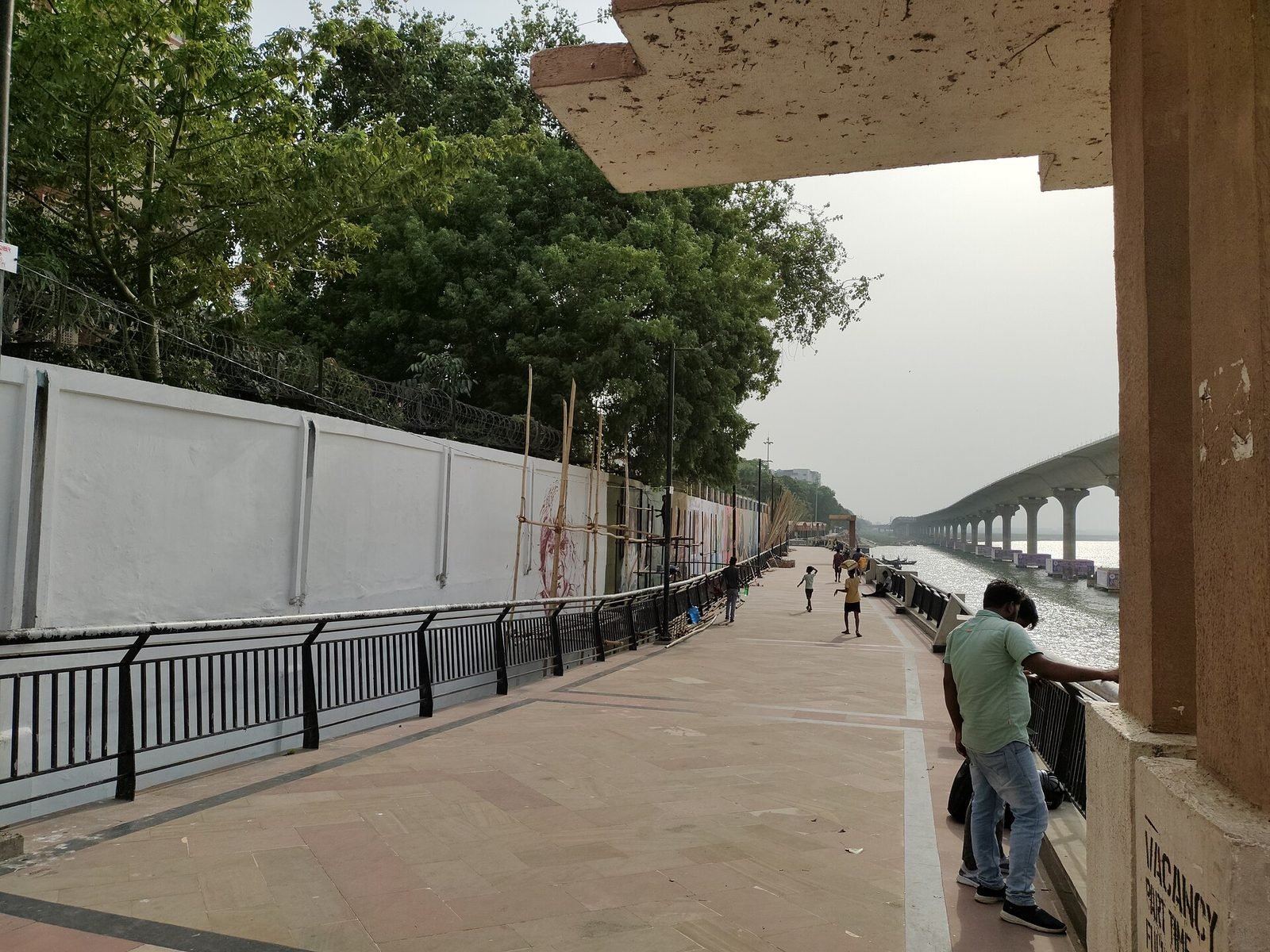
Patna's own map. The city is a 25-km strip along the Ganga, hemmed by the river to the north and the Punpun and the railway to the south, which is why it grows west along Bailey Road to Danapur and Bihta and east along Kankarbagh to Patna City. The JP Ganga Path, the 20-km riverfront expressway from Digha to Didarganj, is the single most important new road: it relieves Ashok Rajpath and Bailey Road and has made the river-facing land in Digha, Kurji and Gaighat a premium address for the first time. The Patna Metro has two corridors, Danapur–Khemnichak and Patna Junction–New ISBT, with the priority east-side stretch open and the rest under construction; stations at Malahi Pakri, Bhootnath and Khemnichak have already moved Kankarbagh and New Bypass prices. The Patna ring road, the Atal Path, the Bailey Road flyovers and the double-decker at Ashok Rajpath are the rest of the fix. The airport is being supplemented by a civil enclave at the Bihta Air Force station, which is the long-term anchor of the Bihta thesis.
Roads out. The Patna–Gaya–Dobhi NH-22 is four-lane and the Gaya side is the Amritsar–Kolkata industrial corridor's Bihar node; the Patna–Bakhtiyarpur–Mokama and Patna–Buxar four-lanes carry the east and west traffic; the Patna–Muzaffarpur–Darbhanga spine is NH-22 and NH-27; the Bharatmala expressways (Raxaul–Haldia, Patna–Purnia, Amas–Darbhanga, Varanasi–Kolkata through Rohtas and Gaya) are the next decade's corridors and the land along their alignments is where the speculation sits today.
Rail and air. Patna, Danapur, Gaya, Muzaffarpur, Bhagalpur and Katihar are major junctions on the Delhi–Howrah and north-bank lines; Vande Bharat services run to Ranchi, Howrah and Lucknow; the Patna Junction redevelopment and the new Patna Sahib and Danapur terminals spread the load. Gaya's airport is international for the Buddhist pilgrim season; Darbhanga's UDAN airport became one of the busiest regional airports in the country and is getting a proper terminal; Purnia opened; Bihta is the plan.
03Micro-Markets and What Sells: Patna Corridor by Corridor, then the Thirteen Towns
Patna (Tier 2)
The west colonies, Boring Road, Patliputra Colony, SK Puri, Shri Krishna Puri, Boring Canal Road and AN College, are where Patna's money lives: old bungalows on two to five katha being redeveloped into six-storey builder towers, flats ₹8,000 to 14,000 per sq ft, and the state's best retail on Boring Road. The Bailey Road corridor from Income Tax to Saguna More is the growth axis: Raja Bazar, Jagdeo Path, Rukanpura and the Ashiana–Digha belt at ₹5,500 to 8,000, with the Ganga Path premium pulling Digha and Kurji up. Kankarbagh is the planned colony of the east, the Metro's first beneficiary, 3 BHKs at ₹5,500 to 7,500 and plots that never come to market. Rajendra Nagar, Kadamkuan and Lohanipur are the dense middle, ₹6,000 to 8,000, waterlogged in a bad monsoon. Patna City and Gulzarbagh are the old trading town and Patna Sahib, unbuildable. Danapur, Khagaul and Phulwari Sharif are the fringe at ₹3,500 to 5,000 with the cantonment, the AIIMS Patna at Phulwari and the New Bypass projects. Bihta, 30 km out, is where the large gated townships are, ₹2,500 to 4,000 per sq ft and ₹8 to 20 lakh a katha, sold on IIT Patna, ESIC, the NIT extension, the airport and the four-lane; it has absorbed a decade of diaspora money and will take a decade more to look like a town.
What sells: 3 BHKs of 1,300 to 1,700 sq ft at ₹70 lakh to 1.5 crore in RERA-registered projects for the doctor–officer–NRI buyer; 2 BHKs at ₹40 to 70 lakh for first homes and the rental market around AIIMS, PMCH, IGIMS and the colleges; plots of one to three katha in Danapur, Bihta, Naubatpur and the Punpun side for those who will build; and shops and showrooms on Boring Road, Bailey Road, Exhibition Road, Fraser Road and Kankarbagh Main Road, which carry the best commercial rents in the state. Hostels and paying-guest buildings near Boring Road, Musallahpur Hatt and Patna University are the city's quiet income business, feeding the coaching-class economy.
Gaya, Muzaffarpur, Bhagalpur and Darbhanga (Tier 3)
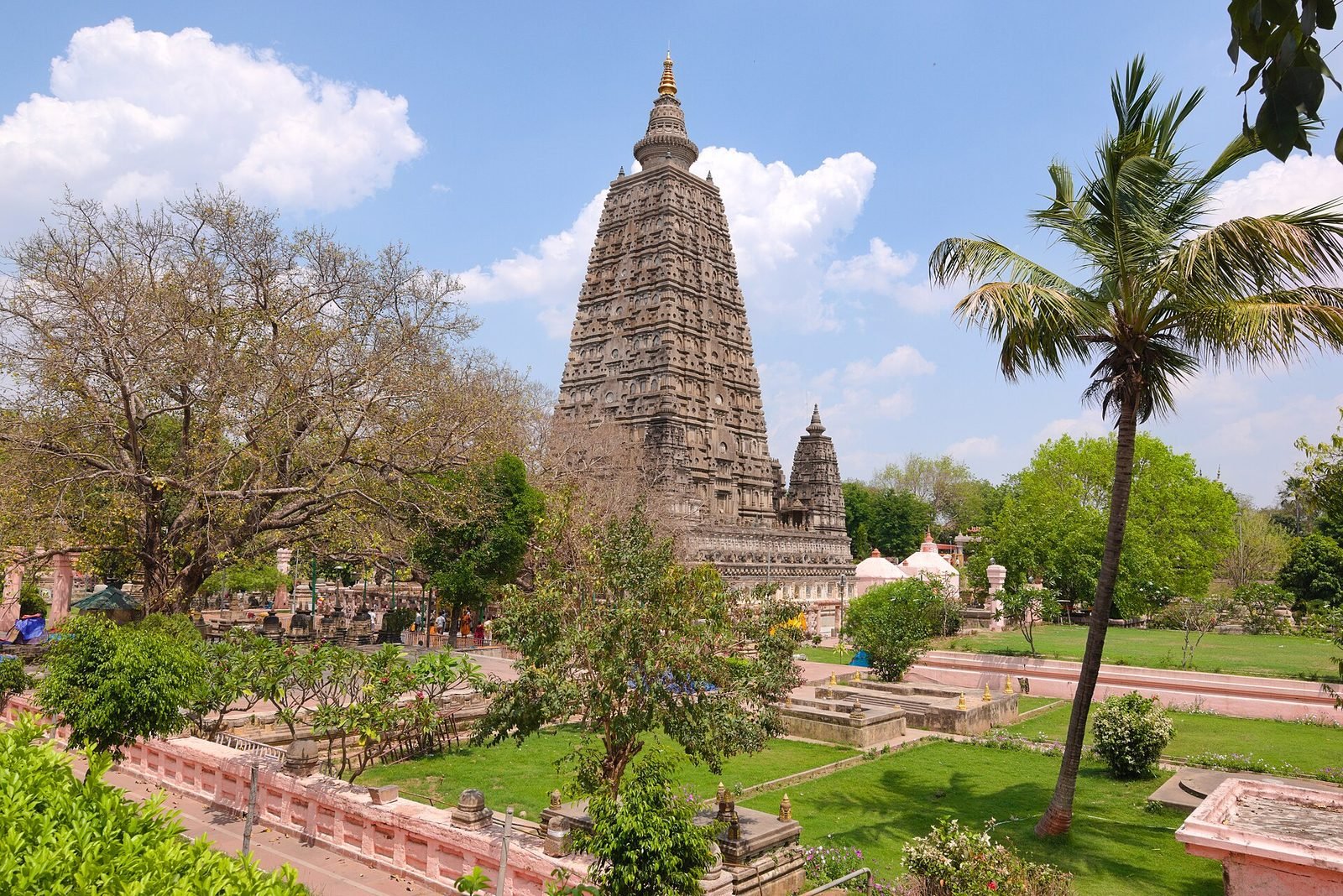
Gaya is two towns: the Hindu pilgrimage city on the Phalgu with its Pitripaksh crowds, and Bodh Gaya 12 km south, where the Mahabodhi temple draws Japanese, Thai, Sri Lankan, Bhutanese and Tibetan monasteries and pilgrims and where a hotel market from dormitories to five-star has grown around the temple zone. Land near the temple is ₹40 lakh to 1.5 crore a katha, hotel plots on the Gaya–Dobhi road the product, and the international airport and the Amritsar–Kolkata industrial corridor's 1,670-acre node at Gaya are the two reasons to hold land here. Muzaffarpur is north Bihar's commercial capital: litchi, the Bela industrial area, the Smart City, SKMCH and the new medical college, Mithanpura and Brahmpura the good addresses at ₹30 to 80 lakh a katha and flats at ₹4,000 to 5,500. Bhagalpur is the silk city on the Ganga with the Vikramshila bridge, NTPC Kahalgaon, the Smart City and the proposed Vikramshila university; flats ₹3,500 to 5,000, Tilka Manjhi and the Ganga-front belt the premium. Darbhanga is Mithila's capital: the UDAN airport that became a success, AIIMS under construction, DMCH and the old Raj estates; plots on the airport road and in Laheriasarai ₹20 to 60 lakh a katha, the first town in north Bihar where outside developers have turned up.
Purnia, Bihar Sharif, Ara, Begusarai and Katihar (Tier 4)
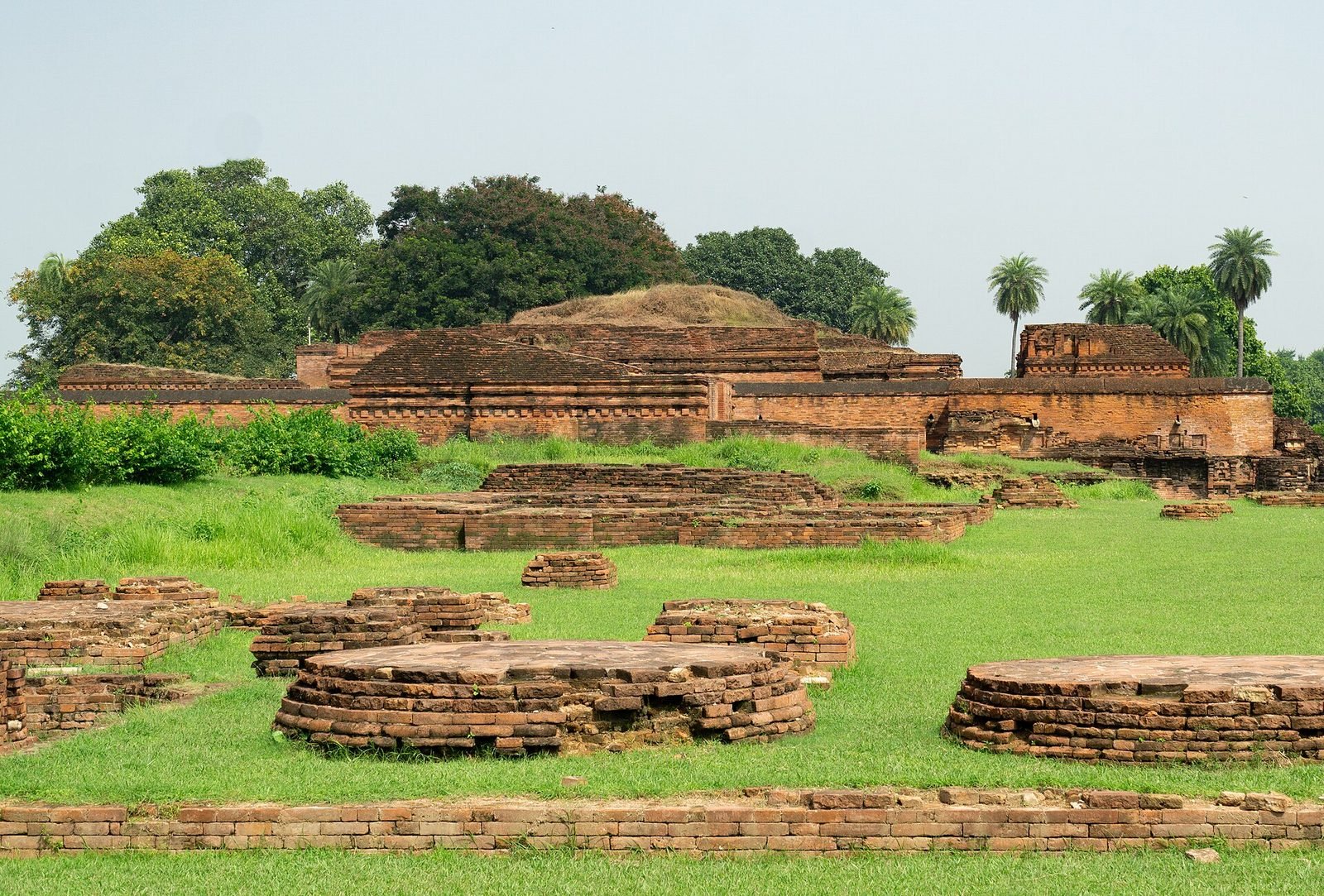
Purnia is the Seemanchal hub with its new airport, the Bengal and Nepal trade and makka and banana money; plots and highway godowns. Bihar Sharif sits between the Nalanda ruins and Rajgir, with the Smart City works and Rajgir's new zoo-safari and convention tourism spilling over; plots and houses. Ara, 50 km west of Danapur on the four-lane, is becoming a Patna satellite for the rice-trade and the diaspora; plots ₹10 to 30 lakh a katha. Begusarai has the Barauni refinery, its petrochemical expansion and the Simaria bridge; refinery and NTPC housing, highway plots. Katihar is the railway division and the jute belt on the Bengal border; plots and godowns.
Munger, Chhapra, Saharsa and Sasaram (Tier 5)
District towns with a plot-and-house market and one catalyst each. Munger has the new Ganga road–rail bridge and the yoga university; Chhapra is across the Ganga from Patna and the Digha–Sonpur and JP Setu bridges make it a 45-minute satellite, the one Tier 5 town with an appreciation story; Saharsa is the Kosi belt, flood-prone, with makhana and migration money; Sasaram is Rohtas on the Grand Trunk Road, Sher Shah's tomb, the stone and cement trade and the Varanasi–Kolkata expressway alignment.
04Economy and Employment: Government, Remittances, Refineries and the Industrial Corridor That Is Finally Moving
Bihar's economy is about ₹9.5 lakh crore and grows fast off a low base. Agriculture employs most people: rice, wheat, maize in Seemanchal, litchi in Muzaffarpur, makhana in Mithila, bananas in Hajipur and vegetables everywhere, with a food-processing sector that is finally industrialising. Government, the courts, the universities and the hospitals are the salaried core of every town, and Patna's status as the state capital makes it the one place with a professional class large enough to support a flat market. Remittances from the 10 million Biharis working outside the state are the largest private capital flow and the source of most land purchases in the districts. Education is an industry in itself: the Patna coaching belt, Patna University, the new Patliputra and Purnea universities, IIT Patna, NIT Patna, AIIMS Patna and the chain of new medical colleges across the districts.
Heavy industry is the Barauni refinery and its petrochemical complex, NTPC at Kahalgaon, Barh and Barauni, the railway's Marhowra diesel-locomotive factory and Madhepura electric-locomotive factory, the Hajipur and Bihta industrial areas, the Bela estate at Muzaffarpur, the Mokama and Fatuha estates, sugar and ethanol in the north, and the new textile and leather parks. The Amritsar–Kolkata Industrial Corridor's Integrated Manufacturing Cluster at Gaya, 1,670 acres between Gaya and Dobhi, is the first large planned industrial estate the state has had and is the reason Gaya's highway land has moved. The Bihar Industrial Investment Promotion Policy's incentives and BIADA's land allotments have pulled a wave of food-processing, textile and pharma units; the investor summits produce MoUs, and a buyer should price in what is on the ground.
IT is a handful of parks in Patna (the Biscomaun tower, the Rajendra Nagar and Bihta IT parks) and a government push for a software technology park; it is not yet an employment story. Health is: AIIMS Patna, the AIIMS Darbhanga, IGIMS, PMCH's new 5,000-bed rebuild and the private hospitals (Paras, Medanta, Ford, Ruban) have made Patna a regional medical centre with service-apartment demand around Phulwari, Bailey Road and Kankarbagh. Hospitality is Bodh Gaya, Rajgir and Patna's business hotels. Buy Bihar on government, medicine, education and remittances, and treat the industrial corridor as upside.
05What Changes in the Next 3 to 7 Years
The Metro finishes. Both corridors open and Kankarbagh, the New Bypass, Danapur and the Mithapur–Khemnichak belt get stations. Station-adjacent plots and flats have moved; the rest of the corridor follows when the trains run.
The circle-rate reset bites. With government values doubled and rising 5 percent a year, registration costs on the prime corridors jump, under-valuation ends, and the market's quoted prices and recorded prices converge. Expect a slowdown in prime-corridor transactions and a shift of demand to Bihta, Danapur, Naubatpur and the north-bank satellites where the circle rate still trails the market.
The riverfront and the bridges. The JP Ganga Path's extensions, the Digha–Sonpur and Kachchi Dargah bridges and the ring road make Chhapra, Sonpur, Hajipur, Bidupur and Fatuha part of metropolitan Patna. The north-bank land across the river, 20 minutes from Boring Road by the new bridges, is the cheapest appreciation story in the state.
Bihta gets its airport. The civil enclave at the Bihta Air Force station, IIT Patna's expansion, the ESIC medical college and the Bihta–Sarmera four-lane turn the township belt into a real suburb. The developers who sold Bihta a decade early will finally see the demand they promised.
Gaya's corridor node and Darbhanga's AIIMS. The Integrated Manufacturing Cluster brings the first large private employers outside Patna; AIIMS Darbhanga and the airport terminal turn Mithila's capital into north Bihar's medical city. Highway and airport-road land in both is the play.
The special survey settles. When the new record of rights is final, titles will be clearer than they have ever been, and the land that is clean will command a premium over the land that is contested. Until then, every purchase is a bet on the survey's outcome for that plot; buy where the family has already completed the survey process and holds the new parcha.
06Civic Life: A Capital Catching Up With Itself
Patna has changed more in fifteen years than in the fifty before: the Ganga Path, the Marine Drive evenings, the Eco Park, the Patna Museum and Bihar Museum, the planetarium, the Sabhyata Dwar and the riverfront ghats are a civic life the city did not have. Schools are strong (St Michael's, Loyola, Notre Dame, DAV, DPS, St Karen's, the new international schools on Bailey Road and in Bihta) and the coaching belt makes Patna the education capital of the Hindi heartland after Kota. Healthcare has gone from PMCH and nothing to AIIMS, IGIMS, Paras, Medanta, Ford, Ruban and the rebuilt PMCH. The food, the Chhath on the ghats, the Litti Chokha stalls and the Sonpur fair are a culture visitors underestimate.
The civic deficits are real: waterlogging in Rajendra Nagar, Kankarbagh and the Bailey Road low ground every monsoon, air quality among the worst in India in winter, traffic that the Metro and the flyovers have not yet fixed, water supply that still leans on borewells, and a municipal corporation whose property-tax base is a fraction of what the city's size implies. Law and order is far better than its reputation; Patna's colonies are safe for families, and the state's prohibition policy has reshaped nightlife rather than removed it. Power is reliable in the city now.
In the districts, Muzaffarpur, Bhagalpur, Darbhanga and Gaya have good schools and medical colleges for their size and the usual problems of Bihar's towns: congestion, drainage, encroached roads and a thin private-service layer. Bodh Gaya and Rajgir are clean, planned tourist zones. North Bihar floods; Seemanchal and Kosi towns are a different, poorer economy, and an outside buyer should treat them as agricultural and trade land, not housing.
07Climate and How to Build for It
Bihar is the Gangetic plain at its most extreme: summers to 44 degrees in May and June with the loo wind, a monsoon from mid-June to September that drops 1,100 to 1,300 mm and floods the north-bank rivers every year, and winters at 5 to 22 degrees with dense fog that shuts the airports and the highways for days in January. Patna's humidity sits at 70 to 90 percent for half the year.
The flood map is the first thing to read. North Bihar, from the Gandak to the Kosi and Mahananda, is one of the most flood-prone regions in the world, and Darbhanga, Saharsa, Purnia, Katihar, Muzaffarpur and Chhapra all have belts that go under; the Kosi's embankment breaches have moved whole towns. South-bank Patna floods from rain, not the river, in the Rajendra Nagar, Kankarbagh and Bailey Road basins where the drainage pumps failed badly in 2019. Build on a plinth a metre above the road, with a sump and a pump, in any low colony; prefer the ridge of Boring Road and the Ganga Path's raised ground; and read the Patna Municipal Corporation's drainage maps before buying a ground-floor flat.
The whole state is seismic zone IV, with the north-bank districts of Madhubani, Darbhanga, Sitamarhi, Supaul and Araria in zone V on the Himalayan front; the 1934 and 1988 earthquakes flattened Munger and Darbhanga. Build with a ductile RCC frame, a soil test on the alluvial clay, and a structural certificate. Heat: insulated roofs, high ceilings, verandahs and a solar water heater; the pre-independence bungalows of Boring Road are the local model for a plan that stays cool.
08Landmarks, Tourism and the Hospitality Angle
Bodh Gaya is the reason Bihar matters to the world: the Mahabodhi temple where the Buddha found enlightenment, a UNESCO World Heritage site ringed by Thai, Japanese, Bhutanese, Tibetan, Sri Lankan and Vietnamese monasteries, with a pilgrim season from October to March that fills every room in the town. Nalanda's ruins and the new Nalanda University campus, Rajgir with its hot springs, ropeway, Vishwa Shanti stupa, the glass bridge, the zoo safari and the convention centre, and Vaishali complete the Buddhist circuit; Gaya's Vishnupad temple and the Pitripaksh fortnight bring Hindu pilgrims in millions; Patna Sahib's Takht Sri Harmandir, the birthplace of Guru Gobind Singh, is one of the five Sikh takhts and draws Punjab's pilgrims year-round. In Patna, the Golghar, the Bihar Museum, the Patna Museum, the Kumhrar Mauryan ruins and the Ganga Path; Sasaram's Sher Shah Suri tomb; the Vikramshila ruins at Bhagalpur; Madhubani's painting villages; Sonpur's cattle fair; and the Valmiki tiger reserve on the Nepal border.
The hospitality angle is three markets. Bodh Gaya and Rajgir are the real one: pilgrim and MICE demand with a seasonal peak, hotel plots on the Gaya–Dobhi road and in Rajgir's new tourism zone, and operators from the Buddhist countries as partners; a well-run hotel earns 10 percent on cost in a normal season. Patna is business and medical: five-star rooms are few and expensive, service apartments near the hospitals and Bailey Road let well, and the state-government conference traffic fills mid-range hotels. Patna Sahib has the Sikh pilgrim market and a dharamshala-and-guest-house economy around the Takht. Homestays and resorts are new and small (Valmikinagar, Rajgir); the rest of the state's tourism is pilgrimage without the hotel stock to match, which is the opportunity.
Photos: Sumitsurai, CC BY-SA 4.0, via Wikimedia Commons · Botu Yadav, CC BY-SA 4.0, via Wikimedia Commons · Aksveer, CC BY-SA 2.0, via Wikimedia Commons
09Legal Checks, Stamp Duty and Property Tax: Bihar Specifics
Who may buy. Anyone may buy land in Bihar; there is no domicile rule. NRIs and OCI holders may buy residential and commercial property under FEMA but not agricultural land. Land held by scheduled-tribe families in the few tribal pockets, and land settled under the Bihar Land Reforms Act or the ceiling laws, carries transfer restrictions, as does government-leased and Bhoodan land.
Records. Bihar's chain is the khatiyan (the cadastral survey record, often from the 1900s revisional survey), the jamabandi (the current record of rights and rent roll, held by the Circle Office and online on the Bhumi Jankari and Bihar Bhumi portals), the land possession certificate from the Circle Officer, the mutation (dakhil kharij) record, and the deed chain from the sub-registrar. All five must name the seller or an unbroken line to the seller. The state-wide special land survey is producing a new khatiyan and map for every village; obtain the survey status for the plot, the self-declaration the family filed, and the new parcha if issued, and understand that a plot whose survey is contested cannot be safely bought until the objection is settled. Partition among brothers, unrecorded for decades, is the commonest defect; insist on a registered partition deed or the signatures of every co-sharer.
Approvals. In Patna the Patna Metropolitan Area Planning Authority gives the land-use and plan sanction under the Patna Master Plan 2031 and the Building Bylaws, and the Patna Municipal Corporation the completion; for flats demand the sanctioned plan, the Bihar RERA registration number, the fire NOC, the occupancy certificate and the apartment deed under the Bihar Apartment Ownership Act; the High Court has ordered demolition of buildings that exceeded their sanction, so the deviation question is real. In the districts, the municipal corporation or council sanctions and the Regional Development Authorities apply in the Smart City towns. Agricultural land needs conversion under the Bihar Agricultural Land (Conversion for Non-Agricultural Purposes) Act, with a conversion fee, before anything can be built.
Stamp duty and registration. Stamp duty is about 6 percent and the registration fee 2 percent, so 8 percent all-in, on the higher of the sale price and the MVR (minimum value register, the circle rate); a woman buyer gets a small concession, quoted variously as a 0.4 percentage-point reduction or a larger rebate under a newer order, so confirm at the registry. The MVR for urban Patna was reset this year for the first time in a decade, with prime corridors doubled and annual increases built in, and the district MVRs are being revised in turn; the days of registering a Boring Road flat at a third of its price are over. Registration is online through the Bhumi Jankari portal with a sub-registrar appointment, and mutation follows at the Circle Office.
Property tax and holding costs. Patna Municipal Corporation charges a holding tax on annual rental value, revised upward this year, still modest in absolute terms; the district municipalities less. Society maintenance in Patna runs ₹2 to 3.5 per sq ft. Plots must be walled and watched; unfenced land in and around Patna is encroached as a matter of routine, and recovering it takes years.
Tax. National rules: 12.5 percent long-term capital gains after 24 months, Section 54 and 54F rollovers, 1 percent TDS above ₹50 lakh, rental income at slab rates. Bihar has no additional property tax regime beyond the municipal holding tax.
Rates on this page are indicative asking prices gathered from transactions and listings Mr. Homez handled or reviewed. They change with every quarter and every collector-rate revision. Stamp duty, cess and tax rules are summarised from government notifications current at the time of writing; confirm the live figures with the sub-registrar before you commit money. This is market commentary, not legal or investment advice.