

01Ground Reality: A City That Cannot Grow and a Region That Grows for It
Chandigarh is 114 square kilometres of Le Corbusier's grid, and almost every residential plot in it was carved out and sold decades ago. The Union Territory administration owns the land, the Estate Office controls what you may do with it, and there is no farmland on the edge to convert. That is the whole story of Chandigarh prices: fixed supply, and demand from the best-paid people in three states. A one-kanal house in Sector 8 or 9 trades at ₹25 to 50 crore. A ten-marla house in the thirties sectors costs more than a 4 BHK on Gurugram's Golf Course Extension. A Chandigarh Housing Board 3 BHK in Sector 51 changes hands for ₹1.5 crore and is gone in a week.
The money comes from the city's own economy and from everyone around it. Chandigarh is the capital of both Punjab and Haryana, so two secretariats, two high courts' worth of lawyers, the Punjab and Haryana High Court itself, PGIMER, Panjab University, the IT Park at Kishangarh, Sector 17's trading families and the Industrial Area's old manufacturers all live here. Add Punjab's agricultural and NRI wealth, Himachal's hydro and apple money and Haryana's political class, and the buyer pool for a Chandigarh house is deeper than the plot count will ever satisfy.
So the region does the growing. Mohali to the south-west, Panchkula to the east, Zirakpur, Kharar and New Chandigarh around the rim: every one of them exists to house people Chandigarh priced out. Mr. Homez works all of it every day, and this guide covers the city itself in depth and the spillover towns where they touch the city; the Punjab and Haryana guides cover them in full.
What changed in the last five years: the Supreme Court's 2023 ruling that shut down floor-wise sales of plotted houses in the heritage sectors, which removed the one way the old city was adding supply; the Housing Board's new sectors in the 50s and the self-financing schemes that re-priced the southern sectors; and a run in Mohali's Airport Road towers that for the first time put branded apartment prices within sight of Chandigarh's older flats. The city has also become older and quieter in the north, while the south and the periphery are where the jobs and the young families actually are.
02Location and Macro Infrastructure: Roads, Airport and the Metro That Keeps Not Happening
Chandigarh sits where the Shivalik foothills meet the plains, with Punjab on three sides and Haryana on the fourth. The grid itself is the infrastructure: V1 to V7 roads, with the Madhya Marg, Dakshin Marg, Himalaya Marg and Vikas Marg carrying the cross-city traffic, and the Tribune Chowk, Transport Chowk and Zirakpur junctions as the daily bottlenecks.
Highways
- NH-5 runs through Zirakpur into the city and on to Kalka and Shimla; the Zirakpur flyovers and the Kalka four-lane made Panchkula, Pinjore and Kasauli commuter distance. The same NH-5 goes west through Kharar to Ludhiana; the Kharar flyover fixed the worst jam but Kharar to Kurali is still slow at peak hours.
- NH-7 links Zirakpur to Patiala and Bathinda and feeds the Patiala Road builder-floor belt.
- NH-152 and NH-44 via Ambala and Rajpura connect to Delhi; Delhi is four to five hours by road, and the Delhi–Amritsar–Katra Expressway will not help Chandigarh directly.
- PR-7, the Airport Road, is the most valuable 12 km of tarmac in the region: it strings Sector 66 to 91 Mohali, the IT City, the Aerocity and Zirakpur's eastern edge to the terminal.
Airport and rail
Shaheed Bhagat Singh International Airport is physically in Mohali district with the terminal on the Punjab side; from Sector 35 it is 25 minutes, from Panchkula 40. It has direct flights to the Gulf and a dense domestic schedule, and it is the single biggest reason Airport Road property outperforms. Chandigarh Junction sits on the Panchkula border with Shatabdis and the Vande Bharat to Delhi in about three hours; the Chandigarh to Ludhiana line serves Mohali and Kharar.
Metro and local transit
The Tricity Metro has been proposed, re-proposed, costed and revised for fifteen years. The latest detailed project report envisages a first phase from Panchkula through Chandigarh to Mohali's Airport Road with construction towards the end of the decade; the Centre has asked for a smaller, cheaper plan more than once. Price it at zero. What exists today is a CTU bus network that works for the grid and fails for the periphery, which is why every Zirakpur and Kharar household owns a car and why parking is the first question in any Chandigarh resale.
03Micro-Markets and What Sells: Sector by Sector, Then the Periphery
Chandigarh is one city, but it behaves like four markets by sector band, and the periphery adds four more. Rates are indicative asking prices from recent deals and listings; the city quotes houses by the kanal and marla and flats by the sq ft.
| Market | Tier | What actually sells | Indicative rates (current) |
|---|---|---|---|
| Chandigarh, Sectors 1–11 (north) | 2 | One and two-kanal houses, heritage-grid plots, a few builder-rebuilt kothis | ₹20–50 crore per kanal house; land ₹6–10 lakh/sq yd |
| Chandigarh, Sectors 15–38 | 2 | 10-marla to 1-kanal houses, paying-guest and student rentals near PU, Sector 17/22/35 commercial | Houses ₹5–15 crore; land ₹2.5–5 lakh/sq yd |
| Chandigarh, Sectors 39–56 | 2 | CHB flats, cooperative society flats, 5 to 10-marla houses, SCOs on Sector 34 and 43 | CHB 3 BHK ₹1.2–2.5 crore; houses ₹3–8 crore |
| Chandigarh, Sectors 56–63, Manimajra, Dhanas, Maloya | 2 | New CHB and self-financing flats, Manimajra's own market, EWS and LIG stock, IT Park offices at Kishangarh | Flats ₹60 lakh–1.8 crore; Manimajra houses ₹2–5 crore |
| Mohali (Sectors 66–91, Airport Road) | 3 | Branded high-rise apartments, GMADA plots, IT offices, showrooms | Flats ₹6,000–12,000/sq ft; plots ₹70,000–2.5 lakh/sq yd |
| Panchkula (HSVP sectors, Pinjore) | 3 | HSVP plots, kothis, group housing, showrooms | Flats ₹7,000–12,000/sq ft; plots ₹1–3 lakh/sq yd |
| Zirakpur and Dera Bassi | 4 | Mid-market apartments, builder floors, highway commercial | Flats ₹4,500–7,500/sq ft |
| New Chandigarh and Kharar | 4 | Eco City plots and low-rise in Mullanpur; entry-level flats and student rentals in Kharar | New Chandigarh ₹7,000–9,500/sq ft; Kharar ₹3,500–5,500/sq ft |
The northern sectors
Sectors 1 to 11 are the Capitol Complex side: one and two-kanal plots laid out for judges, ministers and the first industrialists, now the most expensive residential land in north India outside Lutyens' Delhi. These are heritage-grid sectors where the facade, the plot subdivision and the number of dwelling units are all controlled, and where the Supreme Court's ruling ended the practice of selling a house floor by floor to three families. Buyers are promoters, NRIs and political families; deals are rare, quiet and priced by the kanal rather than the square foot.
Sectors 15 to 38
The working heart of the city: Panjab University and the paying-guest economy around Sectors 15 and 16, the Sector 17 plaza, the 22 and 35 markets, PGIMER's doctors in 24 and 37, and the ten-marla and one-kanal houses that most Chandigarh families actually own. Houses here trade at ₹5 to 15 crore depending on plot size and sector; rentals are strong for ground floors and PG rooms, weak for upper floors. The heritage rules apply to the lower-numbered sectors; the higher thirties have more freedom to rebuild.
Sectors 39 to 56
Where the Chandigarh Housing Board built the city's apartment stock: the 3 BHK CHB flats in Sectors 45, 49, 51 and 55 are the most liquid asset in the UT, trading at ₹1.2 to 2.5 crore with a waiting list of buyers. Cooperative society flats in Sectors 48 to 51 are cheaper and carry transfer formalities. The Sector 34 and 43 SCO belts are the commercial market; the Sector 43 bus stand and the Sector 44 to 45 belt are the traffic trade-offs.
The southern sectors and Manimajra
Sectors 56 to 63 hold the newest CHB and self-financing schemes, with Dhanas, Maloya and the Sector 63 side as the affordable edge. Manimajra is the old town the grid grew around, with its own house and flat market, the IT Park and the Elante mall next door, and Panchkula across the road. The IT Park at Kishangarh, Rajiv Gandhi Chandigarh Technology Park, houses Infosys, Tech Mahindra and the Dell campus, and feeds the rental demand on the Manimajra and Panchkula side.
The periphery
Mohali's Airport Road is where the Tricity's apartment money goes now: Wave Estate, JLPL, Sushma, Gillco and the Sector 66 to 91 towers at ₹6,000 to 12,000 per sq ft, with GMADA's Aerocity, IT City and Eco City as the clean-title plot schemes. Panchkula is the HSVP mirror image on the Haryana side, with the Sector 2 to 12 kothi belt and the newer 20-series sectors. Zirakpur is the volume flat market and Kharar the entry ticket; New Chandigarh at Mullanpur is the premium low-rise and plot story with the Medicity land behind it. Each is covered in full in the Punjab and Haryana guides.
Who buys, and in what bracket
- Under ₹80 lakh: Zirakpur and Kharar 2 and 3 BHKs, Dhanas and Maloya CHB stock, Dera Bassi flats; first-time buyers and the Tricity's salaried base.
- ₹80 lakh to ₹2.5 crore: CHB 3 BHKs in the 40s and 50s sectors, Mohali Airport Road apartments, Panchkula group housing, New Chandigarh low-rise; doctors, lawyers, officers, IT staff.
- ₹2.5 crore to ₹10 crore: 10-marla and 1-kanal houses in the 20s to 40s sectors, GMADA and HSVP plots, Mohali duplexes and penthouses; business families, senior professionals, NRIs.
- Above ₹10 crore: kanal and two-kanal houses in Sectors 2 to 11 and 15 to 19, Sector 17 and 35 commercial; the region's promoters and political families.
04Economy and Employment: Government, Medicine, Education and IT
Two governments and a high court
Chandigarh is the only city in India that houses two state secretariats and the UT administration, plus the Punjab and Haryana High Court. Officers, judges, lawyers and the ecosystem around them are the city's largest salaried class and its most reliable tenants. The posting cycle creates a permanent rental market for furnished kothis and CHB flats.
Medicine
PGIMER is north India's apex referral hospital and the reason every second house in Sectors 24 to 38 has a doctor in it. Government Medical College in Sector 32, the Sector 16 hospital, and the private chains across the border in Mohali and Panchkula make healthcare the Tricity's biggest private employer after government.
Education
Panjab University, PEC, the Sector 26 and 10 college belt, and the schools, St John's, Carmel, Vivek, Strawberry Fields, Bhavan Vidyalaya and the Sacred Heart group, draw families from across Punjab, Himachal and Haryana who buy or rent in the city for the schooling alone. The PG and hostel economy around PU is its own micro-market.
IT and services
Rajiv Gandhi Chandigarh Technology Park at Kishangarh houses Infosys, Tech Mahindra, Dell and a cluster of mid-size firms; Mohali's IT City and Quark City carry the larger share of the region's tech payroll. The service economy, banks, insurers, consultants and the regional offices of national firms, sits in Sector 17, Sector 34 and the Madhya Marg office belt.
Trade and the old industry
Sector 17, 22, 35 and 34 markets and the Grain Market in Sector 26 are the trading economy; Industrial Area Phases 1 and 2 hold the legacy manufacturers, many now converted to showrooms, hotels and offices under the UT's conversion policy. The Tricity's actual manufacturing is in Mohali's industrial phases, Dera Bassi's pharma belt and Panchkula's industrial area.
There is no single-window industrial body of the Punjab or Haryana kind; the UT's Estate Office, the Municipal Corporation and the Industries Department between them control land, conversion and licensing, and the conversion of industrial plots to commercial use is the one policy that still creates new commercial supply inside the city.
05What Changes in the Next 3 to 7 Years
- Housing Board schemes in the 50s and 60s sectors. The only genuine new residential supply inside the UT. Every CHB launch is oversubscribed, and the resale premium on allotment is immediate.
- IT Park Phase 3 and the Sarangpur land. The remaining developable UT land on the Mullanpur side, earmarked for institutions and the IT Park's expansion. If it opens up, the northern edge of the city and New Chandigarh re-price together.
- The leasehold-to-freehold and conversion policies. Each round of relaxation on converting leasehold residential, allowing need-based changes in houses or converting industrial plots adds marginal supply and lifts prices of what qualifies.
- Tricity Metro. A re-rating event for the Airport Road, Madhya Marg and Panchkula corridors if construction starts; a non-event if it stays on paper. Expect the latter for now.
- Mohali's Medicity, Eco City Phase 2 and the Sector 100-plus sectors. This is where the next decade of Tricity supply is, and it is what will cap how far Chandigarh's own prices can run.
- Chandigarh airport and the Airport Road. Terminal expansion and more international routes keep strengthening the PR-7 corridor; the UER-style link roads between Zirakpur, the airport and Panchkula are the local upgrades to watch.
- The heritage ruling settling into practice. With apartmentalisation banned, the heritage sectors become a pure plotted market: fewer buyers, higher per-kanal prices, longer holding periods.
What this means for appreciation: Chandigarh itself appreciates slowly and never falls; it is a store of wealth, not a growth play, and yields are among the lowest in India. The growth is on the periphery, in the order New Chandigarh, Mohali's Airport Road and Kharar for capital gains, and Zirakpur, Mohali and Panchkula for rentals. Buy in the city for the address; buy around it for the return.
06Civic Life: Why People Pay the Premium, and What Still Breaks
Healthcare
PGIMER, GMCH Sector 32, GMSH Sector 16, and across the border Fortis, Max and Ivy in Mohali and Alchemist, Paras and Ojas in Panchkula. For medical access alone, nowhere in north India outside Delhi matches the Tricity.
Education
Panjab University and PEC, the Sector 10, 11 and 26 colleges, and a school belt that includes St John's, Carmel Convent, Sacred Heart, Vivek, Strawberry Fields, Bhavan Vidyalaya, DAV and St Kabir. Chitkara, Chandigarh University, Thapar and ISB are within an hour.
Retail and recreation
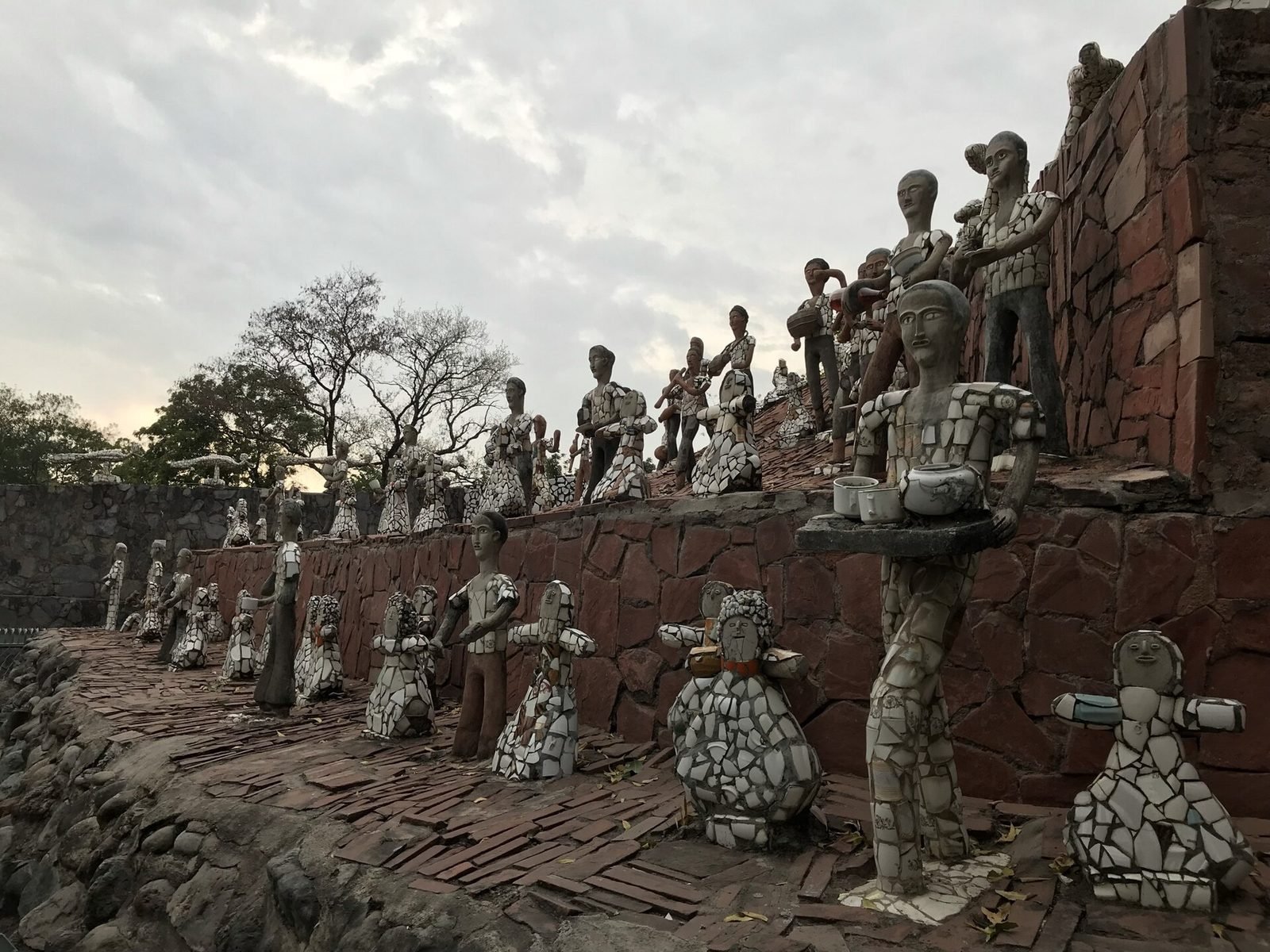
Sector 17 Plaza, Elante at the Industrial Area, Sukhna Lake, the Rock Garden, the Rose Garden, Leisure Valley and the Capitol Complex that UNESCO listed. The Sector 16 cricket stadium, the PCA stadium in Mohali and the new one at Mullanpur, the Lake Club and the golf course in Sector 6 are the leisure anchors; the city's tree cover and cycle tracks are the reason people retire here.
The civic realities
- Parking: the grid was designed for a city of cars that had none. Sector markets and the older residential sectors are parked out; a house without a driveway or a flat without a slot sells at a visible discount.
- Water and power: canal-fed water and reliable supply are a Chandigarh advantage; summer pressure drops in the upper floors of the southern sectors and in Manimajra are the exception.
- Drainage: the N-choe and Patiala Ki Rao seasonal streams flood their banks in heavy monsoons; the Sukhna catchment and the Zirakpur edge are the pockets to check.
- Air: stubble smoke from October to November, and construction dust from the periphery; cleaner than Delhi, worse than its reputation.
- Traffic: Tribune Chowk, Transport Chowk, the PGI light point and the Zirakpur junctions are the morning bottlenecks; the periphery's growth has put more cars on the grid than it was built for.
- Bureaucracy: the Estate Office is methodical and slow; building-plan sanctions, need-based change approvals and leasehold conversions take months, and every misuse notice or unauthorised construction shows up when you try to sell.
07Climate and How to Build for It
Chandigarh has the north Indian plain's climate softened by the Shivaliks: hot, wet and cold in turn, and greener than anywhere else on the plain.
Summer is April to June with 40 to 44°C and dry heat, broken by dust storms. Monsoon runs July to mid-September with 1,000 to 1,100 mm, the heaviest of any city on the plains, delivered in bursts that overwhelm the storm drains in the southern sectors and flood Zirakpur. Winter from December to February brings 3 to 8°C nights and fog that delays flights and shuts the Kalka road. Stubble season in late October and November is the fifth season.
What it means for a buyer or builder
- The grid's north-south orientation means most houses face east or west; a plot with its living rooms facing north or east commands a premium in a city where June afternoons hit 44°C.
- Terrace waterproofing and the condition of the parapet matter more than any kitchen; the monsoon finds every crack in a 1970s house.
- In the southern sectors and anywhere near the choes, check the basement and the rainwater drainage of the plot; the 2023 monsoon flooded houses that had never flooded before.
- Insulation, double glazing and rooftop solar pay back fast because both summer cooling and winter heating drive consumption, and the UT's net-metering is well run.
- The heritage sectors restrict facade changes, so energy retrofits happen inside the envelope; budget for that when buying an old kothi to modernise.
08Landmarks, Tourism and the Hospitality Angle
Chandigarh's identity is its architecture and its green, and its tourism is day trips, weddings and conferences rather than long stays.
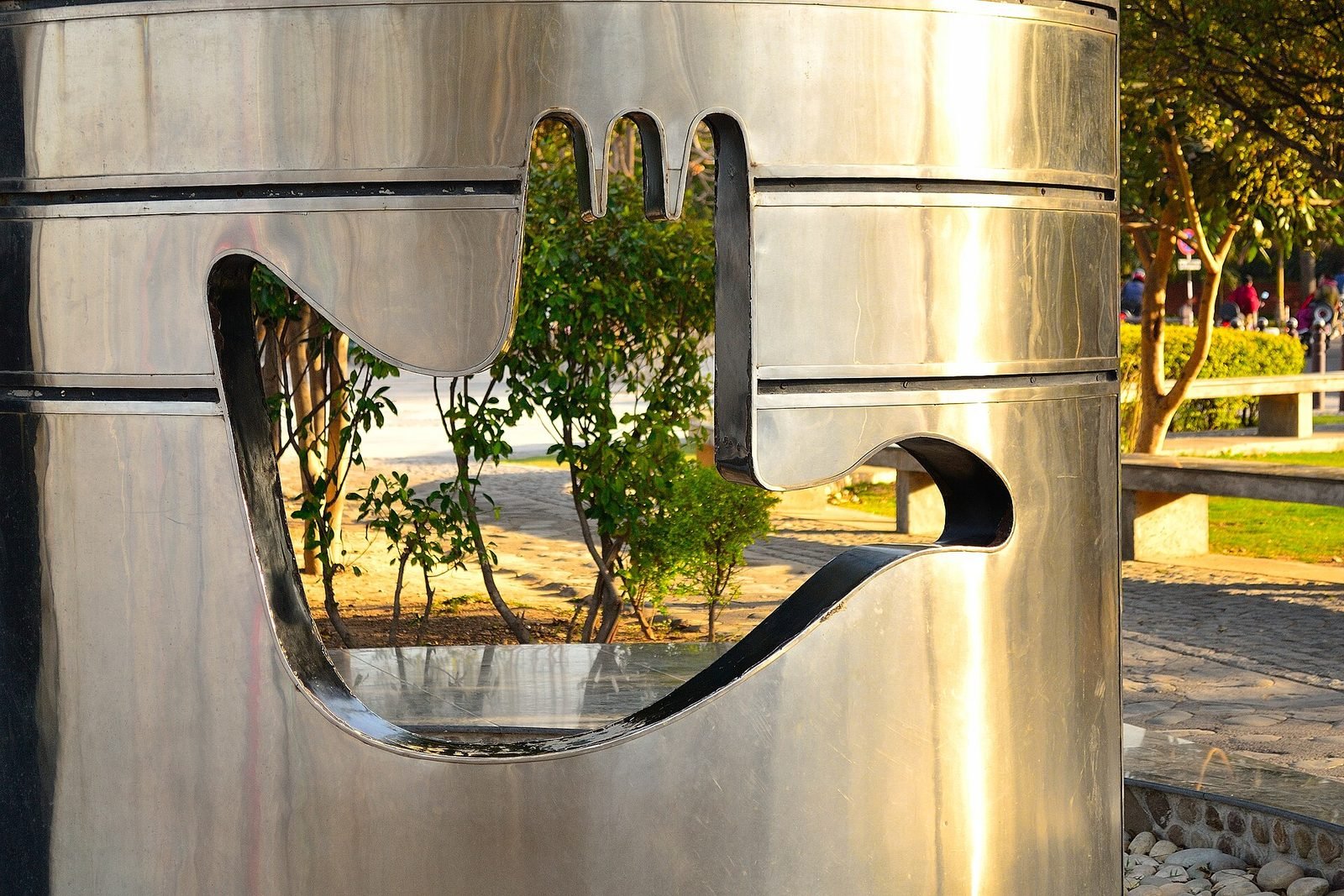
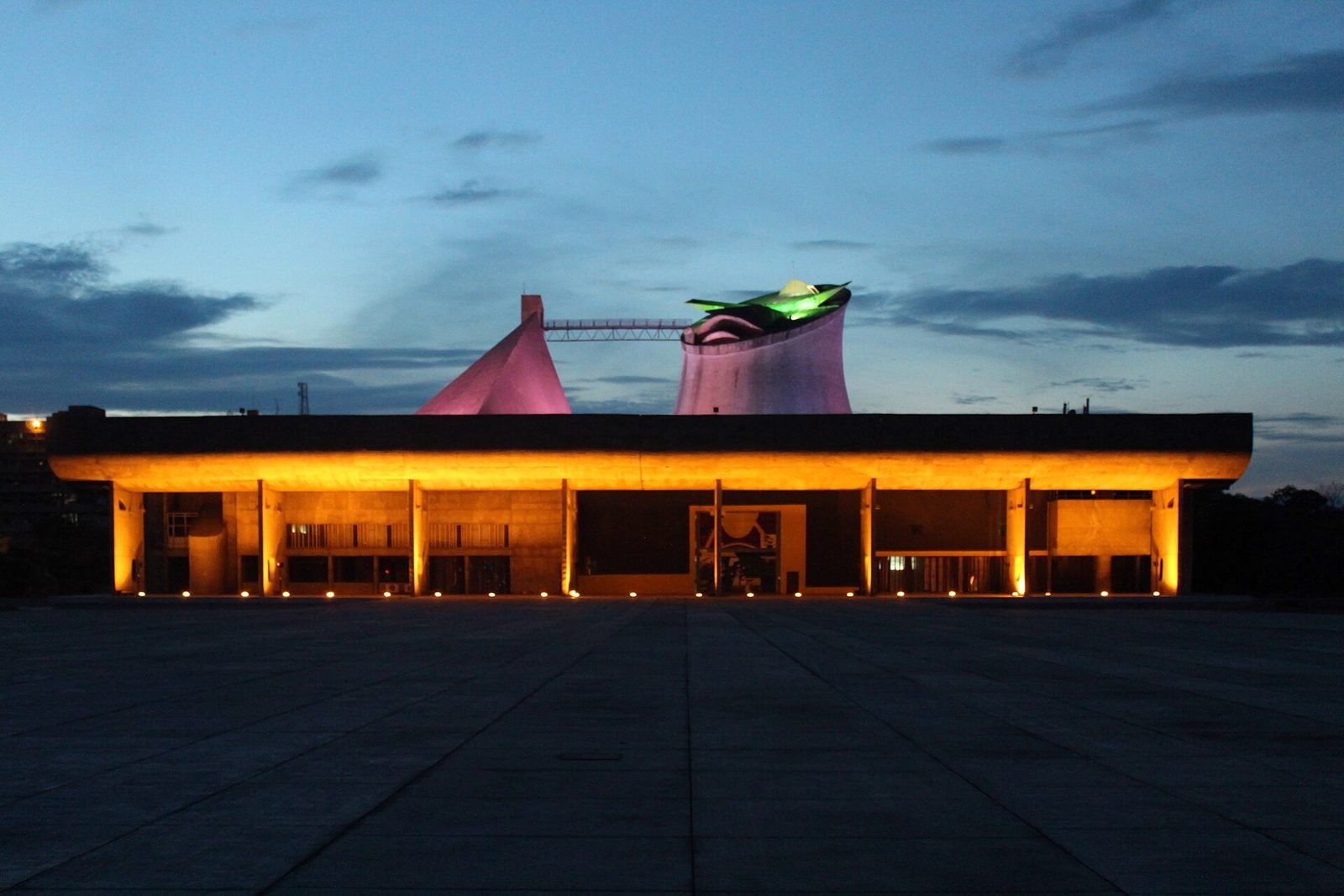
- The Capitol Complex: the High Court, Secretariat, Assembly and the Open Hand, UNESCO-listed as part of Le Corbusier's work; a guided-tour attraction that anchors the Sector 1 end of the city.
- Sukhna Lake and the Rock Garden: the city's two most visited places, and the reason Sectors 1 to 7 and the Kaimbwala side carry a view premium.
- The Rose Garden, Leisure Valley and the Sector 17 Plaza: the public realm the city was designed around; Sector 17's hotels and the Plaza's restaurants are the hospitality core.
- Elante and the Industrial Area: the mall, the JW Marriott and the hotel belt that grew out of converted industrial plots; the Tricity's wedding and conference economy lives here and in the Zirakpur banquet strip.
- Chhatbir Zoo, Pinjore Gardens, Morni and Kasauli: the weekend circuit within 90 minutes, which is why the Kasauli–Dharampur road and the Morni foothills are the Tricity's second-home belt.
- The PCA stadiums in Mohali and Mullanpur, which fill hotels on match days and anchor the Airport Road and New Chandigarh hospitality demand.
The practical takeaway: hospitality property inside the UT is a converted-industrial-plot and Sector 17 hotel story, scarce and expensive; the liquid hospitality plays are the Zirakpur banquet strip, Airport Road hotels and the Kasauli weekend-home belt across the border.
Photos: ShashankSharma2511, CC BY 3.0, via Wikimedia Commons · Slyronit, CC BY-SA 4.0, via Wikimedia Commons · Shanmugamp7, CC BY-SA 3.0, via Wikimedia Commons
09Legal Checks, Stamp Duty and Property Tax: Chandigarh Specifics
Chandigarh's paperwork is cleaner than any neighbouring state's and stricter about what you may do with what you buy. The pitfalls are tenure, the heritage rules and unauthorised changes.
Who approves what
The UT Estate Office is the landlord of the city: it allots, converts, sanctions building plans in the sectors and issues misuse and violation notices. The Chandigarh Housing Board owns and allots its flats and controls their transfer. The Municipal Corporation handles property tax and services. RERA Chandigarh registers the few new projects, mostly CHB and cooperative schemes. The Chandigarh Master Plan 2031 and the Chandigarh (Sale of Sites and Building) Rules govern use, floor area and subdivision.
Freehold and leasehold
Residential sites were sold freehold in the early decades and leasehold later; the UT allows conversion of leasehold residential property to freehold on payment of conversion charges, and a converted title is what most buyers now insist on. Commercial sites are largely leasehold with ground rent and transfer conditions. CHB flats come with their own allotment letters, transfer permissions and, for some categories, a lock-in. Cooperative society flats need the society's transfer approval and a share-certificate transfer on top of the sale deed.
The apartment ban
The Supreme Court's 2023 ruling in the Residents' Welfare Association case ended the sale of plotted houses floor by floor to separate owners in the heritage sectors, Sectors 1 to 30, and the UT has since refused to register such deeds. Floors in those sectors can be rented, not sold separately. For the rest of the city, check the current Estate Office position before you buy a single floor of a house; a deed the office will not register is not an asset.
The due-diligence checklist
- Allotment letter and conveyance deed from the Estate Office or CHB, with the tenure, conversion status and any ground rent or lease conditions.
- Sanctioned building plan and completion certificate, compared against the house as it stands; unauthorised floors, covered courtyards and basements under the setback are the common violations and the Estate Office compounds or demolishes them.
- Misuse and violation notices on record, and their settlement.
- Need-based changes regularised under the UT's policy, with the fee paid and the approval on file.
- Heritage-sector restrictions on subdivision, dwelling units and facade in Sectors 1 to 30.
- Society or CHB transfer permission for flats, plus no-dues from the society and the Municipal Corporation.
- Encumbrances and litigation through a sub-registrar search and a court check; family partition disputes are the commonest cloud on old Chandigarh titles.
Stamp duty and registration
Chandigarh charges around 5 percent stamp duty plus a 1 percent registration fee, with a concession for women buyers that has changed over the years; confirm the live figure at the sub-registrar. Duty is paid on the higher of the sale price and the collector rate, and the UT's collector rates were revised upward recently for the northern sectors in particular. Deals here are more formal than across the border; the cash component that still exists in Punjab and Haryana is smaller in the UT.
Property tax
The Municipal Corporation levies property tax on residential and commercial property on an area basis, with concessions for self-occupied houses and rebates for early payment. It is low; the costs that matter are ground rent on leasehold sites, conversion charges, society charges and the Estate Office's compounding fees for any past violation.
Units you will hear
Chandigarh quotes houses in kanal and marla: one kanal is 500 sq yd in the city's own usage, one marla 25 sq yd, so a "10-marla house" is 250 sq yd and a "2-kanal" is 1,000 sq yd. Flats are quoted in sq ft of built-up area. The city also speaks in sector numbers more than in localities: "the 30s" means Sectors 30 to 38 and carries a price band of its own.
Rates on this page are indicative asking prices gathered from transactions and listings Mr. Homez handled or reviewed. They change with every quarter and every collector-rate revision. Stamp duty, cess and tax rules are summarised from government notifications current at the time of writing; confirm the live figures with the sub-registrar before you commit money. This is market commentary, not legal or investment advice.