
01Ground Reality: A Market Built on Remittances, Not Jobs
Kerala's property market does not behave like any other state's, because its money does not come from where the houses are. A third of the state's economy is remittances from the Gulf, and for fifty years those remittances have gone into one thing first: a house on the family plot. That is why Kerala has more large houses per head than anywhere in India, why Malappuram and Kannur villages have three-storey homes with no one in them for ten months, and why the apartment market is young, thin and concentrated in three cities.
The jobs that do exist are in Kochi, Thiruvananthapuram and Kozhikode. Kochi has Infopark and SmartCity's IT payroll, the Cochin Shipyard, the Vallarpadam container terminal, the refinery at Ambalamugal and the state's business community; Thiruvananthapuram has the government, Technopark, ISRO's VSSC and now the Vizhinjam deep-water port; Kozhikode has trade, Cyberpark and the north's Gulf families. Everywhere else, the economy is rubber, spices, coconut, cashew, tourism, education and the remittance cheque, and the property market is plots by the cent and houses built over ten years.
What changed in the last five years: Vizhinjam opened as India's first deep-water transshipment port and started re-pricing the capital's southern side; the NH-66 six-laning, the largest road project in the state's history, tore up the coast from Kasaragod to Thiruvananthapuram; Kochi Metro reached Kakkanad's doorstep; the 2018 floods and the 2024 Wayanad landslides made every buyer ask about elevation and slope; and the state raised fair values, kept its 10 percent combined registration cost and watched its young people leave for Canada and Australia in numbers that have started to matter for who will live in all those houses. Kochi's good micro-markets rose 25 to 40 percent; the rest of the state moved less.
The honest caution: Kerala's constraints are land classification and water. The 2008 paddy-land and wetland law makes a large share of the state's flat land unbuildable without conversion, the 2018 floods marked the floodplains for a generation, and the state's demographics mean the resale market for a village house is thinner every year. Buy in the cities, buy on dry land, and check the data bank before the plot.
02Location and Macro Infrastructure: One Highway, Four Airports and a New Port
Kerala is 580 km long and rarely 100 km wide, so its infrastructure is one coastal corridor with the Ghats behind it, and property values follow the corridor's upgrades.
Roads
- NH-66. The coastal highway from Kasaragod through Kannur, Kozhikode, Thrissur, Kochi, Alappuzha and Kollam to Thiruvananthapuram is being six-laned end to end at a cost of over ₹50,000 crore; most reaches are under construction and the first are open. Every town on it is being re-priced, and the service roads and interchanges are the land plays.
- NH-544 Kochi to Palakkad and the Coimbatore gap, the state's industrial and freight link to Tamil Nadu and the Kochi–Bengaluru industrial corridor's spine; NH-85 Kochi to Munnar and the high ranges; NH-183 through Kottayam to Sabarimala.
- Thiruvananthapuram's outer ring road and the Vizhinjam port connectivity roads, which will open the capital's south and east; Kochi's bypass and the Seaport–Airport Road, the city's growth axis through Kakkanad.
Ports and airports
Vizhinjam International Seaport near Thiruvananthapuram is India's first deep-water transshipment port, operational, and the state's biggest economic project; it is re-pricing Vizhinjam, Balaramapuram, Nemom and the capital's southern suburbs. Cochin Port and Vallarpadam carry the state's container trade. Four international airports, Kochi at Nedumbassery, Thiruvananthapuram, Kozhikode at Karipur and Kannur at Mattannur, serve the Gulf traffic that is the state's lifeline; Kannur's airport re-priced the north's Mattannur–Iritty belt, and the proposed Sabarimala airport at Erumeli is a long-dated option.
Rail, metro and water
Kochi Metro runs from Aluva through the city to Thripunithura, with Phase 2 to Kakkanad's Infopark under construction; it is Kochi's biggest internal catalyst. The Kochi Water Metro links the islands and the backwater suburbs and is a genuine transit innovation. The Thiruvananthapuram–Kasaragod SilverLine semi-high-speed rail was shelved after land protests; price it at zero. Vande Bharats link the state's cities, and the coastal line's doubling is the realistic rail upgrade.
03Micro-Markets and What Sells: City by City
Fourteen cities, four tiers, three apartment markets and eleven plot-and-house markets. Rates are indicative asking prices from recent deals and listings; Kerala quotes flats by the sq ft of super built-up area and land by the cent, with 100 cents to the acre.
| City | Tier | What actually sells | Indicative rates (current) |
|---|---|---|---|
| Kochi | 2 | Apartments at every price, villas in gated projects, plots by the cent, IT offices, co-working, showrooms, warehouses near the port | Flats ₹4,500–14,000/sq ft by locality; land ₹5–40 lakh/cent |
| Thiruvananthapuram | 2 | Apartments, independent houses, plots, Technopark-belt rentals, port-side land | Flats ₹4,500–10,000/sq ft; land ₹4–30 lakh/cent |
| Kozhikode | 2 | Apartments, houses, plots, trading shops, Gulf-money villas | Flats ₹4,000–6,500/sq ft; land ₹3–25 lakh/cent |
| Thrissur | 3 | Flats, houses, plots, jewellery showrooms, Guruvayur hospitality | Flats ₹3,500–5,500/sq ft; land ₹2–20 lakh/cent |
| Kollam | 3 | Flats, houses, plots, cashew sheds, backwater resort land | Flats ₹3,000–5,000/sq ft; land ₹2–15 lakh/cent |
| Kannur | 3 | Flats, Gulf-money houses, plots, airport-belt land | Flats ₹3,500–5,500/sq ft; land ₹2–18 lakh/cent |
| Palakkad | 3 | Plots, houses, flats, Kanjikode industrial sheds, farm land | Flats ₹3,000–4,500/sq ft; land ₹1.5–12 lakh/cent |
| Alappuzha | 3 | Flats, houses, backwater resort and homestay land, coir sheds | Flats ₹3,000–4,500/sq ft; land ₹2–15 lakh/cent |
| Kottayam | 4 | Houses, plots, flats, student rentals, Kumarakom resort land | Flats ₹3,000–4,500/sq ft; land ₹2–12 lakh/cent |
| Malappuram | 4 | Houses and plots built on remittances, shops, little apartment supply | Land ₹2–15 lakh/cent |
| Thalassery | 4 | Houses, plots, heritage property | Land ₹2–12 lakh/cent |
| Pathanamthitta | 5 | NRI houses, plots, Sabarimala hospitality | Land ₹1–8 lakh/cent |
| Thodupuzha (Idukki) | 5 | Plots, houses, spice and rubber land, Munnar resort land | Land ₹1–8 lakh/cent; estates by the acre |
| Kasaragod | 5 | Plots, Gulf-money houses, Bekal resort land | Land ₹1–8 lakh/cent |
Kochi
Kochi is the only Kerala city where apartments outsell houses. Marine Drive, Panampilly Nagar and the MG Road belt are the premium at ₹10,000 to 14,000 per sq ft, with the waterfront towers the state's most expensive flats. Kakkanad, with Infopark, SmartCity and the Metro's Phase 2, is the IT belt and the city's largest apartment supply at ₹5,500 to 8,000. Edappally, Vyttila, Kadavanthra and Palarivattom are the established mid-market at ₹6,000 to 9,000 on the Metro line and the bypass. Aluva, Kalamassery and Angamaly are the airport-side affordable belt at ₹4,500 to 6,500. Tripunithura, Maradu and the Kumbalam islands are the south, where the Maradu demolitions of CRZ-violating towers are the reference event. Fort Kochi and Mattancherry are heritage and hospitality. Plots sell by the cent across the metro area, and the paddy-land data bank decides which ones can be built on.
Thiruvananthapuram
Kowdiar, Sasthamangalam, Pattom and Vazhuthacaud are the old establishment at ₹7,000 to 10,000 per sq ft; Kazhakkoottam, Technopark's belt and Kulathoor are the IT and university side at ₹4,500 to 7,000; Vizhinjam, Balaramapuram, Nemom and the Kovalam road are the port and outer-ring-road story, the state's best land play for the decade; Attingal and the northern NH belt are the affordable edge. The capital's government payroll keeps rents steady, and the port adds a logistics economy the city never had.
Kozhikode, Kannur and the north
Kozhikode's Mavoor Road, Chevayur, Thondayad and the bypass belt carry the flats; Cyberpark, the medical college and the city's trading families are the economy; the beach and the Kappad side are hospitality. Kannur's airport at Mattannur, the handloom trade and the Gulf families drive a plot-and-villa market with flats appearing in the town. Thalassery, Malappuram and Kasaragod are the remittance belt: houses on family land, shops in the towns and the Bekal resort strip at the northern end.
Thrissur, Palakkad and the centre
Thrissur is the gold and jewellery capital with Kalyan, Joyalukkas and the temple economy of Guruvayur; its flats are mid-market and its plots are priced by distance from the Swaraj Round. Palakkad is the gap to Tamil Nadu, with the Kanjikode industrial belt, rice and the Coimbatore link; it is the state's only inland industrial land market.
The backwaters and the hills
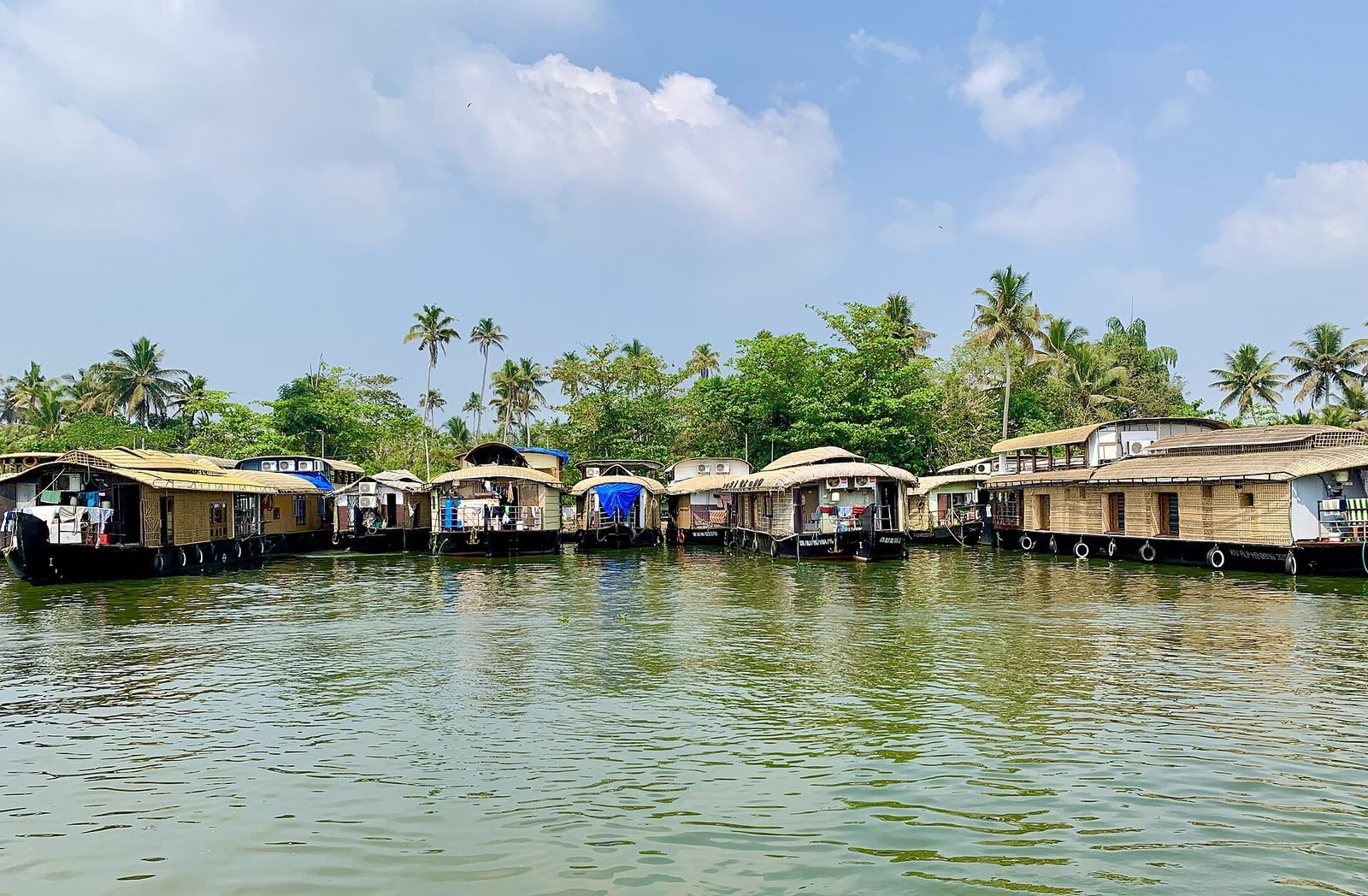
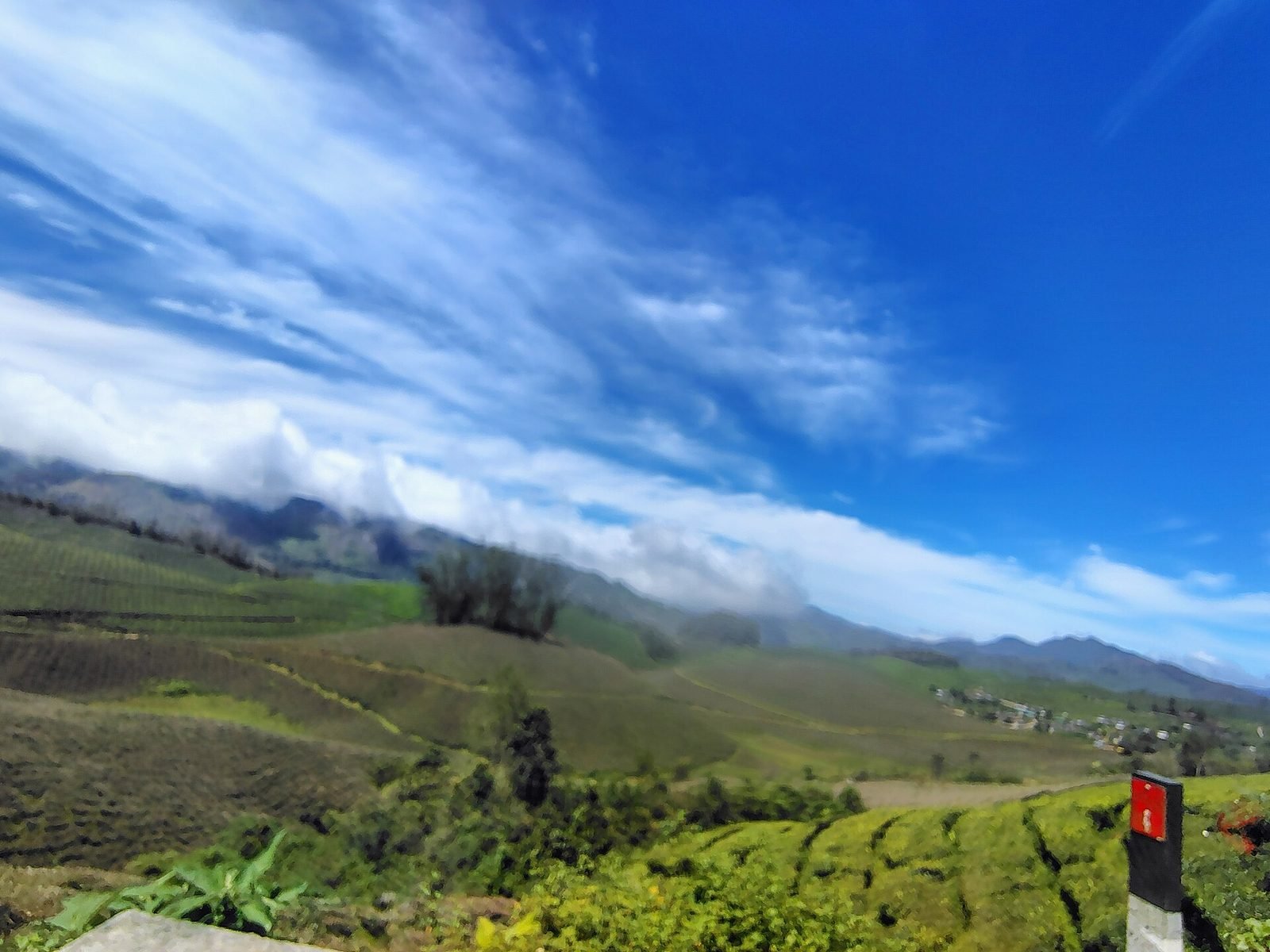
Alappuzha and Kottayam are coir, rubber and the backwater tourism of Kumarakom and the houseboat yards; resort and homestay land along the water is the asset, under CRZ and wetland rules. Idukki and the Munnar belt are spice and tea estates with resort land that carries plantation-tenure and forest rules; Pathanamthitta is Sabarimala's pilgrim economy and NRI houses in a district whose population is falling.
Who buys, and in what bracket
- Under ₹50 lakh: Aluva, Kalamassery and Kazhakkoottam 2 BHKs, flats in Thrissur, Kollam and Kannur, village plots by the cent; young professionals, returning Gulf workers, first-time buyers.
- ₹50 lakh to ₹1.5 crore: Kakkanad, Edappally and Vyttila 3 BHKs, Technopark-belt flats, Kozhikode's bypass belt, house plots in the city suburbs; the IT and government middle class, Gulf NRIs.
- ₹1.5 crore to ₹4 crore: Marine Drive and Panampilly apartments, Kowdiar flats, gated villas in Kakkanad and Kazhakkoottam, resort land on the backwaters; business families, senior NRIs, doctors.
- Above ₹4 crore: waterfront penthouses in Kochi, heritage houses in Fort Kochi and Thalassery, Munnar and Kumarakom resort estates; promoters, hoteliers and the diaspora's top end.
04Industry and Employment: What Pays the EMIs
The Gulf
Two million Keralites work in the Gulf and their remittances, around a third of the state's economy, are the single largest source of property money. They build houses first, then buy flats in the cities for retirement, and their return migration after the pandemic and the Gulf's nationalisation drives is the demographic story that shapes every village market.
Kochi: IT, shipping, refining and trade
Infopark and SmartCity at Kakkanad with TCS, Wipro, Cognizant, IBS and the start-ups; Cochin Shipyard; the BPCL refinery at Ambalamugal; the Vallarpadam terminal and the port; Lulu's headquarters, the Muthoot and Manappuram gold-loan groups and the state's trading houses; the Kochi Biennale and the hospitality trade. Kochi's rental market is the state's deepest because its tenants are spread across all of them.
Thiruvananthapuram: government, Technopark, space and the port
The secretariat and the state's public sector, Technopark's three phases with UST, Infosys, TCS and Allianz, ISRO's Vikram Sarabhai Space Centre and the IISER, and now Vizhinjam's port and the logistics it brings.
Kozhikode, Kannur and the north
Trade, timber and the Malabar business families; Cyberpark and the medical college; the Kannur airport, handloom and the KINFRA parks; the Gulf families' money across Malappuram and Kasaragod.
Plantations, fisheries and the small industries
Rubber in Kottayam and the central hills, spices and tea in Idukki and Wayanad, coconut and coir in Alappuzha, cashew in Kollam, fisheries along the coast, gold and jewellery in Thrissur, the Kanjikode industrial belt in Palakkad, Ayurveda and the state's hospitals that draw patients from the Gulf and the north. KSIDC and KINFRA allot industrial land in parks across the state on leasehold terms; the single window is the K-SWIFT portal.
Tourism
Munnar, Alappuzha's houseboats, Kumarakom, Kovalam and Varkala, Fort Kochi, Wayanad, Thekkady and Bekal draw domestic and foreign tourists in the millions, and homestays, resorts and Ayurveda centres are the hospitality market; the state's homestay classification scheme is the legal route by which a family house earns.
05What Changes in the Next 3 to 7 Years
- Vizhinjam port scaling up. The transshipment volumes, the logistics parks and the outer ring road re-price the capital's southern and eastern suburbs; the strongest catalyst in the state.
- NH-66 six-laning completion. Every coastal town from Kasaragod to Thiruvananthapuram becomes an hour closer to the next; the interchanges and service roads are the land plays, and the towns that lose their bypassed highway frontage lose value.
- Kochi Metro Phase 2 to Kakkanad and the Water Metro's expansion, which tie the IT belt and the islands into the city.
- The Kochi–Bengaluru industrial corridor's Palakkad node and the KINFRA parks, which give the state an industrial land market it has mostly lacked.
- Kannur airport maturing and the Sabarimala airport if it is built; the north's Gulf traffic and the pilgrim economy are the beneficiaries.
- Fair-value revisions and the registration-cost debate; any cut in the 10 percent combined cost would release years of pent-up resale, and the state has discussed it.
- Climate zoning after the 2018 floods and the 2024 landslides, which marks the floodplains and the unstable slopes and lifts the compliant, elevated stock.
- Demographics: an ageing population and emigration to Canada, Australia and Europe thin the resale market for village houses and concentrate demand in the three cities.
What this means for appreciation: Kochi's waterfront and Kakkanad are mature; the headroom is on the Metro's Phase 2 alignment, in Aluva and Angamaly near the airport, and in Thiruvananthapuram's port belt, the best land play in the state. Kozhikode moves with Gulf money and the highway. The village and small-town markets move with remittances and slowly; buy there to live, not to flip.
06Civic Life: The Best Human Development in India, and the Wettest
Healthcare
Amrita, Aster Medcity, Lakeshore, Renai and Lisie in Kochi; KIMS, SUT and the medical college in Thiruvananthapuram; Baby Memorial and MIMS in Kozhikode; Jubilee Mission in Thrissur; the state's public health system is the best in India and its Ayurveda centres draw patients from abroad.
Education
IIM Kozhikode, NIT Calicut, IISER and IIST in Thiruvananthapuram, CUSAT and the Kerala university belt, the medical and nursing colleges that staff hospitals worldwide; schooling is the state's export and the reason its families leave.
Retail and recreation
Lulu Mall in Kochi and Thiruvananthapuram, Oberon and Centre Square; the Kochi Biennale, Fort Kochi's cafés, the backwaters, Munnar, Varkala and the beaches; the Jawaharlal Nehru stadium and the state's football culture; Onam, Thrissur Pooram and the temple festivals.
The civic realities
- Floods and landslides: the 2018 floods inundated Aluva, Paravur, Chengannur and Kuttanad; the 2024 Wayanad landslides and the recurring Idukki and Malappuram slides are the reference events. Elevation, the floodplain maps and the slope above a plot are the first checks.
- Water: abundant but polluted; wells are the norm outside the city cores and the monsoon contaminates them. Check the well and the drainage.
- Humidity and mould: everything rots; maintenance is the real cost of a Kerala house, and a house left empty for ten months a year costs more than one lived in.
- Traffic: Kochi's Vyttila and Edappally junctions, the NH-66 construction zones and the narrow village roads; the Metro and the highway are the fixes in progress.
- Power: KSEB supply is reliable; outages follow the monsoon.
- Approvals: the Kerala Municipality Building Rules and the Panchayat rules are detailed and enforced; the paddy-land data bank, CRZ and the hill-area rules decide what a plot can become. Kochi's Maradu demolitions are the reminder that a permit can be revoked.
07Climate and How to Build for It
Kerala is wet, humid and warm all year, with two monsoons, a coast that erodes and hills that slide.
Summer is March to May at 32 to 36°C with high humidity; the south-west monsoon from June to September brings 2,000 to 3,500 mm, the north-east monsoon in October and November adds more, and the state totals 3,000 mm in a normal year and far more in the Ghats. There is no winter; December and January are the dry, pleasant season. Cyclones and storm surges hit the coast, and the 2018 floods and the Wayanad landslides are the design cases.
What it means for a buyer or builder
- Sloped roofs with wide overhangs, Mangalore tiles or sheet over a waterproofed slab; a flat roof in Kerala is a leak with a schedule.
- Plinth height and elevation above the nearest canal or paddy; the 2018 water line is known house by house in the floodplain districts.
- Termite treatment, rot-resistant timber or steel for doors and windows, and anti-fungal finishes; the humidity destroys cheap interiors in two monsoons.
- Cross-ventilation and shaded verandahs matter more than air-conditioning; the traditional nalukettu with its courtyard was climate engineering.
- On the coast, CRZ and erosion lines decide what may be built; in the hills, the slope, the drainage and the landslide maps decide whether it should be.
- Rooftop solar pays back in the dry season and KSEB's net-metering is reasonable; rainwater harvesting is mandatory for larger buildings and worth having everywhere.
08Landmarks, Tourism and the Hospitality Angle
Kerala is India's best-marketed tourism state and its hospitality property is the most varied, from houseboats to tea-estate bungalows.
- The backwaters: Alappuzha's houseboats, Kumarakom's resorts and Ashtamudi at Kollam; resort and homestay land along the water, under CRZ and wetland rules.
- Munnar and the high ranges: tea estates, Eravikulam and the Thekkady wildlife sanctuary; estate bungalows and resort land that carry plantation-tenure and forest rules.
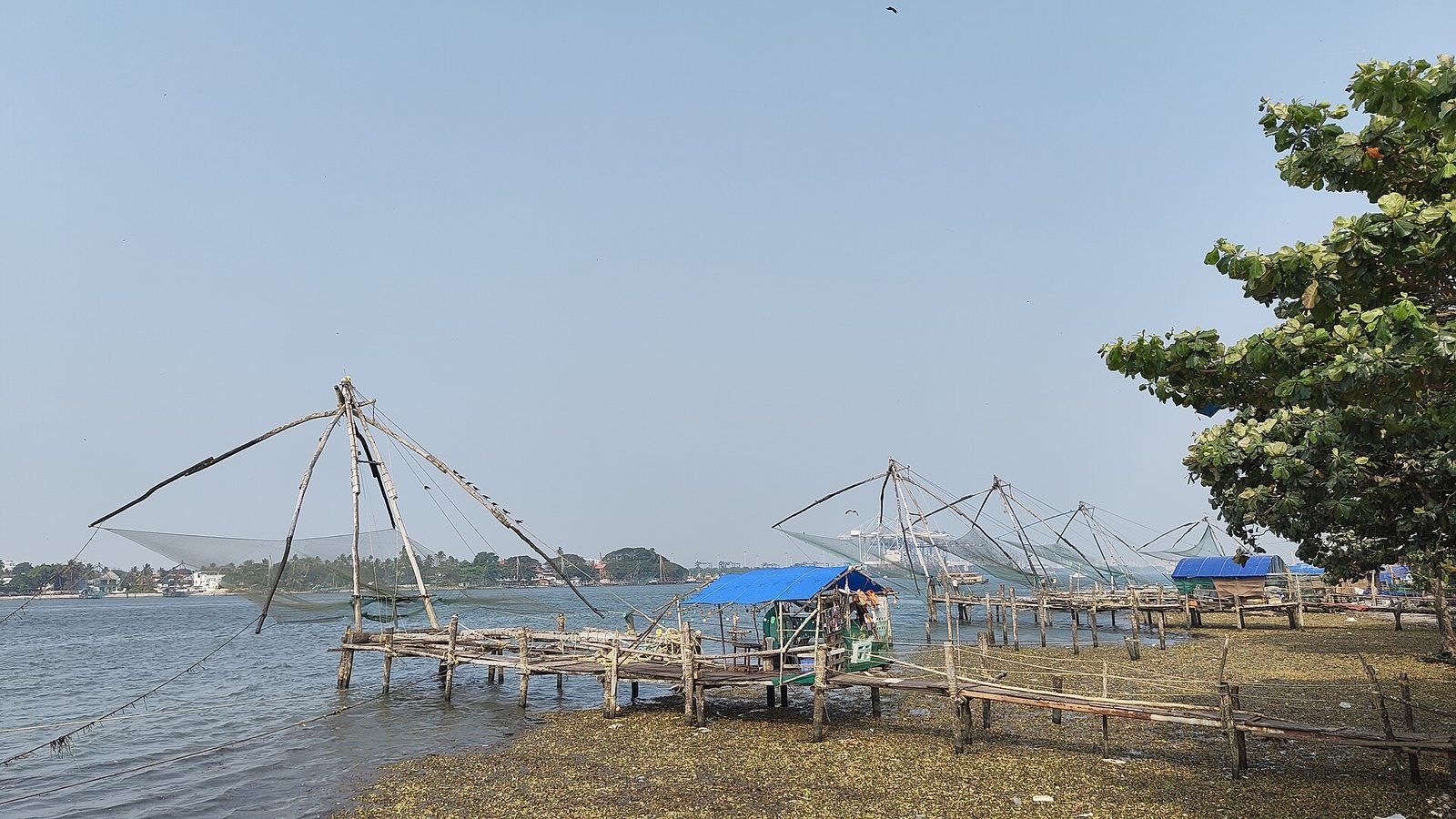
- Fort Kochi and Mattancherry: the Chinese fishing nets, the Dutch Palace, the synagogue and the Biennale; heritage hotels and cafés in a conservation zone.
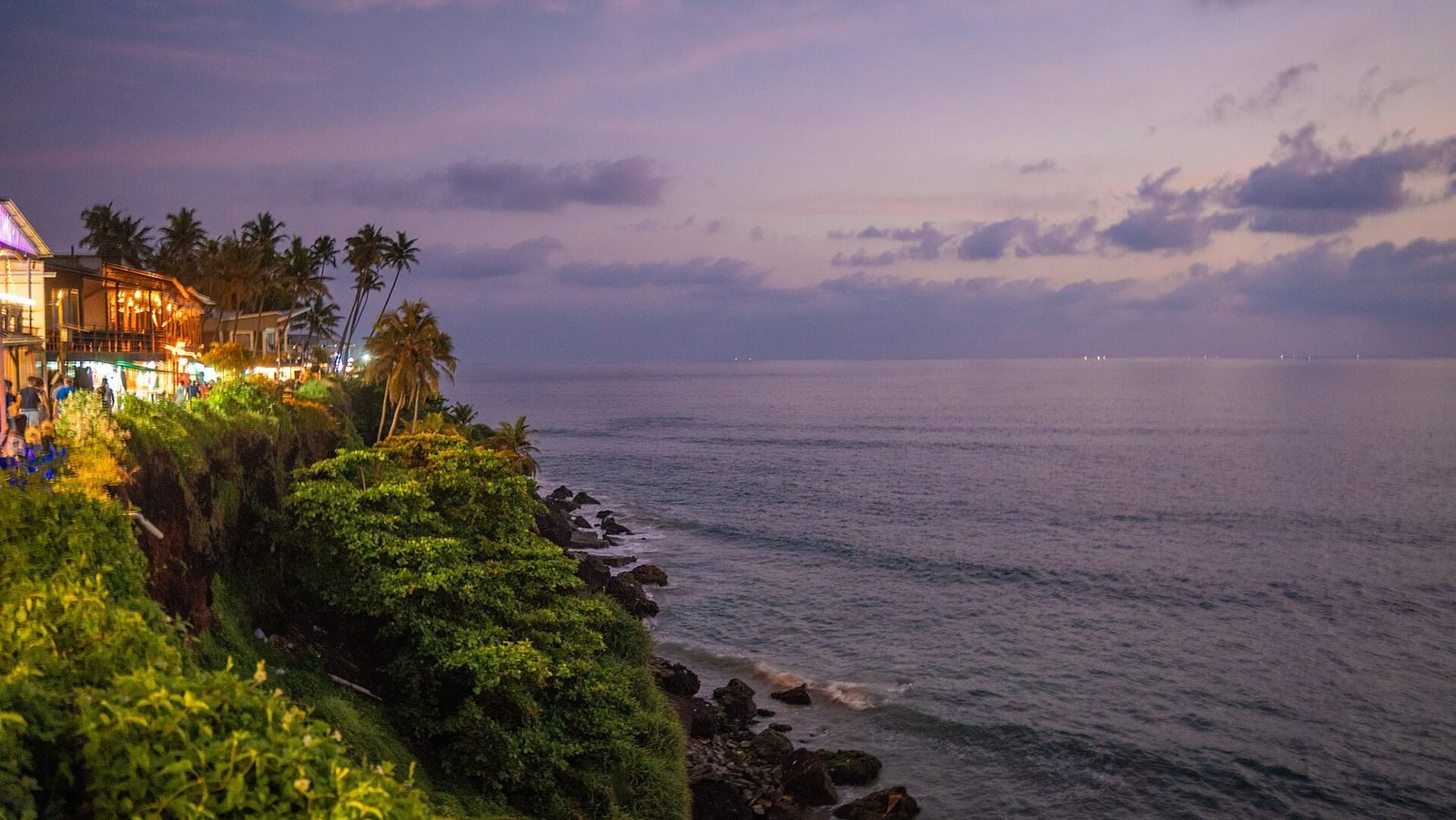
- Kovalam, Varkala and the beaches: the capital's resort coast and the cliff at Varkala; hotel land under CRZ.
- Wayanad, Bekal and the north: the plantation hills, Edakkal and the resorts; Bekal fort and the northern beach belt.
- Sabarimala, Guruvayur and the temples: pilgrim economies at Pathanamthitta, Thrissur and the Sree Padmanabhaswamy temple in the capital; dharamshala and lodge markets that run on the calendar.
- Ayurveda: the state's wellness tourism, with resorts and hospitals from Kovalam to Kozhikode that draw the Gulf and Europe.
The practical takeaway: licensed homestays and backwater resorts are how a Kerala family makes land pay; Fort Kochi heritage property and Munnar estate land are specialist buys with heavy rules; Wayanad's resort market is a post-landslide caution. The state's hospitality boom is real and its building rules are stricter than its marketing suggests.
Photos: Manukrishnan80, CC BY-SA 3.0, via Wikimedia Commons · Ranjithsiji, CC BY-SA 4.0, via Wikimedia Commons · Krissubh, CC BY-SA 4.0, via Wikimedia Commons
09Legal Checks, Stamp Duty and Property Tax: Kerala Specifics
Kerala's paperwork turns on land classification, the fair value and the building rules. The losses come from buying paddy land as a house plot and from the 10 percent registration bill on a property that then cannot be sold.
Who approves what
The corporations and municipalities sanction building plans under the Kerala Municipality Building Rules and the panchayats under the Panchayat rules; the Greater Cochin Development Authority and the Thiruvananthapuram Development Authority plan their regions; the Revenue Department holds the land records on the ReLIS and e-Rekha portals with the thandaper, the survey number and the possession certificate; the Agricultural Officer and the Revenue Divisional Officer handle paddy-land conversion; the Coastal Zone Management Authority enforces CRZ; K-RERA registers projects above the usual thresholds. KSIDC and KINFRA allot industrial land.
The paddy-land and wetland rule
The Kerala Conservation of Paddy Land and Wetland Act of 2008 froze the state's paddy fields and wetlands as recorded in the village data bank; land in the data bank cannot be filled or built on. Land that was paddy in the revenue records but was filled before 2008 can be regularised and converted under the Act's Section 27A on payment of a fee, with limits on size and purpose; land still in the data bank cannot. A plot sold as "dry land" that is paddy in the records cannot get a building permit or a bank loan, and the state's revenue department checks. Insist on the data-bank status and the land's classification in the basic tax register before you pay a token.
The due-diligence checklist
- Title deed chain for 30 years, the thandaper and possession certificate from the village office and the encumbrance certificate from the sub-registrar; Kerala's joint-family partitions and the old tharavad holdings cloud many titles.
- Land classification in the basic tax register and the paddy-land data bank, with the conversion order where the land was reclassified.
- Building permit and completion certificate under the municipal or panchayat rules, with the plan matching what was built; the rules on setbacks, floor area and coverage are enforced and deviations block the occupancy certificate.
- K-RERA registration for projects, with the promoter's record and the carpet-area table.
- CRZ, wetland, forest and hill-area status; the Maradu demolitions and the Wayanad landslides are the reference cases, and the 2018 flood maps are public.
- Plantation and estate tenure for land in Idukki, Wayanad and the high ranges, where the Land Reforms Act's plantation exemptions and the forest rules apply.
- Society or association transfer for flats, with no-dues, and the luxury-tax and property-tax receipts for larger houses.
Agricultural land
Anyone can buy agricultural land in Kerala within the ceiling of the Land Reforms Act, and there is no farmer-only rule; NRIs and OCIs cannot buy agricultural land, plantations or farmhouses under FEMA, though they may inherit. The constraint is classification, not eligibility: dry land, called purayidam, can be built on with a permit; paddy and wetland cannot without conversion, and plantation land carries its own tenure. Converting a rubber or coconut garden to house plots needs the panchayat's layout approval and, for larger layouts, the development authority's.
Stamp duty and registration
Kerala charges 8 percent stamp duty and a 2 percent registration fee on sale deeds, 10 percent combined, the second-highest in India after Tamil Nadu, with no general concession for women. Duty is charged on the higher of the sale price and the fair value, which the state has revised upward across the cities after years of freezes. Concessions apply to family settlements and to some affordable categories. The cost shapes the market: Kerala families hold property for decades and the resale market is thin partly because every sale costs a tenth of the price.
Property tax and the luxury tax
Property tax in the corporations and municipalities is based on plinth area and use and is modest; panchayats charge less. Kerala also levies a one-time luxury tax on houses above about 3,000 sq ft of plinth area, a reminder that the state regards large houses as a vice. The recurring costs that matter are maintenance against the monsoon, caretakers for houses that sit empty and society charges in the Kochi towers.
Units you will hear
Kerala quotes land by the cent, 435.6 sq ft or 40.5 sq m, with 100 cents to the acre, and prices per cent vary from ₹1 lakh in a village to ₹40 lakh on Kochi's waterfront; flats are quoted in super built-up sq ft with the RERA carpet area 20 to 30 percent lower; estates are quoted in acres and hectares. Convert everything to sq m on the revenue record before you agree a price.
Rates on this page are indicative asking prices gathered from transactions and listings Mr. Homez handled or reviewed. They change with every quarter and every collector-rate revision. Stamp duty, cess and tax rules are summarised from government notifications current at the time of writing; confirm the live figures with the sub-registrar before you commit money. This is market commentary, not legal or investment advice.