
01Ground Reality: Indore Runs, Bhopal Walks, the Rest Follows the Roads
Madhya Pradesh is India's second-largest state by area and its property market is concentrated in four cities and one temple town. Indore is the engine: the cleanest city in the country for years running, central India's trading and education capital, an IT and pharma payroll on the Super Corridor, the Pithampur auto belt next door and a Marwari and Jain business community that treats property as a second occupation. Bhopal is the capital, calmer, greener, government-paid and lake-bound. Gwalior and Jabalpur are the north's and the east's regional centres. Ujjain, an hour from Indore, has become the state's most dramatic land story on the back of the Mahakal corridor and the 2028 Simhastha.
The money comes from trade and agriculture first, industry second and government third. Indore's traders in textiles, pharma distribution, grain and the Siyaganj and Chhawni markets, the soybean and wheat wealth of the Malwa and Nimar farmers, the Pithampur plants, the cement and coal economies of the Vindhya and Satpura belts, the state's large public sector and the universities. The diaspora is small; MP money stays in MP and buys plots in approved colonies.
What changed in the last five years: Indore's Super Corridor filled with TCS, Infosys and the IT parks, and its bypass sectors sold out to gated townships; the Delhi–Mumbai Expressway opened through Ratlam, Mandsaur and Jhabua; Ujjain's Mahakal Lok corridor turned a pilgrim town into a land rush with plot prices doubling; the Indore and Bhopal metros went from plans to tracks; the state raised guideline rates and kept its 10.5 percent combined registration cost; and the illegal-colony problem that ringed every city got a regularisation drive and a new colonizer law. Indore's good micro-markets rose 30 to 50 percent; Bhopal less; Ujjain more.
The honest caution: MP's cities are ringed by unauthorised colonies cut from farmland without diversion or a colonizer licence, and the state alternates between regularising and demolishing them. A plot outside an approved colony is a bet on the next amnesty; a plot inside an IDA, BDA or licensed colonizer's scheme is an asset.
02Location and Macro Infrastructure: The Centre of the Map, Finally Connected
Madhya Pradesh sits at the centre of India's road and rail map, and its property values are moving with the expressways that now cross it.
Expressways and highways
- Delhi–Mumbai Expressway. About 245 km through Mandsaur, Ratlam and Jhabua districts, open; it put Ratlam and Mandsaur within five hours of both Delhi and Mumbai and created interchange land markets at Garoth, Jaora and Ratlam.
- NH-46 and NH-52, the Agra–Gwalior–Bhopal–Indore–Mumbai spine, four and six-laned for most of their length; the Gwalior–Bhopal and Bhopal–Indore stretches are the state's busiest corridors.
- Indore–Bhopal expressway, proposed to cut the two cities to under two hours; the Atal Progress-way along the Chambal through Gwalior and Bhind; the Narmada expressway along the river; all at planning or acquisition stage and worth pricing at zero until construction starts.
- NH-30 and NH-45 through Jabalpur, Katni, Satna and Rewa, the Vindhya's cement and coal road; NH-47 Indore to Nagpur through Betul and Chhindwara.
Metro and rail
Indore Metro's first priority corridor is running trials and the ring line through Vijay Nagar, the Super Corridor and the airport is under construction; Bhopal Metro's orange line from AIIMS to Karond is in the same state. Both are the cities' biggest internal catalysts. The Western Dedicated Freight Corridor passes through the state's west and the Eastern through Satna and Katni; Bhopal, Indore, Jabalpur and Gwalior have Vande Bharat and Shatabdi links to Delhi and Mumbai.
Airports
Indore's Devi Ahilyabai Holkar airport is central India's busiest with a growing network; Bhopal's Raja Bhoj, Jabalpur's Dumna with a new terminal, and Gwalior's expanded civil terminal serve the regional cities; Khajuraho serves tourism; Rewa and Satna have new regional airports under the UDAN scheme. Ujjain's proposed airport is a Simhastha promise.
03Micro-Markets and What Sells: City by City
Eighteen cities, four tiers, and a plot culture everywhere outside Indore's and Bhopal's townships. Rates are indicative asking prices from recent deals and listings; MP quotes flats by the sq ft of super built-up area and plots by the sq ft or sq yd, with the collector's guideline rate setting the registration floor.
| City | Tier | What actually sells | Indicative rates (current) |
|---|---|---|---|
| Indore | 2 | Apartments, gated townships, bungalows, IDA and colonizer plots, IT offices, showrooms, Pithampur sheds, warehouses | Flats ₹3,000–8,000/sq ft by corridor; plots ₹25,000–80,000/sq yd |
| Bhopal | 2 | Apartments, BDA plots, bungalows, duplexes, showrooms, Mandideep and Govindpura sheds | Flats ₹3,000–7,000/sq ft; plots ₹20,000–60,000/sq yd |
| Gwalior | 2 | Flats, plots, bungalows, showrooms, Malanpur industrial sheds | Flats ₹3,500–5,000/sq ft; plots ₹15,000–45,000/sq yd |
| Jabalpur | 2 | Flats, plots, bungalows, ordnance-belt rentals, warehouses | Flats ₹3,500–5,000/sq ft; plots ₹12,000–40,000/sq yd |
| Ujjain | 3 | Plots, flats, hotels and dharamshalas, temple-corridor shops | Flats ₹3,000–4,500/sq ft; plots ₹10,000–40,000/sq yd |
| Sagar | 3 | Plots, houses, student rentals, cantonment-side property | Plots ₹8,000–25,000/sq yd |
| Satna | 3 | Plots, houses, cement-belt sheds, warehouses | Plots ₹8,000–25,000/sq yd |
| Ratlam | 3 | Plots, houses, industrial-park land, expressway commercial | Plots ₹8,000–30,000/sq yd |
| Rewa | 4 | Plots, houses, solar-park and airport land | Plots ₹6,000–20,000/sq yd |
| Katni | 4 | Plots, houses, mineral sheds | Plots ₹5,000–18,000/sq yd |
| Singrauli | 4 | Plots, houses, contractor rentals | Plots ₹5,000–18,000/sq yd |
| Burhanpur | 4 | Plots, houses, textile sheds, farm land | Plots ₹4,000–15,000/sq yd |
| Chhindwara | 4 | Plots, houses, orange and coal land | Plots ₹5,000–18,000/sq yd |
| Datia | 5 | Plots, houses, pilgrim lodges | Plots ₹4,000–12,000/sq yd |
| Nagda | 5 | Plots, houses outside the Grasim township | Plots ₹4,000–12,000/sq yd |
| Vidisha | 5 | Plots, houses, Bhopal-fringe land | Plots ₹5,000–15,000/sq yd |
| Damoh | 5 | Plots, houses, farm land | Plots ₹4,000–12,000/sq yd |
| Mandsaur | 5 | Plots, houses, expressway commercial | Plots ₹4,000–15,000/sq yd |
Indore: four corridors
Vijay Nagar, Scheme 54, Scheme 78 and the AB Road belt are the premium at ₹5,500 to 8,000 per sq ft, with the malls, the C21 and Treasure Island strips and the city's professional class. The Super Corridor from the airport towards Pithampur, with TCS, Infosys, the IT parks and the Metro ring, is the growth axis at ₹4,000 to 6,000 for flats and the state's best plotted-township market. The Bypass, from Rau to the Nipania and Kanadia sides, is the township belt at ₹3,500 to 5,500, where the big developers' gated communities sit. Rau, Mhow Road and the Khandwa Road south are the affordable and student belt at ₹3,000 to 4,500, with the medical college, IIM and IIT Indore. Old Indore, Rajwada, Siyaganj and the Chhawni markets, is trade and dense redevelopment. The IDA's own schemes are the cleanest plot titles; the colonizer-licensed townships on the bypass are the next; the unlicensed colonies on every road out of the city are the trap.
Bhopal
Arera Colony, Shahpura, Char Imli and the New Market belt are the establishment at ₹5,000 to 7,000 per sq ft; Hoshangabad Road and the Misrod side are the volume mid-market at ₹3,500 to 5,500, with the AIIMS and the Metro's start; Kolar Road is the southern affordable belt at ₹3,000 to 4,500; Bawadia Kalan, Ayodhya Bypass and the Karond side are the township and plot edge; Mandideep and Govindpura are industry. Bhopal's buyers are government officers, the public-sector payroll, the universities and the city's traders; it moves slower than Indore and falls less.
Gwalior, Jabalpur, Ujjain
Gwalior is City Centre, Thatipur, the Morar cantonment side and the Shivpuri Link Road townships for housing, Malanpur and Banmore for industry; the airport's new terminal, the Chambal expressway and the Agra road are the catalysts. Jabalpur is Napier Town, Wright Town, Vijay Nagar and the Dumna Road side, with the ordnance factories, the high court, the medical college and the Kanha and Bandhavgarh tourism trade. Ujjain is the Mahakal corridor's dharamshala, hotel and shop land, the Dewas Road and Indore Road plotted colonies and the Simhastha 2028 land acquisitions; prices doubled after the corridor opened and the state is zoning the city for the mela.
The Vindhya, Bundelkhand and the rest
Satna is cement, Rewa is the solar park and a new airport, Singrauli is coal and power townships, Katni is minerals and a junction; Sagar and Damoh are Bundelkhand's university and district towns; Ratlam and Mandsaur are the expressway's interchange towns with Ratlam's industrial park; Chhindwara and Burhanpur are the Satpura edge; Datia, Nagda and Vidisha are small-town plot markets on the fringes of Gwalior, Ujjain and Bhopal. Plots in approved colonies are the asset everywhere; apartments are new and thin outside the four cities.
Who buys, and in what bracket
- Under ₹40 lakh: Rau, Mhow Road and Kolar Road 2 BHKs, Tier-3 to Tier-5 plots; students' families, traders, first-time buyers.
- ₹40 lakh to ₹1 crore: Bypass and Super Corridor townships, Hoshangabad Road 3 BHKs, Gwalior and Jabalpur flats, IDA and BDA plots; the state's salaried and trading middle class.
- ₹1 crore to ₹3 crore: Vijay Nagar and Arera Colony apartments, bungalows and duplexes in the townships, Ujjain corridor property; business families, doctors, officers.
- Above ₹3 crore: AB Road and Scheme 54 penthouses, old-Indore trading property, Ujjain hotel land; the Malwa business elite.
04Industry and Employment: What Pays the EMIs
Indore and Pithampur
TCS, Infosys, Impetus, Yash and the IT parks on the Super Corridor; the pharma distribution and formulation cluster; the Pithampur auto and engineering belt with Eicher, Force, Cummins, Bridgestone and the Mahindra and Volvo-Eicher plants; the Sanwer Road industrial area; the grain, textile and consumer-goods trade of Siyaganj and Chhawni; the IIM, IIT, the medical college and the city's hundred colleges. Indore's rental market is the state's deepest.
Bhopal
The state government and its public sector, BHEL's Bhopal unit, the Mandideep and Govindpura industrial areas, AIIMS and the universities; a steady payroll and a slow market.
Gwalior, Jabalpur and the ordnance belt
Gwalior's Malanpur industrial area with Cadbury and the auto suppliers, the cantonment and the Scindia establishment; Jabalpur's four ordnance factories, the high court, the medical college and the Kanha and Bandhavgarh tourism trade.
Cement, coal, power and minerals
Satna's cement plants with UltraTech, Prism and Birla, Katni's limestone, Singrauli's NTPC and Northern Coalfields with a cluster of private power plants, Rewa's ultra-mega solar park, Chhindwara's coal and the Satpura power station, and the Grasim viscose plant at Nagda. These are township economies where contractors rent and owners build.
Agriculture and agro-industry
Soybean, wheat, gram and the Malwa plateau's farms, the opium and garlic of Mandsaur and Neemuch, the oranges of Chhindwara, bananas at Burhanpur; MP is India's largest producer of several crops and the farm money buys town plots across the state.
Industrial land and the single window
MPIDC, the state's industrial development corporation, allots land in industrial areas across every district, Pithampur, Mandideep, Malanpur, Dewas, Ratlam, Rewa and the new parks, on leasehold terms with transfer charges; the Delhi–Mumbai Industrial Corridor's Pithampur node and the Ratlam park are the flagships. The single window is the Invest MP portal, and the state's Global Investors Summits are where the big allotments are announced.
Tourism and pilgrimage
Mahakaleshwar and Omkareshwar's jyotirlingas, Khajuraho, Sanchi, Bhimbetka, Orchha, Mandu, Gwalior fort, Pachmarhi and the tiger reserves of Kanha, Bandhavgarh, Pench and Panna; hospitality land at Ujjain, Khajuraho and the tiger-reserve gates is the state's hotel and resort market.
05What Changes in the Next 3 to 7 Years
- Indore Metro and Bhopal Metro opening. The Super Corridor, Vijay Nagar and the airport ring in Indore, the AIIMS–Karond line in Bhopal; the biggest internal catalysts in both cities.
- Simhastha 2028 at Ujjain. The Kumbh-scale mela brings a decade of road, bridge and township spending to Ujjain and the Indore–Ujjain corridor; the hotel, dharamshala and plotted markets are priced on it, and the state's zoning for the mela decides which plots gain.
- Delhi–Mumbai Expressway maturing and the proposed Indore–Bhopal, Atal Progress-way and Narmada expressways; the first is a fact, the others are options to price at zero.
- Pithampur's DMIC node and the Ratlam industrial park, which extend Indore's industrial belt and worker housing westward.
- Rewa and Satna airports, Rewa's solar park and the Vindhya's cement expansions, for the east.
- Gwalior's airport and the Chambal belt, if the Progress-way is built.
- Guideline-rate revisions and the colonizer law, which push deals into the formal market and expose the unlicensed colonies.
- Tiger-reserve and heritage tourism growth at Kanha, Bandhavgarh, Pench and Khajuraho, with resort land at the gates.
What this means for appreciation: Indore's Vijay Nagar and AB Road are mature; the headroom is on the Super Corridor and the Metro ring, the bypass townships and the Pithampur side. Bhopal moves slowly with the government payroll and the Metro. Ujjain is the speculative play with a hard date. The district towns move with cement, coal, farm prices and the nearest expressway interchange.
06Civic Life: Clean Cities, Big Lakes and What Breaks
Healthcare
AIIMS Bhopal, Bombay Hospital, CHL, Medanta and Choithram in Indore, the medical colleges in Jabalpur, Gwalior, Rewa, Sagar and Ujjain; Indore and Bhopal are the state's medical destinations and Nagpur and Mumbai take the rest.
Education
IIM Indore, IIT Indore, IISER Bhopal, MANIT, NLIU, the Indore and Bhopal school belts, Jabalpur's universities and veterinary college, Gwalior's IIITM and the Scindia School, Sagar's central university; Indore's coaching and college economy is a rental market of its own.
Retail and recreation
Treasure Island, C21, Phoenix Citadel and the Vijay Nagar strip in Indore; DB City and Aura in Bhopal; the Upper Lake and Van Vihar, the Holkar stadium, Sarafa's night food market, Mandu, Pachmarhi and the tiger reserves as the weekend circuit.
The civic realities
- Water: Indore runs on Narmada water pumped 70 km uphill and rations in May; Bhopal has the lakes; the Bundelkhand and Malwa towns ration every summer and the groundwater is falling under the soybean belt.
- Heat: 44 to 47°C in May across the state; Khajuraho, Gwalior and the Chambal are the hottest.
- Drainage: Indore's bypass townships and the Kanadia side flood in heavy years; Bhopal's lake overflows and Jabalpur's low-lying colonies are the pockets to check.
- Air: Indore's cleanliness awards are about garbage, not air; the winter air in Indore, Bhopal and Gwalior is poor, and Singrauli is among the most polluted places in India.
- Traffic: Indore's AB Road, the Vijay Nagar square and the Bypass junctions; Bhopal's Hoshangabad Road; the Metros are the fixes in progress.
- Approvals and colonies: the IDA, BDA and the T&CP directorate sanction slowly; the unlicensed colonies that ring every city are the state's recurring scandal, and the colonizer law and the regularisation drives decide their fate. Buy inside an approved scheme.
07Climate and How to Build for It
Madhya Pradesh is the dry heart of the subcontinent: fierce summers, a single monsoon and cool, pleasant winters on the plateau.
Summer runs March to June with 42 to 47°C across the state and the loo on the northern plains; monsoon is late June to September with 900 to 1,200 mm on the Malwa plateau and in the east and under 800 in the Chambal and Bundelkhand, in bursts that flood the low colonies and fill the lakes; winter from November to February is dry and cool at 6 to 12°C nights, the best season and the tourist season.
What it means for a buyer or builder
- Insulated roofs, cavity or AAC walls, shaded verandahs and cross-ventilation decide the power bill; a west-facing flat in Indore in May runs the air-conditioning around the clock.
- Rainwater harvesting and recharge pits are mandatory in the big cities and are the only reason many colonies have water in June; check that they work.
- Drainage and plinth height in Indore's bypass townships, Bhopal's lake-side colonies and Jabalpur's low areas; recent monsoons flooded colonies that had never seen water.
- North and east-facing units sell at a premium reinforced by Vastu; Indore's and Bhopal's buyers are particular about it.
- Rooftop solar pays back fast across the plateau; the state's net-metering is reasonable and Rewa's park shows the sun is reliable.
- In Bundelkhand and the Chambal, water storage and borewell yield are the due diligence; a plot without water is a plot without a house.
08Landmarks, Tourism and the Hospitality Angle
Madhya Pradesh is the heart of India's heritage and tiger tourism, and its hospitality property is concentrated at the temple, the monument and the park gate.
- Ujjain and Omkareshwar: the Mahakaleshwar and Omkareshwar jyotirlingas, the Mahakal Lok corridor and the Simhastha; the state's most intense hospitality land market, with hotels, dharamshalas and shop land priced on the 2028 mela.
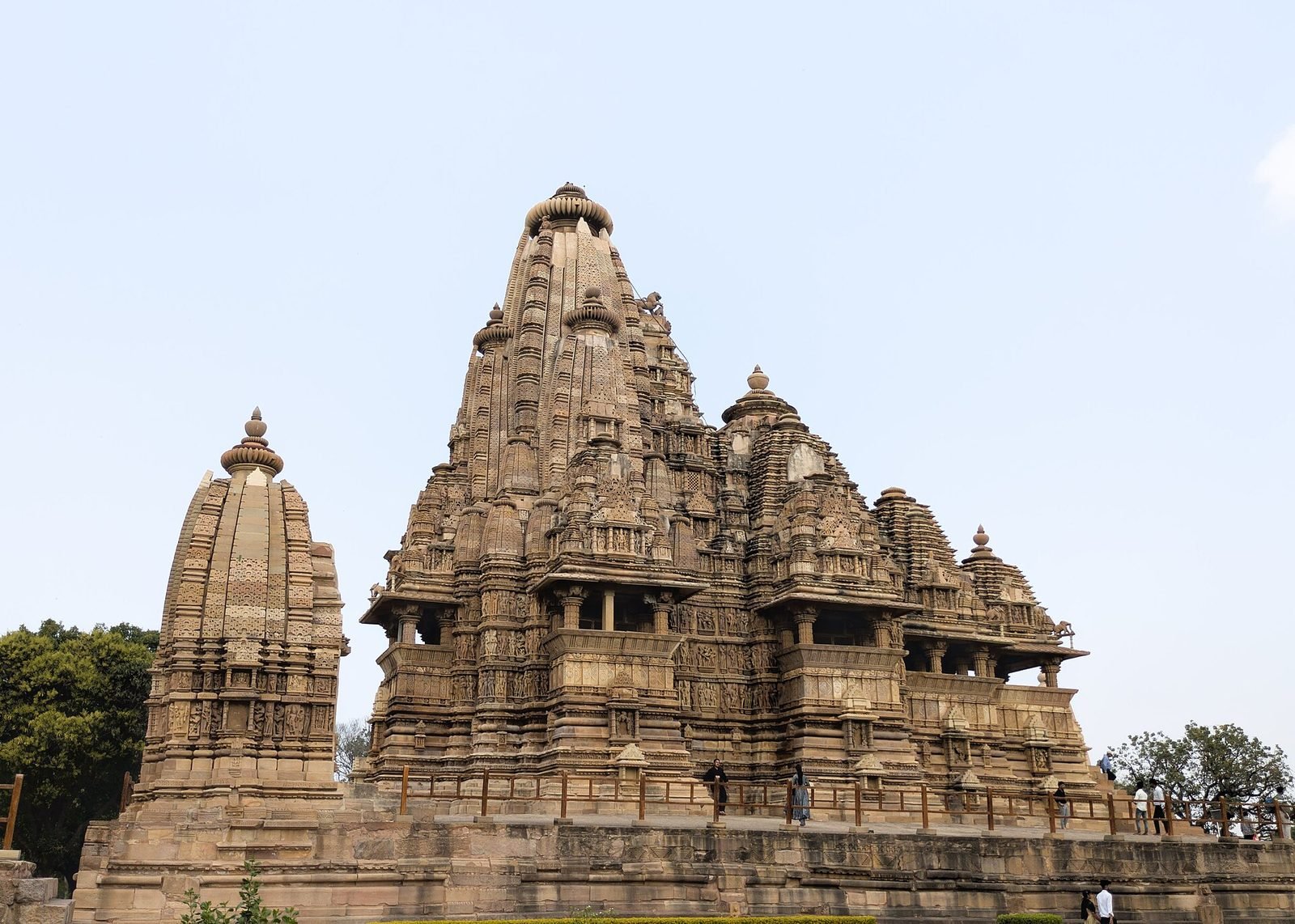
- Khajuraho: the UNESCO temples, an airport and a resort economy that runs on foreign tourism; hotel land in a tightly zoned town.
- Sanchi, Bhimbetka and Bhojpur: the Buddhist stupa, the rock shelters and the unfinished temple on Bhopal's doorstep; day-trip heritage with modest hotel demand.
- Gwalior, Orchha and Datia: the fort, the Scindia palaces, Orchha's cenotaphs on the Betwa and the Bundela palaces; a heritage-hotel circuit with the Jhansi airport across the border.
- Mandu, Maheshwar and the Narmada: the Malwa's monsoon palace city, the Holkar ghats and the river; boutique hospitality an hour from Indore.
- Kanha, Bandhavgarh, Pench, Panna and Satpura: the tiger reserves; resort land at the gates is the state's growth hospitality market and carries buffer-zone rules.
- Pachmarhi and the Satpura hills: the state's one hill station, a cantonment with strict building limits and a weekend-home market for Bhopal.
The practical takeaway: Ujjain's corridor and the tiger-reserve gates are the hospitality plays with real growth; Khajuraho and Orchha are mature and zoned; Pachmarhi is a cantonment where little can be built. The Simhastha's zoning will decide which Ujjain plots are winners.
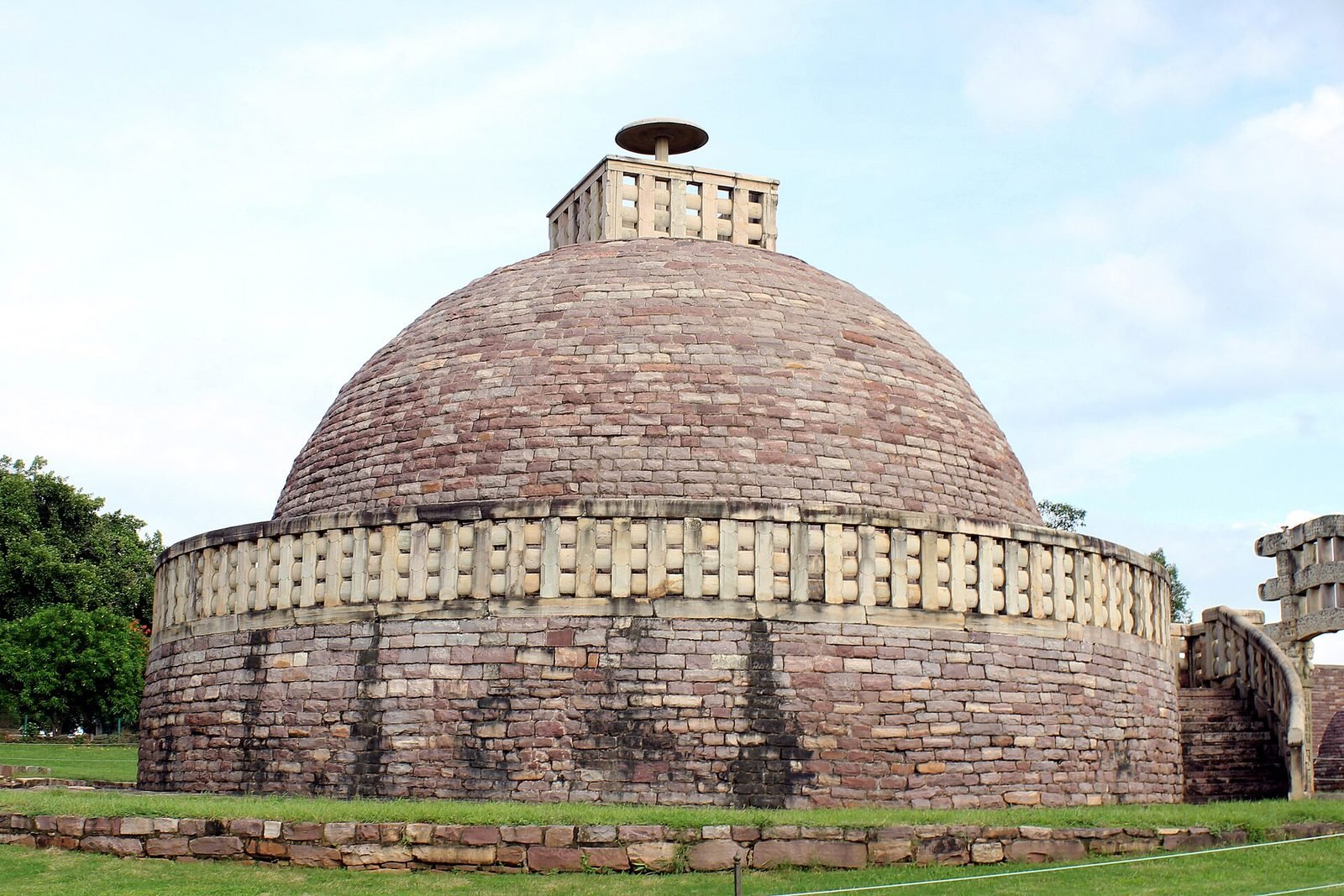
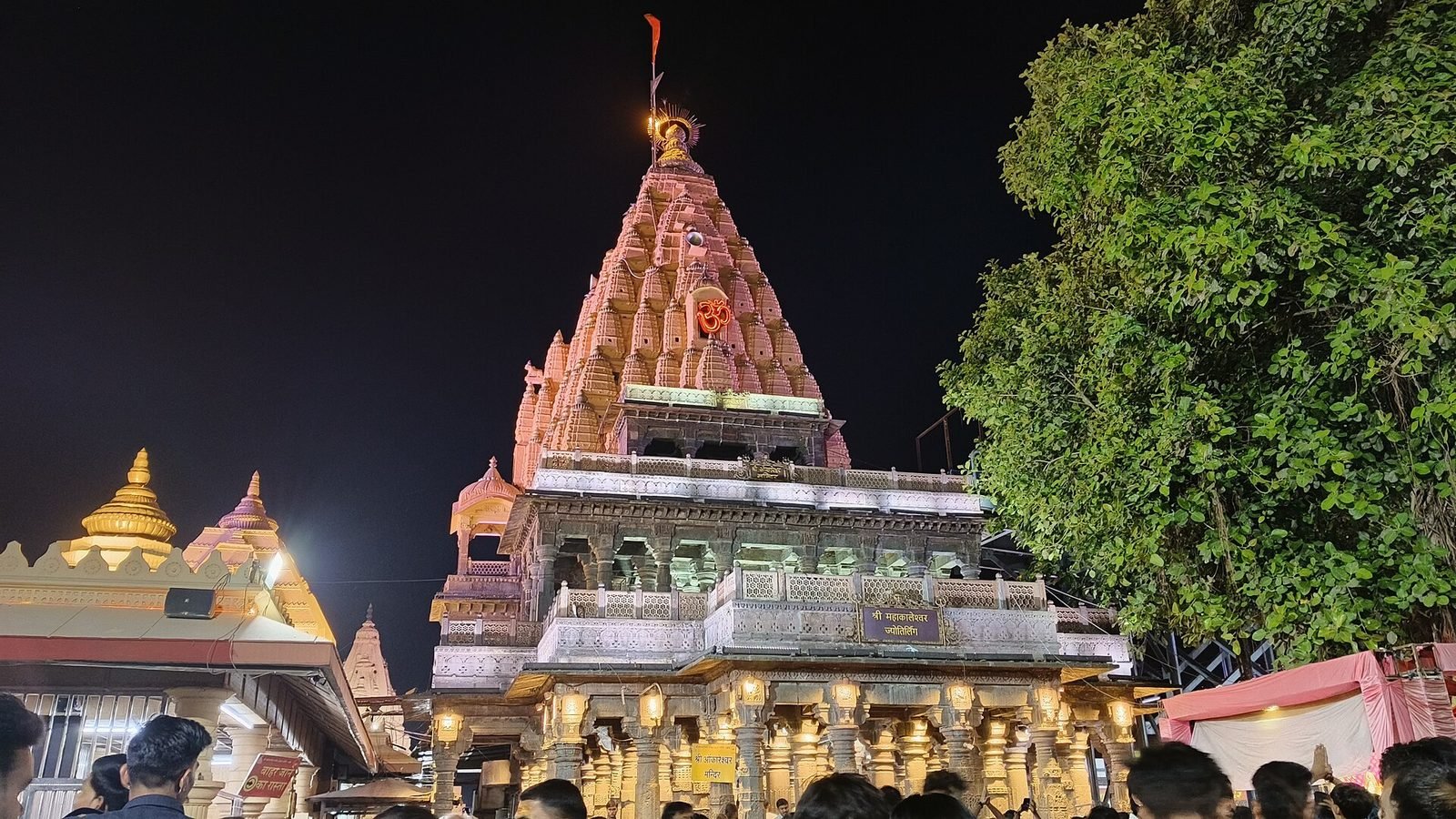
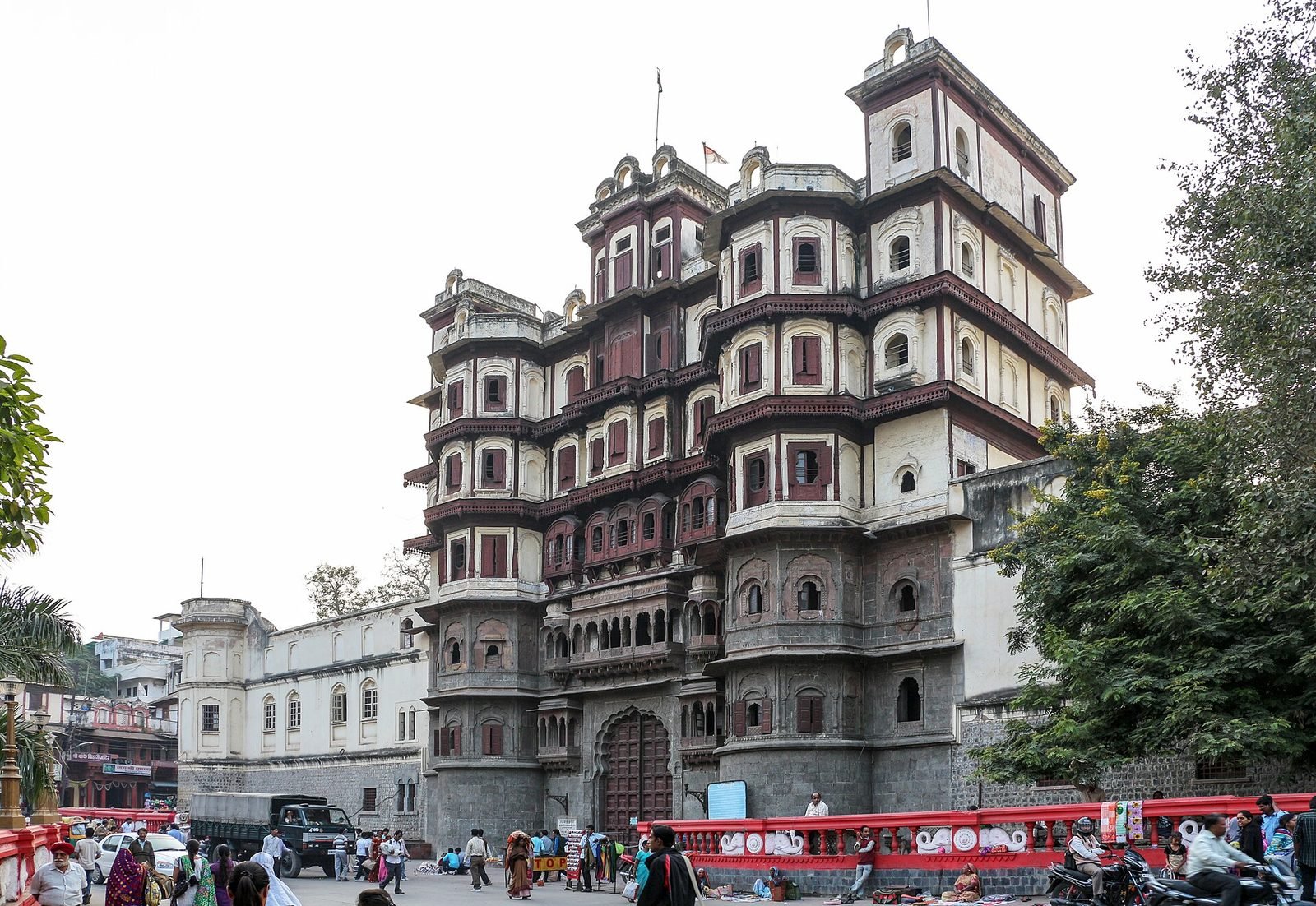
Photos: Suyash Dwivedi, CC BY-SA 4.0, via Wikimedia Commons · Ashverse, CC BY-SA 4.0, via Wikimedia Commons · Bernard Gagnon, CC BY-SA 3.0, via Wikimedia Commons
09Legal Checks, Stamp Duty and Property Tax: Madhya Pradesh Specifics
MP's paperwork turns on the diversion order, the colonizer licence and the guideline rate. The system is reasonably digitised; the losses come from the unlicensed colonies and from a registration bill that is among the highest in the country.
Who approves what
The Indore, Bhopal, Gwalior and Jabalpur development authorities form and allot their own schemes; the Directorate of Town and Country Planning approves layouts and the municipal corporations sanction building plans; the Collector and the SDM grant diversion of agricultural land to non-agricultural use and license colonizers under the state's colony-development rules; MPIDC allots industrial land; RERA MP registers projects above the usual thresholds and publishes the promoter's record. Land records live on the MP Bhulekh portal with the khasra, the khatauni and the diversion entry.
Diversion and the colonizer licence
Agricultural land in MP can be bought by anyone, but it cannot be used for housing until the Collector diverts it to non-agricultural use under the Land Revenue Code, with the diversion fee paid and the entry made in the khasra. A private colony then needs a colonizer licence, a sanctioned layout from the T&CP directorate and the development works completed before plots can be sold; the state's colony law was rewritten after decades of illegal colonies, and an unlicensed colony's plots cannot be registered for building or mortgaged cleanly. The periodic regularisation drives rescue some and leave the rest stranded.
The due-diligence checklist
- RERA MP registration for projects, with the promoter's record and the completion date.
- Khasra and khatauni on MP Bhulekh, with the mutation in the seller's name and the diversion entry; and no government, forest, tribal or ceiling-surplus land in the number.
- Colonizer licence, T&CP layout sanction and the development completion for private colonies, or the development authority's allotment for its schemes.
- Building-plan sanction and completion certificate from the corporation; the state's building bylaws are enforced in the big cities and deviations are compounded or removed.
- Encumbrances and litigation through the sub-registrar's search and a court check; family partitions and the old zamindari holdings cloud rural titles.
- Tribal-land restrictions under Section 165 of the Land Revenue Code in the scheduled areas of the east and south-west, where land of tribal owners cannot be transferred to non-tribals.
- MPIDC lease conditions and transfer permission for industrial plots; Housing Board and society transfer for their stock.
Agricultural land
Anyone resident in India can buy agricultural land in MP within the ceiling limits, with the tribal-area exception; there is no farmer-only rule. NRIs and OCIs cannot buy agricultural land, plantations or farmhouses under FEMA, though they may inherit. Farmhouse plots on the Indore bypass, the Ujjain road and around Bhopal's lakes are only legal with the diversion order and a layout; the "farmhouse scheme" sold on undiverted land is the state's commonest trap.
Stamp duty and registration
Madhya Pradesh charges about 7.5 percent stamp duty, including the municipal and development cesses, plus a 3 percent registration fee, so roughly 10.5 percent all-in, among the highest in India; women buyers get a concession in urban areas that the state has adjusted more than once. Duty is charged on the higher of the sale price and the collector's guideline rate, which the state revised upward across Indore, Bhopal and Ujjain recently. Family transfers and some affordable categories carry concessions. Confirm the live figures before you budget; the state changes them by notification.
Property tax
Municipal property tax in Indore, Bhopal and the other corporations is self-assessed on annual letting value and is modest; Indore's corporation is the strictest collector in the state. Society maintenance in the townships, MPIDC lease rent on industrial plots and summer water tankers are the recurring costs that matter.
Units you will hear
MP quotes plots in sq ft in the cities and in sq yd and bigha in the districts; the MP bigha varies by district between about 1,200 and 2,500 sq yd, so convert on the khasra. Flats are quoted in super built-up sq ft with the RERA carpet area 25 to 35 percent lower, and the guideline rate is published per sq m by locality.
Rates on this page are indicative asking prices gathered from transactions and listings Mr. Homez handled or reviewed. They change with every quarter and every collector-rate revision. Stamp duty, cess and tax rules are summarised from government notifications current at the time of writing; confirm the live figures with the sub-registrar before you commit money. This is market commentary, not legal or investment advice.