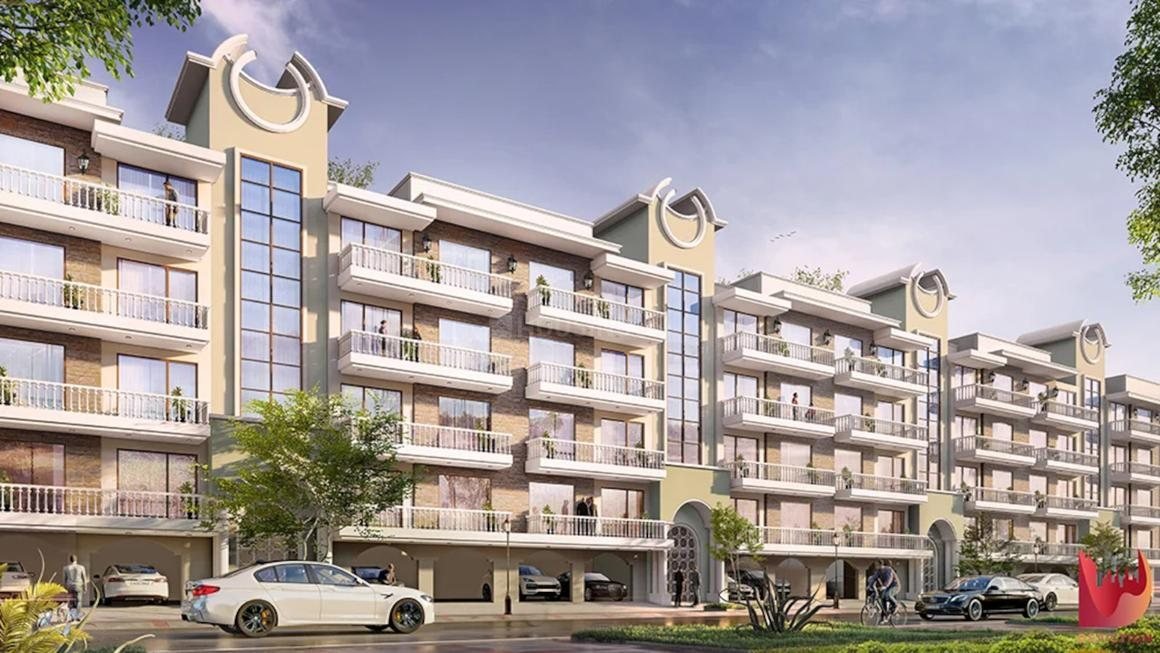
01Ground Reality: What Actually Moves Property in Punjab
Three streams of money buy property in Punjab, and they rarely mix. The first is the Tricity spillover: Chandigarh is a Union Territory with almost no new supply, so every doctor, officer, trader and IT worker who cannot afford a Chandigarh kothi ends up in Mohali, Zirakpur, Kharar or New Chandigarh. The second is NRI money from Canada, the UK, Australia and Italy flowing into the Doaba belt, which means Jalandhar, Hoshiarpur, Kapurthala, Phagwara and the villages between them. The third is industrial cash, mostly Ludhiana hosiery, cycle and auto-parts families, and more recently refinery and thermal money around Bathinda.
Agriculture still employs the most people, but it has stopped being the price-setter. What changed in the last five years is simple. Land acquisition payouts for the Delhi–Amritsar–Katra Expressway, the Amritsar–Jamnagar corridor and the Ludhiana bypasses put serious cash in farming families' hands, and a large share of it went straight into urban plots. At the same time the post-2020 work-from-home wave sent Delhi and Gurugram salaries looking for a quieter base, and Mohali's Airport Road corridor was the obvious landing spot. Tower launches that would have taken three years to sell in 2018 were selling out in months by 2023.
The flip side is that Punjab has a long memory of stalled projects. Mohali's Sector 90-plus belt and the Kharar–Landran road carry a dozen skeletons from the 2011 to 2015 cycle. Buyers here are cautious for good reason, and RERA registration, which the state enforces better now than it did in 2018, is the first thing a serious buyer checks.
Three things stand out in 2026. Mohali has become a genuine high-rise market with per-square-foot pricing that now overlaps with Gurugram's older sectors. Zirakpur has matured from "cheap flats near Chandigarh" into a dense, fully occupied suburb with its own retail, schools and traffic problems. Ludhiana, long a plot-and-kothi city, is finally seeing branded apartment projects sell on Ferozepur Road and Pakhowal Road. Jalandhar and Amritsar remain NRI-paced: steady, kothi-led and slow to crash.
02Location and Macro Infrastructure: Roads, Rail and Airports That Set Prices
Punjab's spine is NH-44, the old Grand Trunk Road, running Ambala to Rajpura, Ludhiana, Phagwara, Jalandhar and Amritsar. Almost every Tier-2 and Tier-3 market in the state sits within 15 km of it. The second axis is NH-5, Zirakpur to Kharar, Ropar and on towards Ludhiana, which is why Kharar prices track Chandigarh prices with a lag of a few years. NH-7 links Zirakpur to Patiala, Sangrur and Bathinda and has turned Zirakpur's Patiala Road into a builder-floor belt.
Expressways that are real, and one that is still a promise
- Delhi–Amritsar–Katra Expressway (NE-5). About 669 km, roughly 400 km of it in Punjab, through Patiala, Sangrur, Malerkotla, Ludhiana, Jalandhar, Kapurthala and Gurdaspur. Land acquisition in Punjab delayed it badly, but large sections are built. When it opens end to end, Delhi to Amritsar drops to around four and a half hours. Plots within 5 km of its interchanges near Ludhiana, Nakodar and Kapurthala have already re-rated twice.
- Amritsar–Jamnagar Economic Corridor. The Punjab stretch through Tarn Taran, Moga and Bathinda is largely open. It is a freight road more than a commuter road, which helps Bathinda's warehousing and cold-storage demand rather than its flats.
- Ludhiana Southern Bypass and the Ferozepur Road elevated corridor. The elevated road has opened in stages and has taken real pressure off the Ferozepur Road retail stretch. The southern bypass is still a construction zone; buy near it on a five-year view, not a two-year one.
- Chandigarh–Ludhiana four-lane and the Kharar flyover. The flyover fixed the worst of the Kharar jam. The Kharar to Kurali stretch is still slow at peak hours, and that lag is exactly why Kurali plots are cheap.
- Tricity Metro. Approved in principle, detailed project report revised more than once, no track laid. Treat it as upside, not as a reason to pay a premium today.
Airports
Shaheed Bhagat Singh International Airport at Mohali is the one that moves property. Everything on PR-7, the Airport Road, from Sector 66 to Zirakpur's Aerocity side, prices off its distance to the terminal. Amritsar's Sri Guru Ram Dass Jee airport is the state's international gateway for the NRI belt, with direct flights to Birmingham, London and the Gulf and heavy Canada traffic through connecting hubs. Ludhiana's new terminal at Halwara, named after Shaheed Kartar Singh Sarabha, has been built and is working through its opening process. Once it carries regular flights, the Halwara–Raikot–Ludhiana side becomes the next plot story. Adampur near Jalandhar and Bhisiana near Bathinda run limited domestic schedules.
Rail and freight
The Eastern Dedicated Freight Corridor begins at Sahnewal outside Ludhiana, and CONCOR's Dhandari Kalan dry port sits beside it. That is the single most important fact for anyone looking at industrial sheds or warehouses in Punjab: the Sahnewal–Dhandari–Doraha belt is where container traffic actually originates. The Amritsar–Delhi Vande Bharat and the Shatabdi make Ludhiana and Jalandhar practical for weekly Delhi commuters, and the Chandigarh–Delhi corridor keeps Rajpura and Ambala on investors' radar.
03Micro-Markets and What Sells: City by City
Punjab is not one market. The 14 cities below behave differently, attract different buyers and carry different property types. The rates are indicative asking rates seen in transactions through 2025 and early 2026. They move, so treat them as a starting point for negotiation, not a valuation.
| City | Tier | What actually sells | Indicative rates (2026) |
|---|---|---|---|
| Mohali (Tricity) | 2 | Multistorey apartments, GMADA plots, builder floors, Airport Road commercial, IT office space | Flats ₹6,000–12,000/sq ft; plots ₹70,000–2.5 lakh/sq yd |
| Ludhiana | 2 | Kothis, plots, branded apartments, showrooms, industrial sheds, warehouses | Flats ₹4,000–7,000/sq ft; prime kothi land ₹1.5–3 lakh/sq yd |
| Amritsar | 2 | Kothis, plots, hotel and commercial land, a few mid-rise apartments | Flats ₹3,500–6,500/sq ft; Ranjit Avenue plots ₹1–2 lakh/sq yd |
| Jalandhar | 2 | NRI kothis, plots in approved colonies, builder floors, showrooms | Flats ₹3,500–6,000/sq ft; Model Town plots ₹1–2 lakh/sq yd |
| Patiala | 3 | Plots, independent houses, builder floors near Urban Estate, student rentals | Flats ₹3,000–5,000/sq ft; plots ₹40,000–1 lakh/sq yd |
| Bathinda | 3 | Plots, kothis, refinery-driven rentals, warehouses, farm land | Flats ₹2,800–4,500/sq ft; plots ₹25,000–80,000/sq yd |
| Pathankot | 4 | Independent houses, plots, highway commercial, defence-linked rentals | Plots ₹15,000–45,000/sq yd |
| Hoshiarpur | 4 | NRI kothis, plots, agricultural land, cold storage | Plots ₹12,000–40,000/sq yd |
| Batala | 4 | Independent houses, plots, small industrial sheds | Plots ₹10,000–30,000/sq yd |
| Moga | 4 | Plots, houses, agricultural land, highway commercial on NH-54 side | Plots ₹12,000–35,000/sq yd |
| Kapurthala | 5 | NA plots, kothis, farmhouses, NRI-held land | Plots ₹10,000–30,000/sq yd |
| Khanna | 5 | Plots, houses, grain-market linked shops, warehouses | Plots ₹12,000–35,000/sq yd |
| Phagwara | 5 | Student rentals near LPU, plots, kothis, highway shops | Plots ₹15,000–45,000/sq yd |
| Rajpura | 5 | Plots, houses, highway commercial, land near the industrial belt | Plots ₹12,000–40,000/sq yd |
Mohali and the Tricity belt
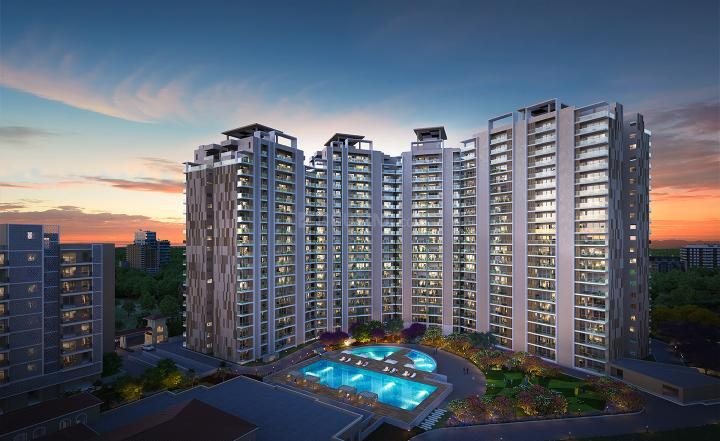
This is the only part of Punjab where apartments outsell plots. The Airport Road corridor from Sector 66 through 82 and on to Sector 88 and 91 is where the branded high-rises are: Wave Estate in Sector 85, JLPL in Sectors 90 to 94, and a long list of 20-plus-storey launches by Sushma, Gillco, Motia and Omaxe. Entry pricing on the better towers now sits between ₹8,000 and ₹12,000 per sq ft. GMADA's own schemes, Aerocity, IT City and Eco City in Mullanpur, remain the safest plot bets because title is clean, though possession of some pockets ran years late. Zirakpur is the volume market: 3 BHKs from ₹70 lakh to ₹1.3 crore on VIP Road, Patiala Road and the Peermuchalla side, fully occupied, with rental demand from Chandigarh-based employees. Kharar is the entry ticket, ₹3,500 to ₹5,500 per sq ft, driven by Chandigarh University at Gharuan and the Landran colleges. New Chandigarh, which is Mullanpur under GMADA's Eco City plan, is the premium plot and low-rise story: Omaxe, DLF Hyde Park and Tata's township, with the Medicity land bank behind it.
Ludhiana
Ludhiana money prefers land it can stand on. Sarabha Nagar, Model Town, BRS Nagar, Gurdev Nagar and the Pakhowal Road belt are kothi markets where a 500 sq yd plot can cost more than a 4 BHK flat in Mohali. Apartments sell on Ferozepur Road and Pakhowal Road, in Omaxe Royal Residency on Pakhowal Road and in South City, mostly to younger industrial families and doctors at DMC and CMC. Industrial demand is in Focal Point, Dhandari Kalan, the Chandigarh Road belt and the new Hi-Tech Cycle Valley at Dhanansu. The honest pain point is the Buddha Nullah, the polluted drain that runs through the city; properties along it discount heavily, and the clean-up has been promised for twenty years.
Jalandhar, Phagwara, Kapurthala and Hoshiarpur: the Doaba NRI belt
Jalandhar's Model Town, Urban Estate Phases 1 and 2, the 66 Feet Road and the Nakodar Road colonies are where NRI families build three-storey kothis that sit empty ten months a year. That keeps prices sticky and rentals thin. Apartments are a small market, mostly on the Jalandhar–Phagwara highway. Phagwara is a Lovely Professional University economy: PG rooms, student flats and the Law Gate retail strip. Kapurthala and Hoshiarpur are plot-and-farmhouse territory with occasional spikes when a large NRI buyer enters.
Amritsar
Ranjit Avenue, Green Avenue, the Mall Road belt and the GT Road towards Jalandhar are the premium pockets. Amritsar's edge is tourism: Heritage Street near the Golden Temple sees hotel and guest-house land deals that have nothing to do with residential fundamentals. The Ajnala Road and Airport Road sides are where the new plotted colonies are. Apartment supply is thin and mid-rise.
Patiala, Bathinda and Rajpura
Patiala is a government and university town: Urban Estate Phases 1 to 3, Bhadson Road and Sirhind Road, with Thapar Institute and Punjabi University giving a reliable rental floor. Bathinda's story is the HMEL refinery, the Talwandi Sabo thermal plant, AIIMS Bathinda and the Central University; Model Town and the Goniana Road and Mansa Road sides have the newer colonies, and furnished rentals for refinery staff are the best yield in Malwa. Rajpura sits on NH-44 between Ambala and Patiala, with Chitkara University and a PSIEC industrial estate, and its plots are priced for the next phase of Tricity overflow rather than the current one.
Who buys, and in what bracket
- ₹40 lakh to ₹80 lakh: first-time buyers in Kharar, Zirakpur and Dera Bassi; 2 BHK flats and small builder floors; Tier-4 and Tier-5 plots.
- ₹80 lakh to ₹2 crore: the bulk of Mohali and Zirakpur 3 BHK demand; Ludhiana and Jalandhar 200 to 300 sq yd plots; Punjab government officers, Chandigarh professionals, Himachal and Haryana buyers.
- ₹2 crore to ₹5 crore: Mohali premium towers and duplexes, GMADA plots in the 60s and 70s sectors, New Chandigarh plots, Ludhiana and Amritsar kothis; industrialists, senior doctors, NRIs.
- Above ₹5 crore: one-kanal kothis in Sarabha Nagar, Model Town Jalandhar or Mohali's Sector 70s; commercial showrooms on Airport Road; hotel land in Amritsar.
04Industry and Employment: What Pays the EMIs
Punjab's industrial map explains its rental map. Where there are factories or campuses, there are tenants; where there are only NRI kothis, there are not.
Ludhiana: the manufacturing engine
Hosiery, bicycles, auto components, sewing machines, hand tools and machine tools. Hero Cycles, Avon, Vardhman, Nahar, Oswal and thousands of MSMEs in Focal Point Phases 1 to 8, Industrial Area A and B, Dhandari Kalan and the Chandigarh Road belt. PSIEC's Hi-Tech Cycle Valley at Dhanansu, anchored by Hero, has pulled sheds and worker housing towards the Chandigarh Road side. The Eastern Dedicated Freight Corridor terminal at Sahnewal and the Dhandari dry port make this the state's only serious warehousing market. Rental yields on industrial sheds here run higher than on any residential asset in Punjab.
Mohali: IT, pharma and the service economy
GMADA's IT City in Sectors 82 and 83, Quark City, the Infosys and Bestech Business Tower campuses and the Phase 7, 8, 8B and 9 industrial areas supply the salaried tenant base for Mohali and Zirakpur flats. Dera Bassi and Lalru on the Ambala side are a pharmaceutical cluster, with Nectar Lifesciences, Ind-Swift and a long tail of formulation units; that is why Dera Bassi has its own small apartment market. Mohali also carries the state's healthcare and education payroll: Fortis, Max, Ivy, IISER, ISB and the NIPER campus.
Jalandhar and Hoshiarpur
Sports goods, leather, hand tools, pipe fittings and surgical instruments in Jalandhar's Focal Point and the Basti belt; Sonalika's tractor plant and the Hoshiarpur Focal Point. These are owner-run businesses and they generate kothi demand, not rental demand.
Bathinda and the Malwa energy belt
HMEL's Guru Gobind Singh refinery at Phulokhari, the Talwandi Sabo and Goindwal power plants, the fertiliser units and the cotton and grain trade. Refinery contractors and engineers rent furnished houses in Model Town and on the Mansa Road side, and that demand has been steady for a decade.
Mandi Gobindgarh, Khanna, Rajpura and Amritsar
Mandi Gobindgarh is the steel re-rolling town between Khanna and Sirhind. Khanna has one of Asia's largest grain mandis and a shop-and-warehouse economy around it. Rajpura's PSIEC estate and Chitkara University are small but growing. Amritsar runs on textiles, Verka, food processing and tourism; the Attari land border trade, once a large employer, has been shut for years and should not be in anyone's investment thesis.
The single-window body is Invest Punjab, and industrial land is allotted through PSIEC focal points. Freehold industrial plots in PSIEC estates are tradeable; leasehold ones carry transfer charges, so read the allotment letter before you price a shed.
05What Changes in the Next 3 to 7 Years
Here is the list of catalysts worth paying attention to, ranked by how likely they are to actually move prices rather than headlines.
- Delhi–Amritsar–Katra Expressway opening end to end. The strongest driver in the state. It converts Nakodar, Kapurthala, Sangrur-side villages and the Ludhiana interchanges into weekend-commutable distance from Delhi. Expect a second wave of farmhouse and plotted-colony demand along the interchanges, and a stronger case for Amritsar hospitality land.
- Halwara airport going live for Ludhiana. A functioning international terminal 30 km from the city's industrial heart changes how Ludhiana's exporters travel and makes the Raikot–Halwara side a plot story. Prices on that side have already front-run the opening, so the easy money is gone; the durable gain is in Ludhiana's commercial and hospitality segment.
- Mohali's Medicity and Eco City Phase 2 in New Chandigarh. GMADA's Medicity land is earmarked for hospitals and a medical college. If the Tata Cancer Hospital and the planned institutions take shape, Mullanpur's rental market, which is thin today, finally gets tenants.
- IT City expansion and Sector 100-plus sectors in Mohali. GMADA's new sector plans towards Sector 100 to 130 are the next supply band. Buying there is buying ahead of roads, water and sewer lines; expect a long hold.
- Tricity Metro. If it starts construction, the Airport Road and Kharar corridors re-rate. If it stays on paper, nothing happens. Price it at zero and treat any progress as a bonus.
- Ludhiana's Southern Bypass and Buddha Nullah rejuvenation. The bypass opens the Pakhowal–Sidhwan Canal side for plotted colonies. A genuinely clean nullah would be the biggest re-rating event in Ludhiana's history, but nobody in the city is pricing it in yet, and neither should you.
- Collector rate revisions. Punjab raised collector rates sharply across Mohali and most districts in 2024 and 2025. This is a drag on transactions in the short run, because it lifts stamp duty, but it also reduces the cash component in deals and makes bank funding easier.
What this means for appreciation: Mohali and Zirakpur are late-cycle. The 2021 to 2024 run was 40 to 70 percent in the good towers and it will not repeat on that scale; think high single digits a year with the possibility of flat patches. Kharar, New Chandigarh plots and Ludhiana apartments have more room. Expressway-adjacent plots in Doaba and Malwa are the speculative end, where gains can be large and liquidity is poor.
06Civic Life: Hospitals, Colleges, Malls and the Things That Break
Healthcare
PGIMER in Chandigarh is the reason half of north India's medical traffic ends up in the Tricity, and it supports a permanent floating population of patients' families in Mohali and Zirakpur rentals. Fortis Mohali, Max Mohali, Ivy Hospital, Grecian in Sector 69 and the upcoming Medicity cover the private side. Ludhiana has DMC, CMC and Fortis; Patiala has Rajindra Hospital and Columbia Asia; Amritsar has Amandeep and Fortis Escorts; Jalandhar has Patel Hospital and Capitol; Bathinda has AIIMS and Max.
Education
Panjab University in Chandigarh, IISER and ISB in Mohali, IIT Ropar, Thapar Institute and Punjabi University in Patiala, PAU and GADVASU in Ludhiana, GNDU and IIM in Amritsar, NIT Jalandhar, LPU at Phagwara, Chandigarh University at Gharuan near Kharar, Chitkara at Rajpura and the Central University at Bathinda. Each one anchors a rental micro-market, and LPU, Chandigarh University and Chitkara each support thousands of PG beds.
Retail and recreation
Elante in Chandigarh is still the Tricity's default mall. Mohali has Bestech Square and the Airport Road high streets; Kharar has VR Punjab; Ludhiana has Pavilion, MBD Neopolis and the Ferozepur Road strip; Jalandhar has Curo and MBD; Amritsar has Trilium and Alpha One; Patiala has Omaxe. The PCA Stadium in Mohali and the new one at Mullanpur, the Guru Nanak Stadium in Ludhiana and the Gandhi Ground in Amritsar are the sporting anchors.
The civic realities
- Power: PSPCL supply in urban Punjab is reliable by north Indian standards. Rural feeders near paddy season see scheduled cuts. Rooftop solar on net-metering is common on kothis for a reason.
- Water: Most of Punjab runs on groundwater, and the table is falling fast in Ludhiana, Mohali and the Malwa cotton belt. GMADA sectors have canal-based supply; many colonies on the Kharar and Zirakpur fringe still run on society borewells. Ask who owns the tubewell and what it costs to run.
- Drainage: Zirakpur's Dhakoli, Peermuchalla and parts of VIP Road flood most monsoons. Patiala, Dera Bassi and the Ghaggar belt flooded in 2023. Ludhiana's low-lying colonies near the nullah back up every July. Ground floors and basements in these pockets should be priced accordingly.
- Air: October and November stubble burning pushes AQI past 300 across the state. It is a quality-of-life issue, not a price issue, but it is why premium buyers now ask about air purification in new towers.
- Traffic: Zirakpur's Singhpura and Patiala Chowk, the Kharar–Kurali stretch and Ludhiana's Ferozepur Road and Dugri side are the daily bottlenecks. Thirty minutes on a map is an hour at 6 pm.
- Approvals: Building-plan sanction in GMADA and GLADA areas is reasonably fast; in older municipal zones and in the many unauthorised colonies it is slow or impossible. That is the main reason a cheap plot stays cheap.
07Climate and How to Build for It
Punjab has four real seasons and every one of them tests a building.
Summer runs from April to June with daytime highs of 42 to 46°C across the plains and higher in Bathinda and the Malwa belt. Dust storms in May and June strip paint and jam window channels. Monsoon arrives in early July and runs to mid-September. The Shivalik foothills, which means Mohali, Kharar, Ropar and Hoshiarpur, get 700 to 900 mm, Ludhiana around 700 mm and Bathinda less than 450 mm. The problem is intensity rather than volume: 100 mm in an afternoon on flat land with poor drainage. Winter from December to February brings 2 to 8°C nights and dense fog that regularly shuts Amritsar and Chandigarh airports and slows NH-44 to a crawl. Stubble season in late October and November is the fifth season nobody advertises.
What this means for a buyer or builder
- Terrace waterproofing and parapet detailing matter more than any interior finish. Ask for the membrane spec on a new flat and the age of the treatment on a resale kothi.
- In Zirakpur, Dera Bassi and low-lying Ludhiana, insist on a sump pump and a sealed basement if there is one. Better still, avoid basements in those pockets.
- North and east-facing homes command a premium here for a practical reason: a west-facing bedroom in June is unusable without heavy air-conditioning.
- Insulated roofs, AAC block walls and double-glazed windows pay back quickly on power bills. Rooftop solar does too, because summer and winter both drive consumption.
- Fog means the winter commute to the airport or to Delhi takes longer than any app says. For a frequent flyer, Airport Road proximity is worth paying for.
08Landmarks, Tourism and the Hospitality Angle
Punjab's identity is spiritual and historical, and that is where tourism-linked property demand sits.
- Amritsar: Sri Harmandir Sahib, the Golden Temple, with Heritage Street, Jallianwala Bagh, the Partition Museum and the daily Attari–Wagah retreat ceremony. Hotel, guest house and shop land within walking distance of the Temple trades on tourism numbers, not residential logic.
- Anandpur Sahib and Virasat-e-Khalsa: the Hola Mohalla crowds and the museum keep homestay and dharamshala demand alive in a town with almost no other economy.
- Dera Baba Nanak and the Kartarpur Corridor: pilgrim traffic to Pakistan's Kartarpur Sahib when the corridor is open; a small hospitality-land market that depends entirely on cross-border politics.
- Takht Sri Damdama Sahib at Talwandi Sabo and Fatehgarh Sahib: seasonal pilgrim towns near Bathinda and Sirhind.
- Patiala's Qila Mubarak and Sheesh Mahal, Bathinda's Qila Mubarak, Kapurthala's Jagatjit Palace: heritage anchors that give these cities a weekend-visitor economy.
- Harike and Ropar wetlands, Ranjit Sagar Dam near Pathankot, Chhatbir Zoo near Zirakpur and the Shivalik foothills above Hoshiarpur: the farmhouse and weekend-home belt for Tricity and Ludhiana families.
- Kila Raipur Rural Olympics and Sukhna Lake: the former is Ludhiana's annual spectacle; the latter is in Chandigarh but is the reason every Tricity brochure mentions "lake views".
The practical takeaway: hospitality land in Amritsar and farmhouse plots in the Shivalik foothills and along the Sidhwan Canal are the two tourism-linked plays with real liquidity. Everything else is a long-term bet on footfall that depends on things you cannot control.
09Legal Checks, Stamp Duty and Property Tax: Punjab Specifics
Punjab paperwork is manageable if you know which office owns which document. Most bad deals here come from one of three things: an unapproved colony, a missing mutation, or an agricultural plot sold as residential.
Who approves what
PUDA is the parent authority. GMADA runs Mohali, Zirakpur, Kharar, Dera Bassi and New Chandigarh; GLADA runs Ludhiana; JDA Jalandhar; ADA Amritsar; PDA Patiala; BDA Bathinda. A private colony needs a PAPRA licence under the Punjab Apartment and Property Regulation Act, a sanctioned layout from the relevant authority, change of land use (CLU) and paid-up external development charges (EDC). A tower additionally needs Punjab RERA registration, which is mandatory above 500 sq m or eight units, and a completion or occupation certificate before you move in.
The due-diligence checklist
- Fard and jamabandi from the Punjab Land Records Society portal: confirms ownership, area in kanal and marla, and any charge. Match the khasra numbers to the site plan.
- Intkal (mutation) in the seller's name. A registered sale deed without mutation is a dispute waiting to happen.
- RERA registration number on rera.punjab.gov.in, with the quarterly progress updates actually filed.
- Layout sanction and CLU from the development authority, plus the PAPRA licence number for private colonies.
- NOC position. Punjab's 2024 amendment to PAPRA allowed registration of plots up to 500 sq yd in unauthorised colonies without an NOC, provided the sale agreement or power of attorney was executed before 31 July 2024. Outside that window you need the authority's NOC, and without it banks will not lend.
- Encumbrance and litigation through a sub-registrar search and a civil-court check; Punjab has no single encumbrance certificate like the southern states, so your lawyer does it by hand.
- Society or developer dues on resale flats: maintenance arrears, transfer fees and, for GMADA allotments, the transfer permission and unearned-increase rules.
Freehold, leasehold and agricultural land
Punjab urban property is overwhelmingly freehold, which is a real advantage over Chandigarh UT, where a large share of older stock is leasehold with conversion charges. PSIEC industrial plots can be either. Agricultural land in Punjab can be bought by non-farmers and by NRIs who are Indian citizens or hold OCI status (NRIs cannot buy agricultural land, plantation or farmhouse property anywhere in India under FEMA; inherited holdings are allowed). Converting farm land to residential use needs CLU, and until then it cannot legally be plotted and sold as housing, however many people do exactly that on the Kharar and Ludhiana fringes.
Stamp duty and registration
Stamp duty in Punjab works out to around 7 percent for male buyers and 5 percent for women, with joint purchases in between, plus a 1 percent registration fee. The rate includes the social security and infrastructure cess components, which the state adjusts by notification, so confirm the live figure at the sub-registrar or on the state's registration portal before you budget. Duty is charged on the higher of the deal value and the collector rate, and collector rates were revised upward in most districts in 2024 and 2025. Registration has moved online for appointments and deed drafting, which has cut the queue but not the arbitrariness of some offices.
Property tax
Municipal property tax in Punjab is modest and self-assessed through the state's mSeva portal. Self-occupied houses up to 125 sq yd and flats up to 500 sq ft are exempt, and larger homes pay a small percentage of a formula-based annual value. Commercial and rented property pays more. Properties inside GMADA or PUDA sectors that are not yet transferred to a municipal body pay the authority instead. Budget for it, but it will not change your decision.
Units you will hear
Deals in Punjab are quoted in kanal, marla and gaj. One marla is 30.25 sq yd (272 sq ft), one kanal is 20 marla or 605 sq yd, and one acre is 8 kanal, or 4,840 sq yd. A "10 marla kothi" is therefore roughly 300 sq yd; a "one kanal" is the prestige size in every city's old money belt.
Rates on this page are indicative asking prices gathered from transactions and listings Mr. Homez handled or reviewed. They change with every quarter and every collector-rate revision. Stamp duty, cess and tax rules are summarised from government notifications current at the time of writing; confirm the live figures with the sub-registrar before you commit money. This is market commentary, not legal or investment advice.