
01Ground Reality: One Deep Market, One Borrowed Market and Fifteen Local Ones
Rajasthan's property money has three sources. Jaipur is the first and by far the largest: a state capital with a tourism economy, a gem and jewellery trade, an IT and back-office layer, Mahindra World City's SEZ and the Marwari business families who treat Jaipur plots the way Gujaratis treat gold. The second is the NCR edge: Bhiwadi, Neemrana, Khushkhera and Alwar borrow Gurugram's industrial overflow and Delhi's price-sensitive buyers. The third is local and specific: Kota's coaching students, Jodhpur's handicraft exporters and defence establishment, Udaipur's hotels and marble, Bhilwara's mills, Bikaner's traders and the farm wealth of Sri Ganganagar and Shekhawati that buys town plots as savings.
The state's buyer culture is plotted. Outside Jaipur's inner rings and the Bhiwadi towers, Rajasthanis buy land with a JDA, UIT or municipal patta and build when they can; apartments are a Jaipur and Bhiwadi phenomenon that is spreading slowly to Jodhpur, Udaipur and Kota. That is why the paperwork chapter here is about pattas and 90A conversions rather than occupation certificates.
What changed in the last five years: the Delhi–Mumbai Expressway opened its Sohna to Dausa stretch and pulled Jaipur's eastern edge and the Dausa belt into a two-and-a-half-hour Delhi orbit; Jaipur's Jagatpura, Ajmer Road and Vaishali Nagar extensions saw gated-township launches from national developers for the first time at scale; Kota's hostel market swung with the coaching industry's headlines; and the state's DLC rates, its circle rates, were revised sharply upward across the big cities. Jaipur's good micro-markets ran up 40 to 60 percent and have since settled into steady single digits.
The honest caution: Rajasthan has a long tail of unapproved colonies on every city's fringe, sold on sub-division agreements without a patta or a 90A conversion. The state periodically regularises them, which is why buyers keep taking the bet, and periodically demolishes them, which is why the bet is a bet.
02Location and Macro Infrastructure: Expressways Across the Desert
Rajasthan is India's largest state and most of it is empty; its property markets sit on the highways that cross it and at the ends of the lines from Delhi, Gujarat and the Punjab.
Expressways and highways
- Delhi–Mumbai Expressway. The longest stretch of the corridor runs through Rajasthan: Alwar and Dausa, past Sawai Madhopur, Kota and Jhalawar into Madhya Pradesh. The Sohna to Dausa section is open and Jaipur's link road from Bandikui puts the capital under three hours from Delhi; the Kota stretch is open and has re-priced Kota's eastern land. Interchanges at Dausa, Bandikui, Lalsot and Kota are the land plays.
- Amritsar–Jamnagar Economic Corridor. Through Hanumangarh, Suratgarh, Bikaner, Nagaur, Jodhpur, Pali and Barmer to Gujarat; largely open. A freight road that helps Bikaner, Jodhpur and Pali warehousing more than their flats.
- NH-48 Delhi–Jaipur–Ajmer–Udaipur, the state's old spine, six-laned for most of its length, with the Jaipur ring road finally closing the loop around the capital and taking truck traffic off Tonk Road and Ajmer Road.
- NH-52 Jaipur–Kota, NH-62 Jodhpur–Pali–Udaipur, NH-11 Jaipur–Agra and the Jaipur–Bikaner four-lane complete the grid; the Jaipur–Kishangarh and Kishangarh–Beawar stretches are the busiest corridor outside the NCR edge.
- Bhiwadi, Neemrana and the NCR industrial belt sit on NH-48 and the Delhi–Mumbai Industrial Corridor's Khushkhera–Bhiwadi–Neemrana investment region, with the Western Dedicated Freight Corridor's Rewari junction next door.
Rail and metro
Jaipur Metro's first line runs Mansarovar to Badi Chaupar through the walled city; Phase 2, north to south from Sitapura to Ambabari, is the project that would re-price Tonk Road and the Jagatpura side and is at the approval stage. The Western DFC crosses the state through Rewari, Phulera, Ajmer and Marwar Junction, which is why Phulera and Kishangarh are logistics-land stories. Jaipur, Jodhpur, Kota, Ajmer and Udaipur all have Vande Bharat or Shatabdi links to Delhi.
Airports
Jaipur is the international gateway with direct Gulf, Southeast Asian and dense domestic schedules. Jodhpur and Udaipur have strong domestic networks that carry the tourism trade; Kota, Bikaner, Jaisalmer and Kishangarh's new Ajmer airport run thinner schedules. Bhiwadi and Alwar use IGI Delhi, an hour away, which is the whole point of them.
03Micro-Markets and What Sells: City by City
Seventeen cities across five tiers. Rates are indicative asking prices from recent deals and listings; Rajasthan quotes plots by the sq yd and flats by the sq ft, and the DLC rate sets the floor for stamp duty.
| City | Tier | What actually sells | Indicative rates (current) |
|---|---|---|---|
| Jaipur | 2 | Apartments in gated townships, JDA plots, villas, builder floors, showrooms, offices, warehouses on the ring road, farm houses on the Delhi and Agra roads | Flats ₹4,000–8,000/sq ft (C-Scheme ₹10,000–14,000); plots ₹30,000–1.5 lakh/sq yd |
| Jodhpur | 2 | Plots, kothis, a growing apartment market, handicraft export sheds, hotel land | Plots ₹25,000–80,000/sq yd; flats ₹3,500–5,500/sq ft |
| Kota | 2 | Hostel and PG buildings, plots, independent houses, shops near coaching hubs | Plots ₹20,000–60,000/sq yd; hostel buildings priced on bed count |
| Udaipur | 3 | Flats, plots, villas, hotel and resort land, marble-money kothis | Flats ₹4,000–7,000/sq ft; plots ₹20,000–70,000/sq yd |
| Bikaner | 3 | Plots, havelis and houses, trading shops, warehouses on the corridor | Plots ₹15,000–50,000/sq yd |
| Ajmer | 3 | Plots, houses, Dargah-side hotels and dharamshalas, Pushkar resort land, Kishangarh marble sheds | Plots ₹15,000–50,000/sq yd |
| Bhilwara | 3 | Plots, mill-owner kothis, RIICO industrial sheds | Plots ₹12,000–40,000/sq yd |
| Alwar (with Bhiwadi, Neemrana) | 3 | Alwar plots and houses; Bhiwadi and Neemrana apartments, industrial plots and warehouses | Alwar plots ₹15,000–45,000/sq yd; Bhiwadi flats ₹3,500–5,500/sq ft |
| Bharatpur | 4 | Plots, houses, highway commercial, agricultural land | Plots ₹10,000–30,000/sq yd |
| Sikar | 4 | Coaching-hub PGs, plots, houses, agricultural land | Plots ₹12,000–40,000/sq yd |
| Pali | 4 | Plots, houses, dyeing and textile sheds | Plots ₹10,000–30,000/sq yd |
| Sri Ganganagar | 4 | Plots, houses, cold storage, agricultural land | Plots ₹12,000–40,000/sq yd |
| Banswara | 5 | Plots, houses, highway commercial, farm land | Plots ₹6,000–20,000/sq yd |
| Sujangarh | 5 | Plots, havelis, shops | Plots ₹6,000–20,000/sq yd |
| Churu | 5 | Plots, havelis, houses | Plots ₹6,000–20,000/sq yd |
| Jhunjhunu | 5 | Plots, havelis, houses, PGs near BITS Pilani | Plots ₹8,000–25,000/sq yd |
| Beawar | 5 | Plots, houses, highway commercial, cement-belt sheds | Plots ₹8,000–25,000/sq yd |
Jaipur: the growth rings
The walled city and the C-Scheme, Civil Lines and Bani Park ring are old money and heritage; C-Scheme flats and bungalow plots are the state's most expensive property at ₹10,000 to 14,000 per sq ft and ₹2 to 4 lakh per sq yd. The second ring is Malviya Nagar, Vaishali Nagar, Mansarovar and Jhotwara: the city's working middle class, JDA and Housing Board plots at ₹60,000 to 1.5 lakh per sq yd and the first apartment projects. The third ring is where the growth is: Jagatpura and the Sitapura side on Tonk Road, with the IT and SEZ payroll and the airport; Ajmer Road from Vaishali Nagar extension out to Mahindra World City, with national developers' townships; Sirsi Road and Kalwar Road on the Jhotwara side for affordable plots; and the Agra Road and Delhi Road belts for farmhouses and warehousing. Gated townships from Mahima, Manglam, Ashiana, Godrej and the Jaipur Development Authority's own schemes are what sells; the Jaipur ring road and the Phase 2 metro are what the third ring is priced on.
Jodhpur
Shastri Nagar, Ratanada and the Circuit House belt are the establishment; Pal Road, the Jhanwar Road side with AIIMS and IIT Jodhpur, and Basni are the growth corridors. Handicraft and furniture exporters, the army and air force stations and the Sun City tourism trade are the buyers, and plots outnumber flats five to one. The Amritsar–Jamnagar corridor and the Jodhpur bypass are the catalysts.
Kota
Kota is a college town without the college: the coaching institutes in Mahaveer Nagar, Jawahar Nagar, Talwandi, Indra Vihar and Landmark City support an industry of hostels and PG buildings that are priced on beds, not square feet, and whose yields rise and fall with the coaching industry's enrolment and the state's hostel regulations. The Chambal riverfront, the thermal plant and the Delhi–Mumbai Expressway interchange are the non-coaching stories; plots in Kunhari and the Jhalawar Road side are the local market.
Udaipur
Hiran Magri, Pratap Nagar, Bhuwana and the Ahmedabad highway side carry the flats and plots; the lakeside and the Fateh Sagar to Pichola belt is hotel and resort land where prices follow tourism rather than residential logic. Marble money from Rajsamand and Kishangarh, the hospitality industry and a growing IT and education layer are the buyers.
The NCR edge: Bhiwadi, Neemrana, Alwar
Bhiwadi is Gurugram's price-sensitive cousin: an industrial township with Saint-Gobain, Honda, Gillette and hundreds of units, apartments at ₹3,500 to 5,500 per sq ft and a rental market of factory managers and Delhi commuters. Neemrana is the Japanese industrial zone and the fort hotel; Khushkhera and Tapukara are the DMIC investment region. Alwar town is a district headquarters with Sariska tourism and plots for local demand. The Delhi–Mumbai Expressway passes close enough to matter.
Ajmer, Bikaner, Bhilwara and the Tier-4 and Tier-5 towns
Ajmer runs on the Dargah, Pushkar, Mayo College, the Kishangarh marble mandi and the new airport; Bikaner on its trading families, the army and the corridor; Bhilwara on textile mills. Sikar and Jhunjhunu are coaching and army-recruitment towns with Shekhawati haveli heritage; Sri Ganganagar is canal-fed farm wealth; Pali is dyeing and textiles; Bharatpur is Keoladeo and the Agra fringe; Beawar is cement; Banswara, Sujangarh and Churu are local plot markets where Marwari families who made money in Mumbai or Kolkata build houses they visit twice a year.
Who buys, and in what bracket
- Under ₹40 lakh: Bhiwadi and Neemrana flats, Jaipur's Sirsi and Kalwar Road plots, Tier-4 and Tier-5 town plots; factory staff, first-time buyers, farming families.
- ₹40 lakh to ₹1 crore: Jaipur 2 and 3 BHKs in Jagatpura, Ajmer Road and Vaishali extension, JDA plots in the second ring, Jodhpur and Udaipur flats, Kota hostels; the state's salaried and trading middle class.
- ₹1 crore to ₹3 crore: Jaipur villas and premium township apartments, Malviya Nagar and Vaishali plots, Jodhpur and Udaipur kothis, Ajmer and Pushkar hospitality; business families, NRIs, Delhi second-home buyers.
- Above ₹3 crore: C-Scheme and Civil Lines bungalows and flats, Udaipur lakeside and heritage property, Jaipur farmhouses on the Delhi road; promoters, royals, hoteliers and HNIs.
04Industry and Employment: What Pays the EMIs
Jaipur: tourism, gems, IT and the SEZ
Jaipur's economy is layered: a tourism and hospitality trade that fills the Pink City's hotels year-round; the gem and jewellery industry in Johari Bazaar and the Sitapura export zone, the world's largest coloured-stone cutting centre; Mahindra World City's SEZ with Infosys, Deutsche Bank, Metlife and a back-office cluster; the state government and its secretariat; and the Marwari trading houses. The Sitapura and Jagatpura side carries the salaried tenants; the walled city and C-Scheme carry the trade.
The NCR industrial belt
Bhiwadi, Khushkhera, Tapukara and Neemrana form Rajasthan's share of the Delhi–Mumbai Industrial Corridor: Honda's car plant at Tapukara, Saint-Gobain, Gillette, Hero's Neemrana plant, the Japanese zone and hundreds of auto-component and consumer-goods units. RIICO allots the industrial land; the worker and manager housing is in Bhiwadi's towers.
Kota's coaching industry
Allen, Resonance, Motion and the rest run an industry that at its peak housed two lakh students a year; it is Kota's largest employer and the sole basis of its hostel market. Enrolment, regulation and the shift to online learning move Kota rents more than any road ever will.
Jodhpur, Udaipur and the craft and mineral towns
Jodhpur's handicraft and furniture exports, its air force and army establishments, AIIMS and IIT; Udaipur's hotels, Hindustan Zinc at Zawar and the marble trade of Rajsamand; Kishangarh's marble mandi near Ajmer, the largest in Asia; Bhilwara's textile mills; Pali's dyeing units; Beawar's cement plants; Bikaner's namkeen, wool and ceramics. Each is a local employer whose owners buy kothis and whose workers rent rooms.
Solar, mining and agriculture
Bhadla in Jodhpur district is one of the world's largest solar parks, and the Jaisalmer and Bikaner belts are the state's renewable energy frontier; the land leases and transmission work pay compensation that turns into town plots. Zinc, copper, limestone, marble and sandstone mining pay the same way. Canal-fed agriculture in Sri Ganganagar and Hanumangarh and the Shekhawati army-pension economy buy plots as savings across the north.
RIICO is the industrial land authority with estates in every district; its plots are leasehold with transfer charges, and industrial buyers in Rajasthan go through RIICO allotments or 90A-converted private industrial land. The single window is the state's Invest Rajasthan portal.
05What Changes in the Next 3 to 7 Years
- Delhi–Mumbai Expressway end to end, with the Jaipur link. Jaipur under three hours from Delhi and Kota on the corridor re-price the eastern districts; the Dausa, Bandikui and Lalsot interchanges and the Agra Road side of Jaipur are the land plays.
- Jaipur Metro Phase 2. The north–south line from Sitapura to Ambabari along Tonk Road is the capital's biggest internal catalyst; if construction starts, Jagatpura, Sanganer and the Tonk Road belt re-rate.
- Jaipur ring road completion and the logistics parks on it, which move warehousing off Ajmer Road and Tonk Road and create a new commercial belt.
- Amritsar–Jamnagar corridor maturing into a logistics spine for Bikaner, Jodhpur and Pali.
- The NCR edge after the Haryana Orbital Rail and the DFC: Bhiwadi, Khushkhera and Neemrana become rail-served industrial nodes, which is the case for holding RIICO land there.
- Kishangarh airport, the Udaipur and Jodhpur expansions and Jaipur's growing international network for the tourism and second-home market.
- Solar and mining expansions in Jodhpur, Jaisalmer and Bikaner districts, which keep paying compensation into town plots.
- DLC-rate revisions and colony regularisation. Higher DLC rates push more deals into the formal market; the periodic regularisation of unapproved colonies lifts the ones that qualify and strands the rest.
What this means for appreciation: Jaipur's inner rings are mature; the third ring on Tonk Road, Ajmer Road and the Agra Road side has the most headroom, in the order of the metro and expressway news. Bhiwadi moves with Gurugram's industrial cycle. Kota moves with the coaching industry, which is a risk, not a catalyst. The Tier-3 to Tier-5 towns move with farm incomes, mining and the corridors, not with Delhi sentiment.
06Civic Life: Hospitals, Universities, Malls and What Breaks
Healthcare
SMS Hospital, Fortis, Manipal, Eternal and Narayana in Jaipur; AIIMS Jodhpur; the new AIIMS-standard facilities and Geetanjali in Udaipur; Kota's medical college; Bikaner's PBM Hospital; the Jaipur private chains are where the whole state's serious cases go.
Education
Rajasthan University, MNIT and IIIT Kota in Jaipur, IIT Jodhpur, AIIMS Jodhpur, BITS Pilani in Jhunjhunu, IIM Udaipur, Mayo College in Ajmer, the Kota coaching industry and the Sikar coaching belt; Manipal, Amity, JECRC and the private universities on the Jaipur fringe add a student layer along Ajmer Road and Tonk Road.
Retail and recreation
World Trade Park, Pink Square, Elements and MGF in Jaipur, with the Johari Bazaar and MI Road high streets; Udaipur's Celebration Mall and the lakeside; Jodhpur's Sardarpura and the Clock Tower bazaar. The Sawai Mansingh stadium, the Jaipur polo grounds, Jaipur Literature Festival and the Pushkar and Jaisalmer fairs are the cultural anchors.
The civic realities
- Water: the defining constraint. Jaipur runs on the Bisalpur dam with summer rationing; Jodhpur and Bikaner on the Indira Gandhi canal; Udaipur on its lakes, which have run dry in bad years; the desert towns on tankers. Ask any society about its summer water bill before anything else.
- Heat: Churu, Phalodi and Sri Ganganagar record India's highest temperatures; Jaipur hits 45°C. Power demand and borewell failure follow.
- Drainage: Jaipur floods at Sanganer, the Sitapura underpass and the Jhotwara side in heavy years; Kota's low-lying Chambal-side colonies and Udaipur's lake overflow are the other pockets.
- Air and dust: dust storms in May and June, and winter air in Jaipur and Bhiwadi that now matches the NCR; Bhiwadi regularly tops national pollution lists.
- Traffic: Jaipur's Tonk Road, Ajmer Road and the Jhotwara side jam daily; the ring road is the fix in progress.
- Approvals: JDA, the UITs and the municipalities are slow on pattas and plan sanctions; unapproved colonies on every city's fringe are the result, and the periodic regularisation schemes are the state's answer.
07Climate and How to Build for It
Rajasthan is hot, dry and bright, with a short monsoon and cold desert nights, and its vernacular architecture is the best guide to building here.
Summer runs April to June with 42 to 48°C across the state and the Thar's loo winds; Churu and Phalodi are India's hottest places. Monsoon is July to September, 600 to 700 mm in Jaipur and the Aravalli belt, 300 to 400 mm in Jodhpur and Bikaner, under 250 mm in Jaisalmer, usually in a few heavy bursts that flood cities built for drought. Winter from December to February brings 3 to 8°C nights, frost in the Shekhawati and warm dry days that are the tourist season.
What it means for a buyer or builder
- Thick walls, small openings, courtyards and jharokhas were not decoration; they were climate engineering. Stone and cavity walls, insulated roofs and shaded verandahs cut cooling bills by a third against a glass-fronted flat.
- Rainwater harvesting is mandatory in Jaipur for larger plots and is the only reason many Jaipur societies have water in June; check that it actually works.
- North and east-facing units sell at a premium; a west-facing bedroom in a Jaipur tower is unusable from April to June without heavy air-conditioning.
- Rooftop solar pays back faster in Rajasthan than anywhere in India; the state's net-metering is well run and the sun is relentless.
- Drainage and plinth height in Jaipur's third ring and Kota's riverside; the monsoon bursts of recent years flooded colonies that had never seen water.
- Dust: sealed windows, fine-mesh screens and a tiled rather than carpeted interior are the difference between a liveable and an unliveable summer.
08Landmarks, Tourism and the Hospitality Angle
Rajasthan is India's most visited state for leisure tourism, and heritage hospitality is a property market of its own.
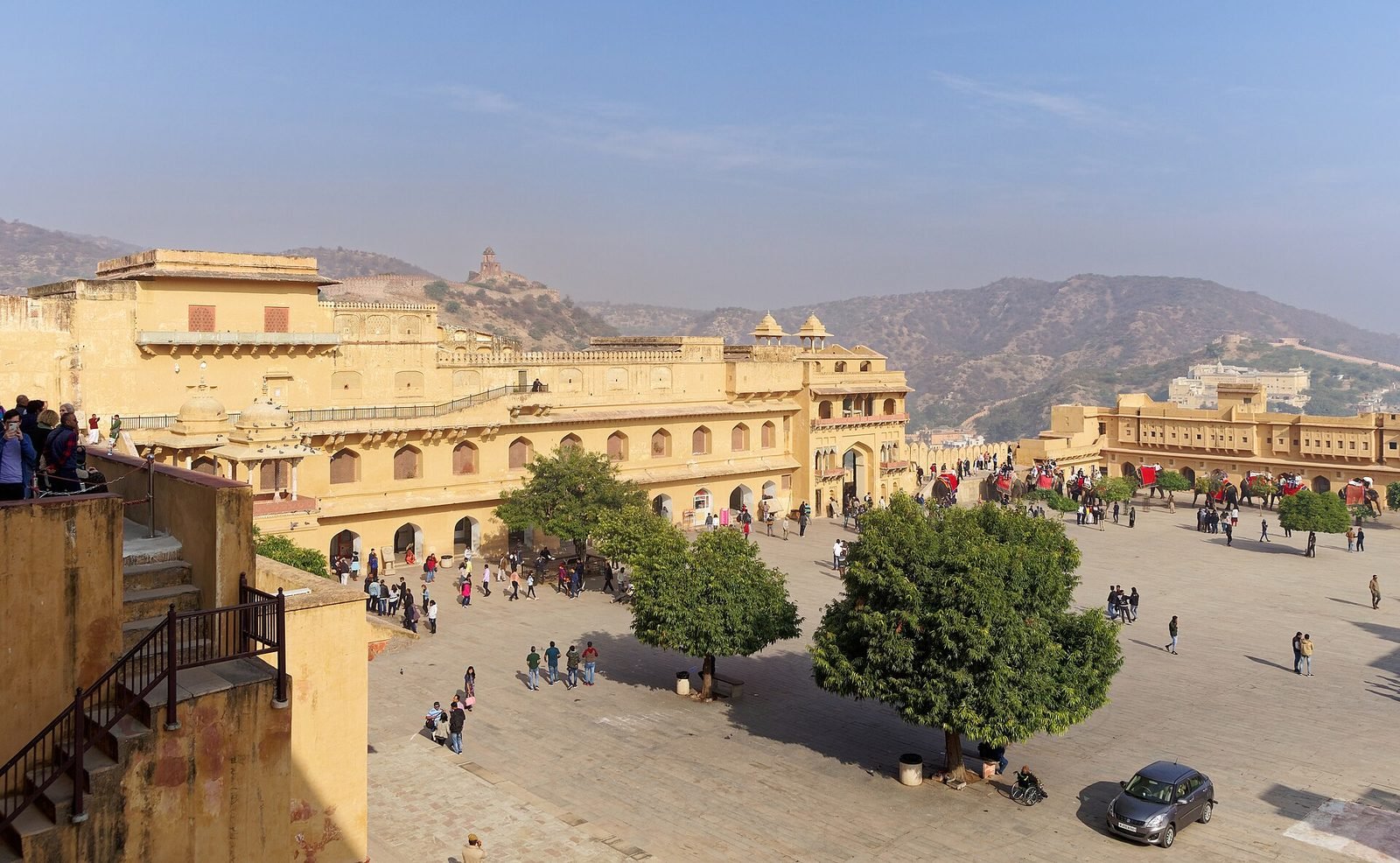
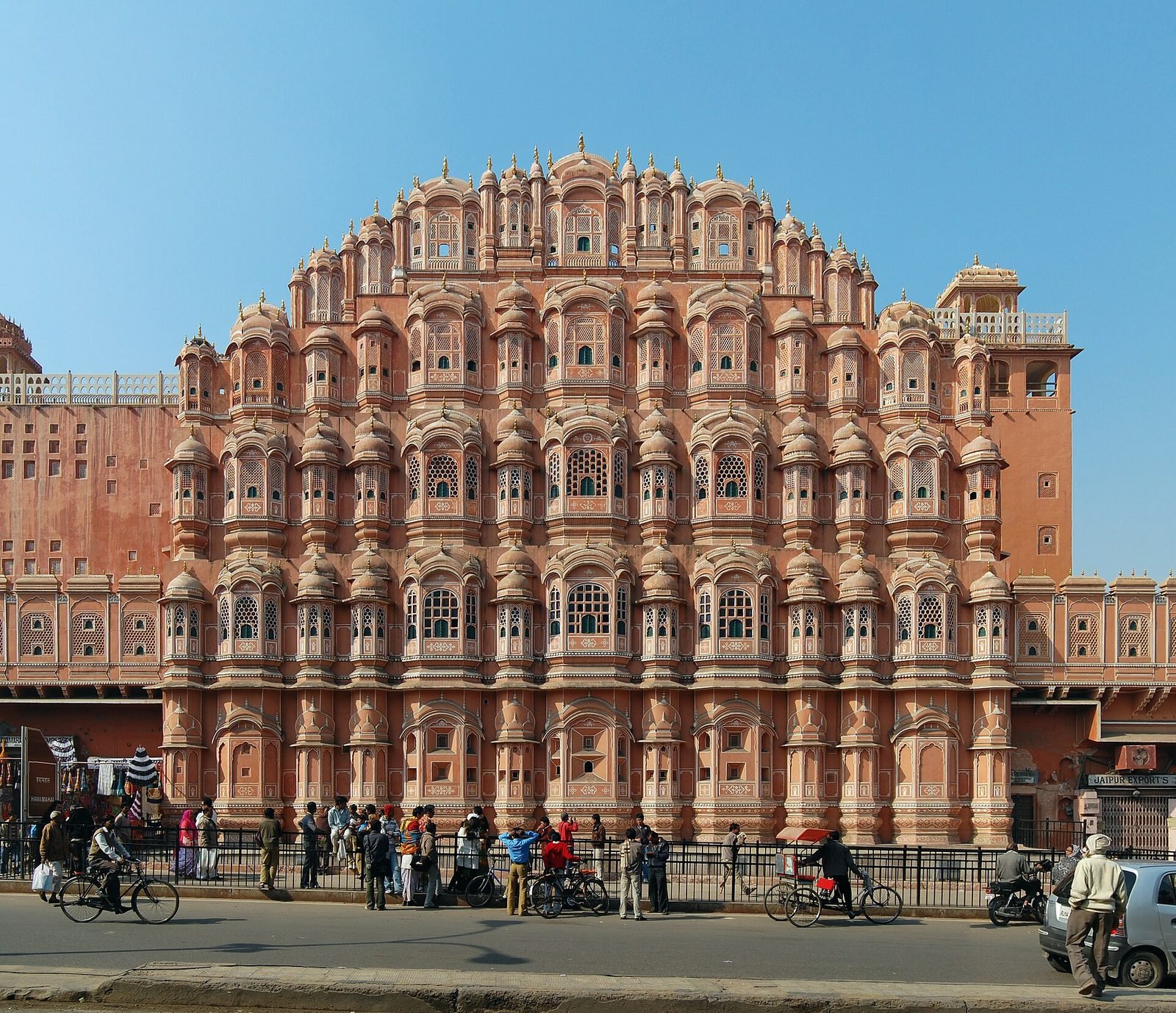
- Jaipur: Hawa Mahal, City Palace, Amber Fort, Jantar Mantar, Nahargarh and the Pink City bazaars; a UNESCO-listed walled city where haveli hotels and boutique properties trade on tourist nights.
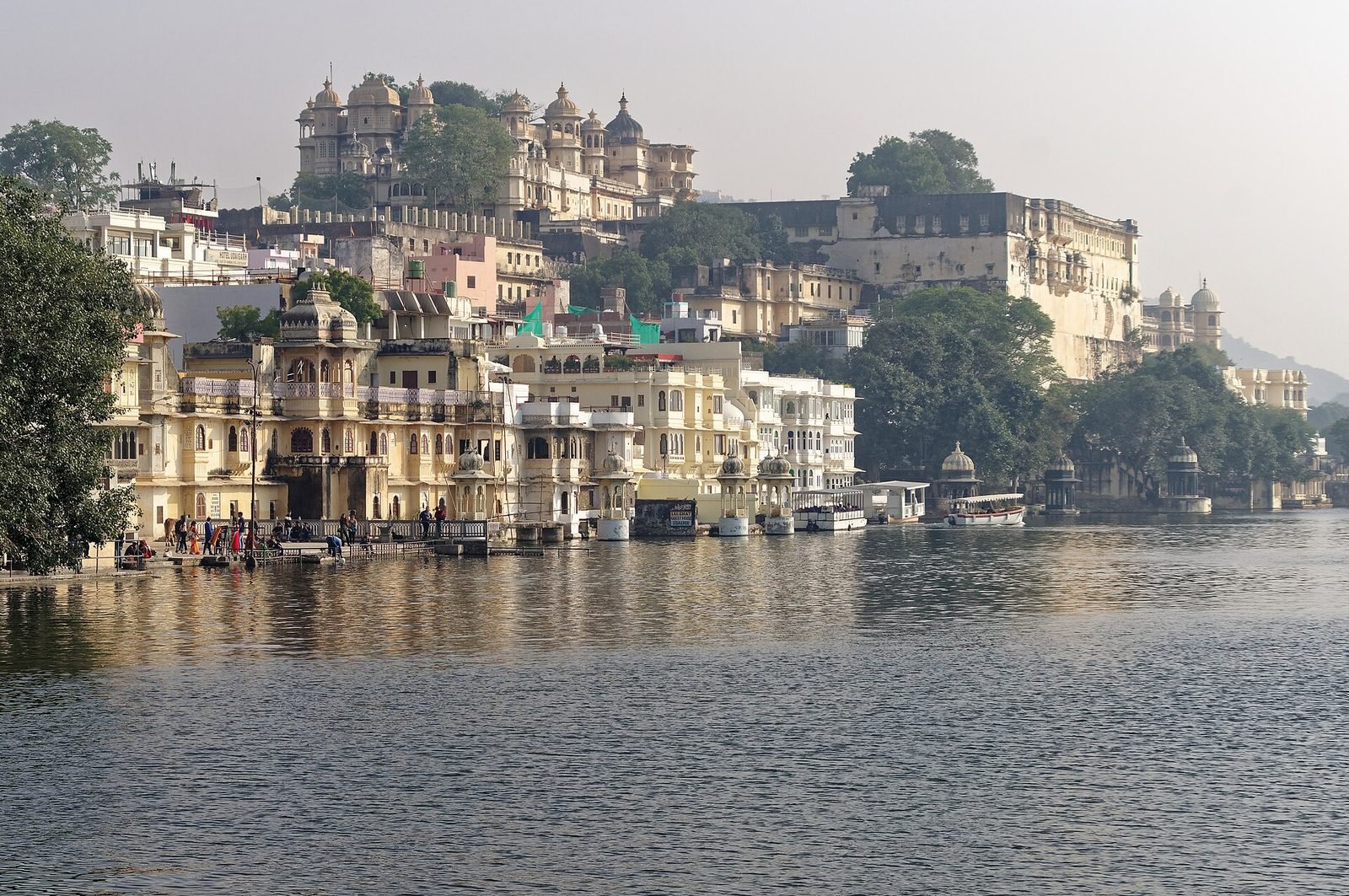
- Udaipur: the City Palace, Lake Pichola and Fateh Sagar, the Lake Palace and the ghats; the most expensive hospitality land in the state outside Jaipur, and a destination-wedding economy that fills every heritage property.
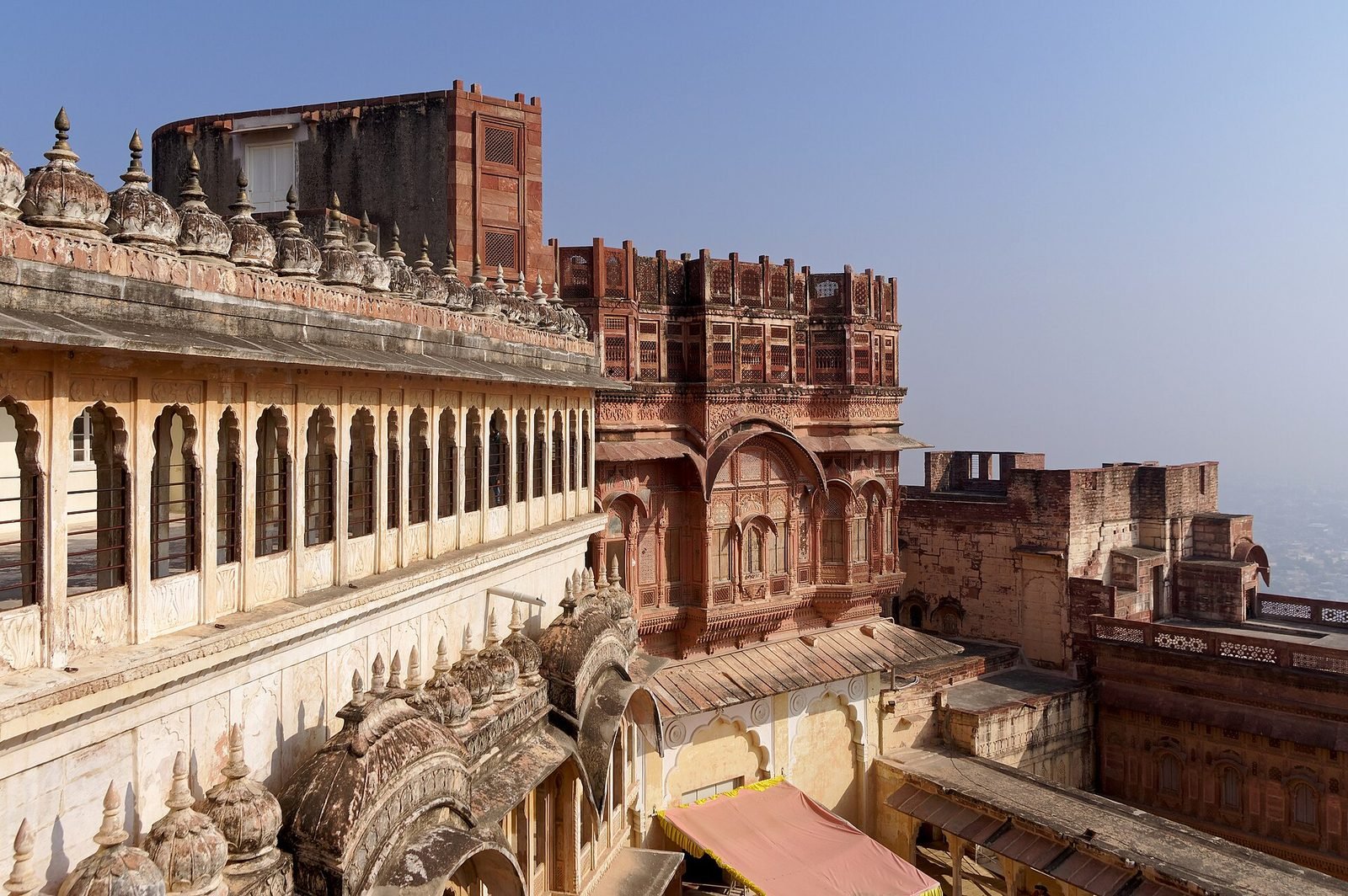
- Jodhpur and Jaisalmer: Mehrangarh, the blue city, the Umaid Bhawan; Jaisalmer's fort, havelis and the Sam dunes camp belt; desert-camp and haveli-hotel land markets.
- Pushkar and Ajmer: the Brahma temple, the camel fair and the Dargah; dharamshala, hotel and resort land that trades on the fair calendar.
- Ranthambore, Sariska and Keoladeo: the tiger reserves and the bird sanctuary; resort land at Sawai Madhopur and on the Alwar side.
- Mount Abu, the Shekhawati havelis, Bundi, Chittorgarh and Kumbhalgarh: heritage and hill circuits with boutique hospitality and slow second-home demand.
- Neemrana and the fort hotels: the model that turned ruined forts into the state's signature hospitality product and the reason heritage property in small towns has buyers.
The practical takeaway: Jaipur's walled-city havelis, Udaipur's lakeside and the Jaisalmer and Pushkar camp and resort belts are the hospitality plays with real liquidity; destination weddings are the demand driver that matters most. Everything else is a bet on a circuit's footfall and the heritage-conservation rules that govern what you may change.
Photos: Marcin Białek, CC BY-SA 4.0, via Wikimedia Commons · Jakub Hałun, CC BY-SA 4.0, via Wikimedia Commons
09Legal Checks, Stamp Duty and Property Tax: Rajasthan Specifics
Rajasthan's paperwork turns on three documents: the patta, the 90A conversion and the DLC rate. Get those right and the rest follows.
Who approves what
The Jaipur Development Authority covers the capital; Jodhpur and Udaipur have their own development authorities; every other city has an Urban Improvement Trust or a municipal body that issues pattas, the title document for urban plots. RIICO allots industrial land. The Rajasthan Housing Board builds and allots its own schemes. RERA Rajasthan registers projects above the usual thresholds, and its website carries the project and promoter records. Land records live on the Apna Khata portal with the jamabandi and the khasra map.
Patta and 90A
A patta from the JDA, UIT or municipality is what makes an urban plot a legal, mortgageable asset; a plot sold on a sub-division agreement without one is a promise, not a title. Agricultural land can only become residential or commercial through conversion under Section 90A of the Rajasthan Land Revenue Act, on payment of conversion charges and with a layout approved by the authority; the older 90B route was closed years ago, and colonies cut on un-converted khatedari land are the state's unapproved-colony problem. Regularisation schemes come and go; a converted, patta-backed plot never needs one.
The due-diligence checklist
- Patta in the seller's name from the competent authority, freehold, with the lease-to-freehold conversion done where the scheme was leasehold.
- 90A conversion order and approved layout for any plot carved from farmland, plus the authority's approval of the colony.
- Jamabandi and khasra on the land-records portal for the underlying land, with no government, charagah or forest land in the number.
- RERA registration for projects, with quarterly filings and the promoter's complaint record.
- Building-plan sanction and completion certificate for built property; JDA and the UITs sanction slowly and unauthorised floors are compounded or removed.
- Encumbrances and litigation through a sub-registrar search and a court check; family partition disputes over ancestral havelis and plots are common.
- RIICO transfer permission and dues for industrial plots; Housing Board transfer for its flats.
Agricultural land
Anyone, farmer or not, can buy agricultural land in Rajasthan; the ceiling law limits holdings and NRIs and OCIs cannot buy agricultural land, plantations or farmhouses under FEMA, though they may inherit. Farmland near Jaipur's Delhi and Agra roads is the farmhouse market, and 90A conversion is what turns it into something you can legally build a weekend home on.
Stamp duty and registration
Stamp duty in Rajasthan is about 6 percent for male buyers and 5 percent for women, with a surcharge on the duty on top and a 1 percent registration fee, so the effective cost lands near 7 to 8 percent for men. Duty is charged on the higher of the sale price and the DLC rate, which the state revised sharply upward in Jaipur, Jodhpur, Udaipur and Kota recently. Concessions exist for women, for senior citizens and for Housing Board and affordable units. The state changes all of this by notification; confirm the live figures before you budget.
Property tax
Municipal urban development tax in Rajasthan is area-based and low, with exemptions for small plots and self-occupied houses below a size; Jaipur, Jodhpur and Udaipur collect it through their corporations and the rest through municipalities. The costs that matter more are lease rent on older JDA and UIT schemes, conversion charges, society maintenance in Jaipur's townships and summer water tankers.
Units you will hear
Rajasthan quotes plots in sq yd, flats in sq ft of super built-up area and farmland in bigha; the Rajasthan bigha is about 1,210 sq yd, a quarter acre, though it varies by district. A "100-gaj plot" means 100 sq yd, and the DLC rate is published per sq m, so convert before you compare.
Rates on this page are indicative asking prices gathered from transactions and listings Mr. Homez handled or reviewed. They change with every quarter and every collector-rate revision. Stamp duty, cess and tax rules are summarised from government notifications current at the time of writing; confirm the live figures with the sub-registrar before you commit money. This is market commentary, not legal or investment advice.